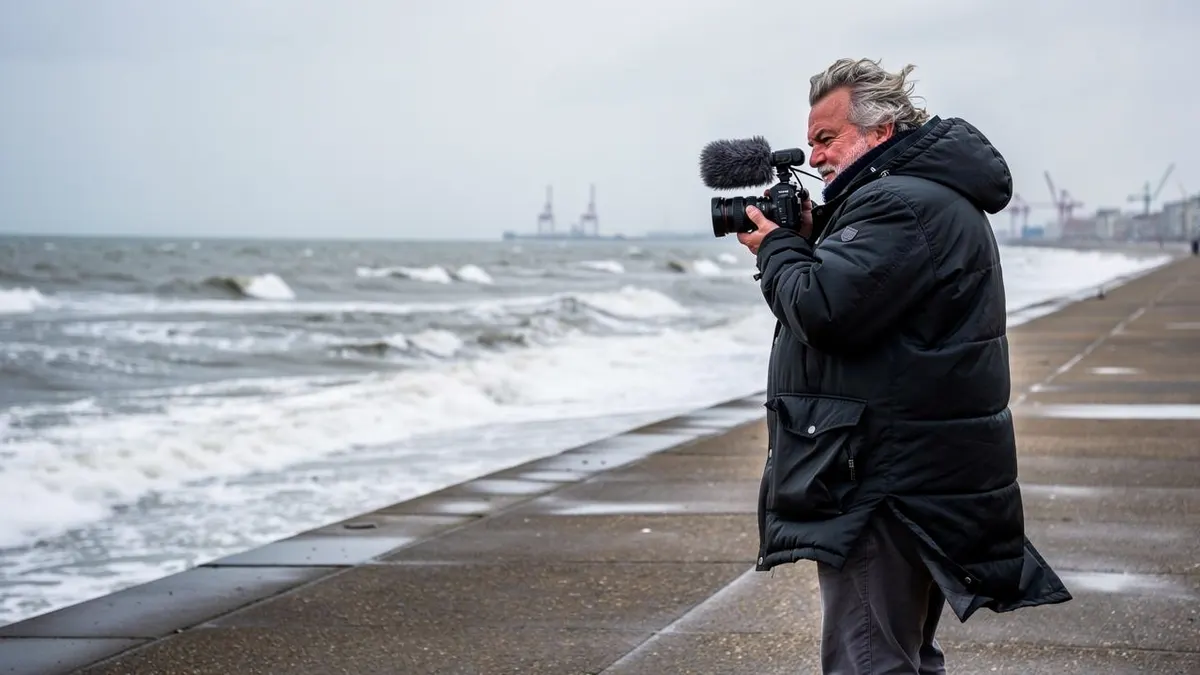
A brand orders six videos from a creator, then wonders six months later whether it can reuse their face to generate ten variants with artificial intelligence. The question looks technical, it is legal, and the answer fits in one sentence: an AI use of a face or a voice must be expressly authorised, and must not be assumed covered by a generic UGC assignment.
Why a standard assignment does not answer the question
A standard UGC contract assigns rights in a video: copyright in the delivered work, and authorisation to exploit the person's image on named media, for a named duration.
Generating a new video from that face is not, by contrast, an exploitation of the delivered work. It is the creation of a new work reproducing the attributes of a person. The contract spoke about one object, the AI manufactures another, and nothing in the assignment contemplated that second object.
That is why prudence does not consist in checking whether the assignment forbids it, but in noting that it does not authorise it.
The three attributes that each need authorisation
The face, including reconstructed, animated or aged. A likeness sufficient for someone close to identify the person engages their image rights.
The voice, which falls under the same regime protecting the person. Voice cloning from the delivered soundtrack reproduces an identifying attribute, and the fact that no image appears changes nothing.
The name and visual signature, when they are attached to generated content. An AI video reusing the creator's handle adds a layer of identification on top of the face.
What the contract has to write, and in what order
| Point | Useful wording | What it prevents |
|---|---|---|
| AI authorisation | Express, separate from the video assignment | An assumed authorisation |
| Attributes covered | Face, voice, name, listed | Unforeseen voice cloning |
| Purpose | The specific uses allowed | Unlimited generation |
| Duration | Distinct from the video's | An AI right outliving the contract |
| Exit | Deletion of trained models | A model that stays usable |
The last line matters most and nobody writes it. Taking a video down is simple; taking down a model trained on a face is far less so, and a clause silent on what happens to models leaves the creator with no practical recourse.
The purpose, which has to be narrow
"Using the creator's image for AI generation purposes" is not a purpose, it is a blank cheque. A useful purpose names the use: generating variants of the same video to test hooks, adapting the video to other formats, dubbing the voice into another language.
Each of those is defensible and negotiable. A general right to generate is not, because neither the brand nor the creator can say what it will cover a year from now.
The trained model, which outlives everything else
A video comes off a platform in minutes. A model trained on a face does not come off: it exists on a disk, possibly at a supplier, and nothing in the contract says who holds it or what becomes of it.
It is the one asymmetry in the arrangement that cannot be repaired afterwards. A brand ending the collaboration returns the files, stops the distribution, and unintentionally keeps the technical ability to produce new videos with the face of someone who no longer works for it.
The clause that settles it fits in a sentence: at the end of the contract, models trained on the creator's attributes are deleted, and the brand attests to it. It costs one line to write, it is hard to obtain afterwards, and it is exactly the kind of point a creator should carry in their own contract template rather than wait for a brand to offer.
What the European framework adds
The European regulation on artificial intelligence imposes transparency obligations for artificially generated or manipulated content, in particular where it depicts people realistically. Advertising built from a synthesised face falls within that scope and has to be identifiable as such.
That obligation stacks on top of the one already flowing from French advertising law: a commercial communication must be identifiable as commercial, and a generated video must in addition be identifiable as generated. Those are two separate disclosures, not one.
On the personal data side, a face and a voice are personal data, and processing them to train a model falls under the GDPR. The creator's contractual consent does not relieve the brand of needing a lawful basis, nor of the information owed to the person.
The brand's objection
"It is our video, we paid for it." The video, yes. The face, no: it was never sold, it was authorised for a use. The difference is the same as between buying a photograph and buying the right to make the model pose again.
A brand that wants the latitude to generate should buy it at the time of the order, where it costs one line and an uplift. Afterwards, it costs a renegotiation in which the creator holds all the power.
What a creator should refuse
A clause authorising AI without naming the attributes. A clause reusing the duration of the video assignment without distinguishing it. A clause silent on the fate of models at the end of the contract.
And above all, a clause buried in a framework agreement signed once and for all. AI authorisation is the one permission that should be asked again for every campaign, because the technology moves faster than contracts.
Sources
- Civil Code, article 9, respect for private life
- Regulation (EU) 2024/1689 laying down harmonised rules on artificial intelligence
- CNIL, artificial intelligence and data protection
- Law no. 2023-451 of 9 June 2023 on commercial influence
Checked on 7 September 2026. This guide is not legal advice. Where this guide and the official source disagree, the source prevails.