Four hours of usable light, a cold that kills batteries and an indoor corner that has to carry half your year.
Daylight is the first constraint
Three facts that decide the schedule.
The usable window shrinks to four hours around midday, and it shortens further in overcast weather.
The light changes fast: a series started at two in the afternoon no longer matches at four.
And the snow on the ground bounces strong light from below, which completely changes how a face looks.
One simple method: shoot everything that has to look alike in the same slot, and keep the end of the day for editing, not for filming.
Build the indoor corner in September
Five reasons to do it before the first snow.
It will carry half your annual production, from November to April.
Setting it up cold, during an urgent order, produces a mediocre result.
In September, natural light still allows the setup to be judged by eye.
You have time to buy what is missing before December's delivery times.
And you can test two or three positions before fixing it.
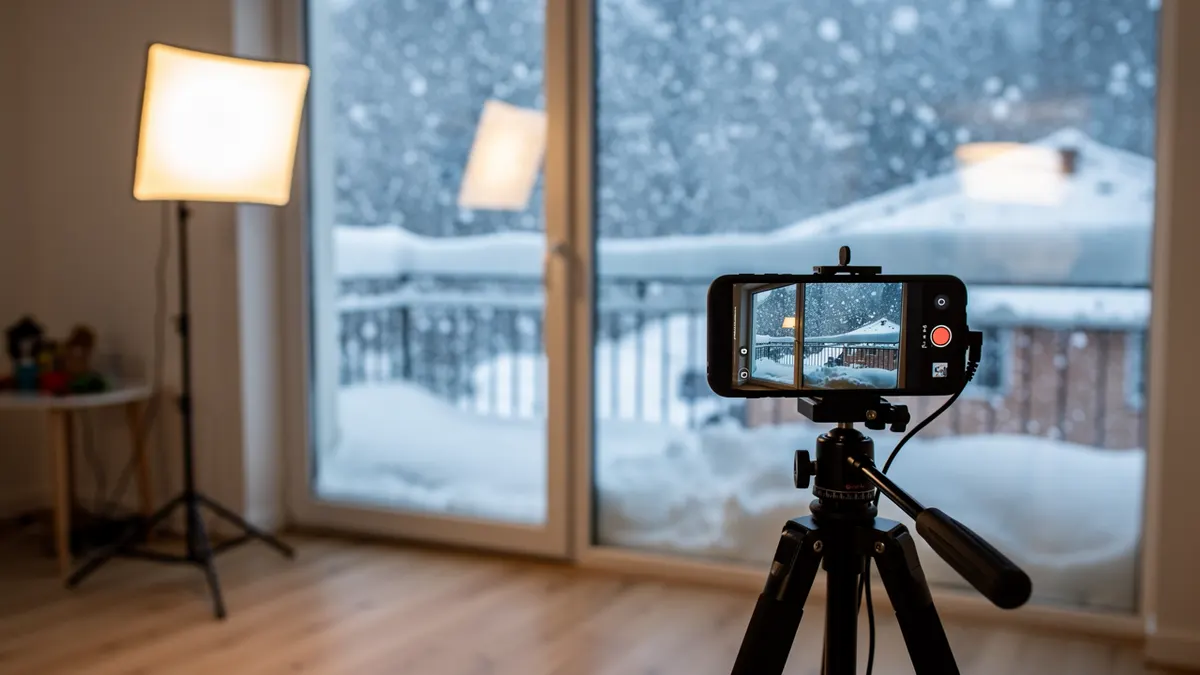
What a corner that holds contains: a clear wall, a table at the right height, a light source with adjustable temperature, a white sheet for fill, a mark on the floor.
Shoot the outdoor year in advance
Four sequences to film before the cold sets in.
The outdoor shots with no snow, usable all year except in winter.
The autumn shots, which also serve in early spring if no dated foliage appears.
The walking, running and terrace scenes, impossible to obtain from January to March.
And the generic cutaways, sky, hands, objects on a surface, which are always missing at the edit.
One budget consequence: one shooting day in October replaces three half-days painfully snatched between two storms.
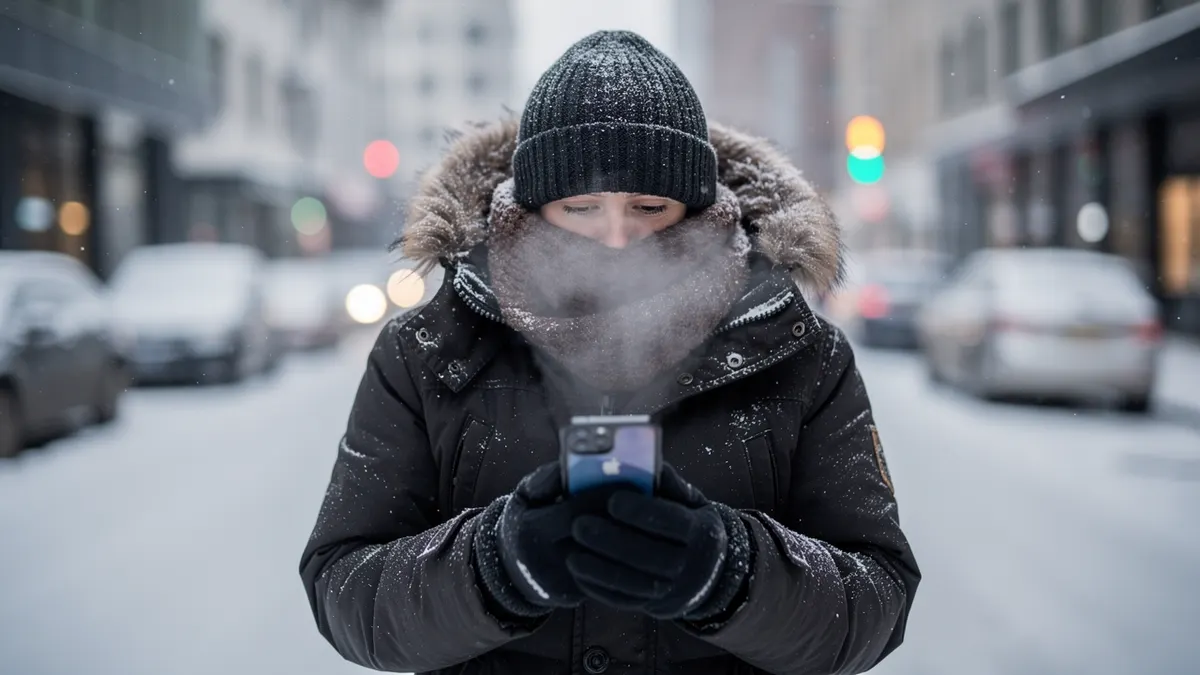
The cold breaks equipment
Five frequent failures, besides the battery.
Condensation on the lens on coming back inside: take the device out of your pocket ten minutes ahead, or leave it in a closed bag while it evens out.
Wireless microphones, which lose the link in deep cold.
Cables, which harden and break at the connector.
Touchscreens, unusable with gloves and painful without.
And wind, which makes any sound recorded without a windshield unusable.
What the cold changes on a shoot
| Problem | What happens | The counter |
|---|---|---|
| The battery | It drops in minutes | Two spares kept warm, on you |
| Lens fogging | At every in-out transition | Take the camera out ten minutes ahead |
| Wind noise | It saturates the track | A windshield and your back to the wind |
What is filmed outside, and what is filmed inside
Outside: the scene, the scale, the real use. Inside: the voice, the product close-up, and anything needing more than two takes.
What is prepared before stepping out
The shots written in order, the camera already set, and free hands. Fifteen well-prepared minutes beat an hour improvising at minus twenty.
Winter is a category, not a gap
Five subjects that exist only in this season.
Cold-weather gear, tested in real conditions rather than described.
The indoors: cooking, storage, comfort, repair, everything done when nobody goes out.
Snow clearing and maintenance, service content that is much watched.
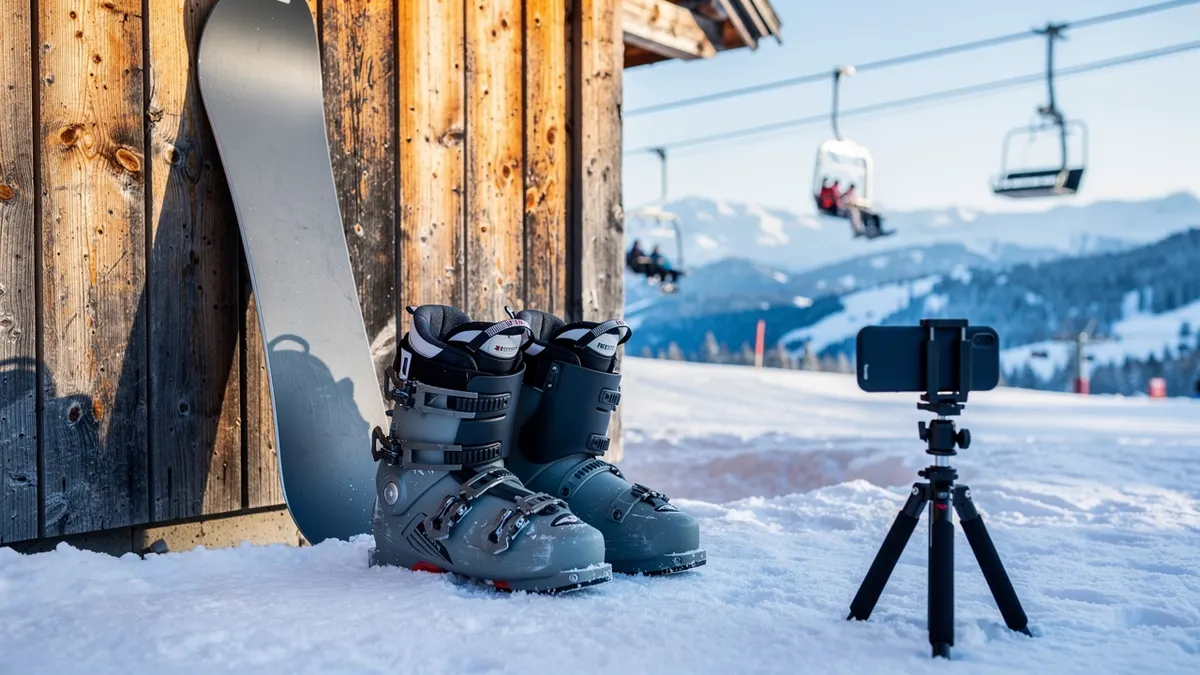
Winter sport and the equipment that goes with it.
And preparing for spring, which starts in February, well before anybody thinks about it.
One commercial note: brands look for creators able to film outdoors in winter, precisely because most do not. It is a rare and chargeable skill, provided it is mentioned in the profile.
One last marker: winter does not reduce your production, it moves your constraints. Somebody who set up their corner in September and shot their outdoor material in October works normally from January to March, while the others wait for the thaw.