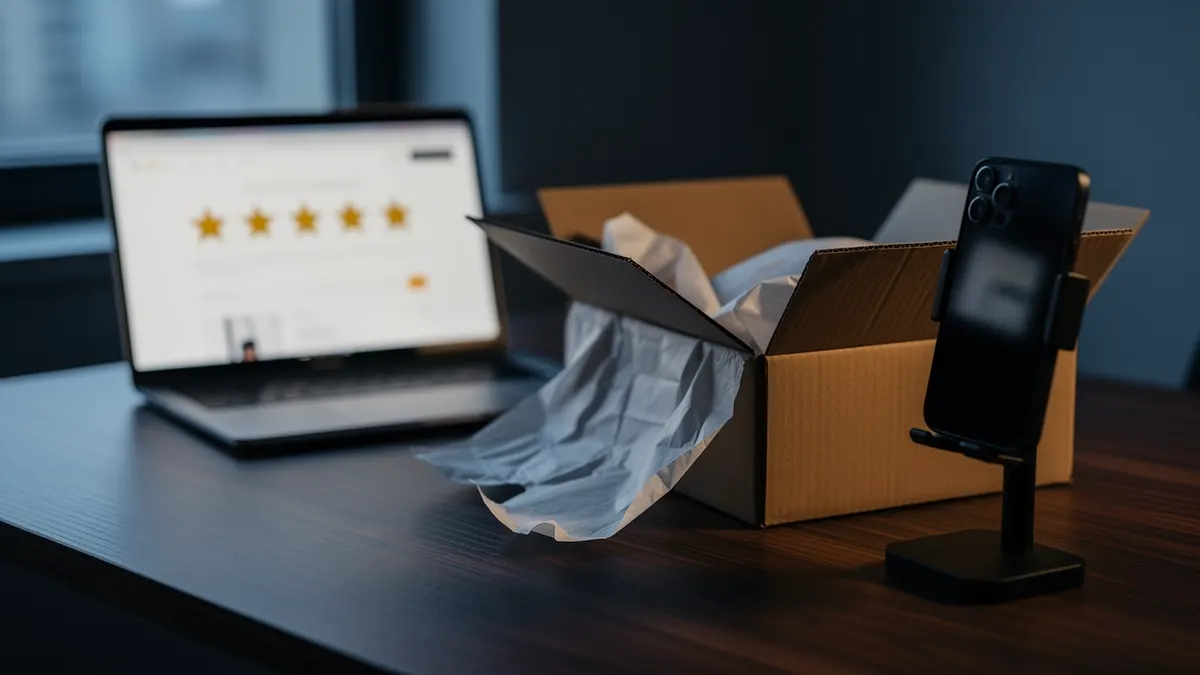
A creator says "eco-friendly" in the third second of a video, the brand approves the cut because the packaging is indeed recyclable, and the video runs. Since 6 April 2025 that sentence is one the Competition and Markets Authority can fine a brand for without going to court, and the ceiling on the fine is set by turnover, not by the media budget.
Environmental claims were already one of the categories the advertising regulator pursues most actively in the UK, and the guide to claims substantiation in creator content explains why a brand carries every sentence its creator says. This guide is about the environmental sentences specifically: which proof each one requires, what changed in 2025, and how to write a brief that gives a creator words they can use rather than a list of words they cannot.
One word, one proof: the six principles read as a test
The Green Claims Code, published by the CMA, sets out six principles, and each one converts into a question you can put to a single sentence in a script. Is the claim truthful and accurate, meaning true of the product as sold and not of a hoped-for version? Is it clear and unambiguous, so that the viewer takes from it the meaning the evidence supports and no wider one? Does it omit or hide important information, such as the fact that the benefit is limited to the packaging? If it compares, is the comparison fair and meaningful, against a like-for-like product on a stated basis? Does it consider the full life cycle of the product, or at least say which part it is talking about? And can it be substantiated, with evidence the brand holds today?
The CAP Code, which the Advertising Standards Authority applies to creator content, says the same thing in fewer rules. Rule 11.1 requires the basis of an environmental claim to be clear and warns that unqualified claims can mislead by omission. Rule 11.3 requires absolute claims to be supported by a high level of substantiation. Rule 11.4 requires claims to be based on the full life cycle unless the advertisement says otherwise, and to make the limits of that life cycle clear. A creator video fails these rules in exactly the way a printed advertisement does, with one difference: nobody proofread the sentence before it was spoken.
Five sentences creators say, and what each one costs to keep
The sentences below are the ones that recur in beauty, food, fashion and homeware briefs. Whereas a brand's copywriter would qualify each one, a creator says them the way a customer would, which is precisely why brands pay for the format and precisely why the regulator reads them as claims.
| The sentence | Principle it strains | What the brand must hold to keep it | What to say instead if it cannot |
|---|---|---|---|
| "It's eco-friendly" | Truthful, clear, life cycle | Evidence of an environmental benefit across the whole product, not one attribute | Name the attribute: "the bottle is made from recycled plastic" |
| "The packaging is recyclable" | Omission | Evidence that the packaging can be recycled in the UK's actual collection system, and which parts | "The outer box is kerbside recyclable; the pump is not" |
| "It's carbon neutral" | Substantiated, life cycle | The measured footprint, what is included, and the basis of any offsetting, all documented before the claim | "We measure our footprint and publish it here", with the page shown |
| "It's plastic-free" | Truthful, clear | The product and all its packaging, including labels, seals and tape, contain no plastic | "The packaging is plastic-free" only if that is fully true, or name the exception |
| "It's better for the planet than our old one" | Fair comparison, substantiated | A like-for-like comparison on a stated measure, with the old product's figures | "It uses 30% less packaging by weight than the previous version", if the figure is documented |
Absolute claims
"Eco-friendly", "green", "sustainable" and "kind to the planet" are absolute claims: they attribute an overall quality to the product rather than describing a feature. Rule 11.3 puts them behind a high level of substantiation, and in practice a brand rarely holds evidence that a product is good for the environment in the round. The route the Code offers is to replace the general claim with a limited one about a specific aspect, and it is the route that survives a creator saying it out loud. "The refill uses 80% less plastic than the original bottle" is a sentence a creator can say, a viewer can understand and the brand can prove.
The life cycle question
A claim about a product is read as a claim about the product's whole life unless the advertisement says otherwise. A jumper made from recycled fibres is not a sustainable jumper if it is dyed, shipped and disposed of like any other; it is a jumper whose fibre is recycled. The brief has to say which stage the claim covers, and the creator has to say it too, because the viewer cannot see the brief. "The fabric is recycled" and "this jumper is sustainable" are two different sentences with two different evidence burdens, and only the first one is usually available.
What changed on 6 April 2025
Until that date, misleading environmental claims were unfair commercial practices under regulations from 2008, and the CMA had to go to court to enforce them. The Digital Markets, Competition and Consumers Act 2024 replaced that regime. Part 4 of the Act restates the prohibition on unfair commercial practices, including misleading actions and misleading omissions, and Part 3 gives the CMA power to decide for itself that a trader has infringed consumer law and to impose a penalty by notice. Section 182 sets the cap: a fixed amount not exceeding £300,000 or, if higher, 10% of the trader's turnover.
The practical effect is that the two regulators now work at different speeds and with different tools. The ASA still handles complaints about advertisements, publishes rulings that name the brand, and can require an ad to be withdrawn. The CMA handles the underlying commercial practice, and it can now do so with a penalty rather than an undertaking. A creator video is an advertisement for the first and a commercial practice for the second. Nothing in either regime requires the brand to have intended to mislead; both are judged on the impression the sentence leaves.
The image makes claims the script never wrote
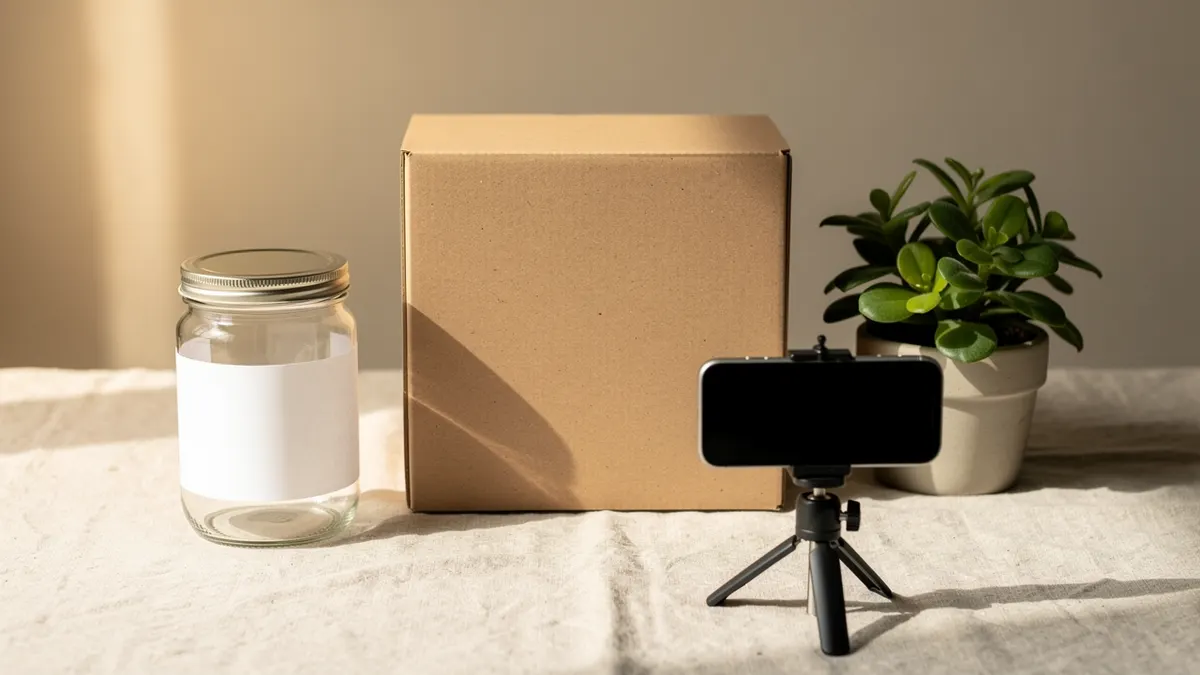
A creator unboxing a product on a wooden table, surrounded by plants, with the brand's kraft-paper packaging in shot, is making an environmental claim in pictures. Rule 11.1 is written for exactly this: a claim whose basis is not clear can mislead by omission, and imagery that suggests natural or recycled materials is a claim about materials. The Green Claims Code's third principle, that claims must not omit or hide important information, applies to what the frame implies as much as to what the voice says.
The brief should therefore treat the set as part of the script. If the packaging is kraft on the outside and plastic-lined on the inside, the shot that shows the outside and hides the lining is the shot to cut. If the brand's logo has a leaf on it, that leaf is not a licence to imply anything. The aesthetic can stay. It is being read as a claim, and it should read true.
What to hand the creator
The method for briefing any claim, a short list of sentences the creator may say with the proof behind each, is set out in the guide to claims substantiation in creator content and applies here unchanged. An environmental brief adds two things to it.
The first is the form of the proof. The creator should be able to see why "the bottle is 100% recycled plastic" is available and "the product is zero waste" is not, which means the evidence is summarised in a line a non-specialist can read, not attached as a report. The second is a public page on the brand's domain that carries the evidence, because a claim the viewer can check is a claim the regulator finds easier to accept. That page is also what to show on screen, or put in the description, when the creator makes the claim.
For videos already delivered before the brief existed, the choice is the same one the ASA would impose later: cut the sentence, or add the qualification in the caption where the viewer sees it. Re-editing a creator's video is covered in the general guide to managing the UK approval chain; the environmental sentence is simply the first thing to look for on that pass.
When the supplier's certificate is the only proof
A certificate from a packaging supplier says what it says about the material it covers. It does not make the finished product recyclable, carbon neutral or plastic-free, and it does not transfer responsibility for the sentence to the supplier. A brand relying on a supplier document should check that the document covers the product actually filmed, in the form actually sold, this year.
Where a creator's own opinion stops
Creators are often told that opinions are safe and facts are risky, and that the distinction protects them here. It does not. "I think it's more sustainable than what I used before" is a comparison, and it is read as one. Genuinely believing it is not a defence, because the regulator asks what the viewer understood, not what the speaker felt.
The workable rule for a creator is to say about the environment only what the brief provides, and to say it with the qualification the brief attaches. Where the brief provides nothing, the video has no environmental sentence in it, and that is a complete and lawful video. A creator who wants to add their own view can describe the experience of using the product, which is not a claim about the planet, rather than the effect of the product on it, which is.
Sources
- Competition and Markets Authority, Green Claims Code: making environmental claims
- Digital Markets, Competition and Consumers Act 2024, section 182, final infringement notices and monetary penalties
- Digital Markets, Competition and Consumers Act 2024, Part 4, Chapter 1, protection from unfair trading
- Competition and Markets Authority, Direct consumer enforcement guidance (CMA200)
- CAP Code, section 11, environmental claims
- CAP Code, section 3, misleading advertising
Checked on 19 September 2026. This guide is not legal advice. Where this guide and the official source disagree, the official source prevails.