No audience is needed to get paid. What replaces followers, how to build proof from scratch, and how to land the first orders.
What the brand actually buys
A file, not an audience. It runs it on its own accounts or in advertising, with its own budget. Your follower count therefore has no effect on the video's reach, and that is why a quiet account can charge the same price as a well-known one.
What replaces followers
Seven proofs, by order of importance.
Three videos from the same category.
Clean sound on every example.
An announced turnaround, met.
A displayed price, rights included.
A stated language and country.
One precise client review.
And a fast reply to the first message.
The gear you actually need
Six items, not one more.
A recent phone, even two years old.
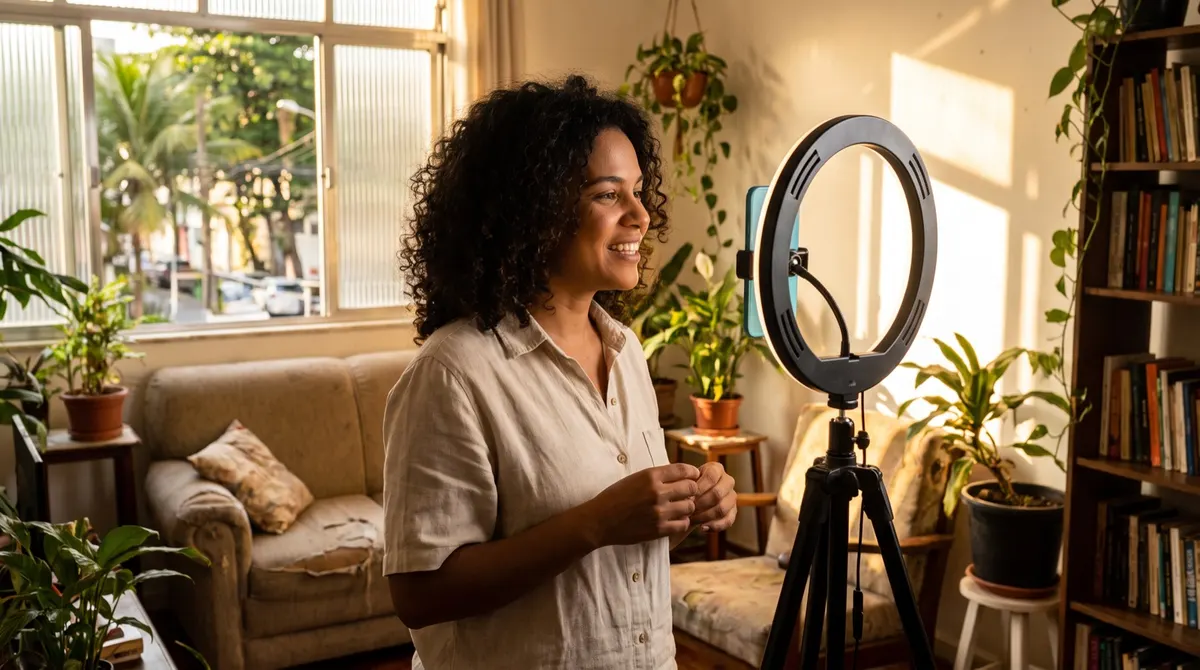
A window.
A simple lavalier microphone.
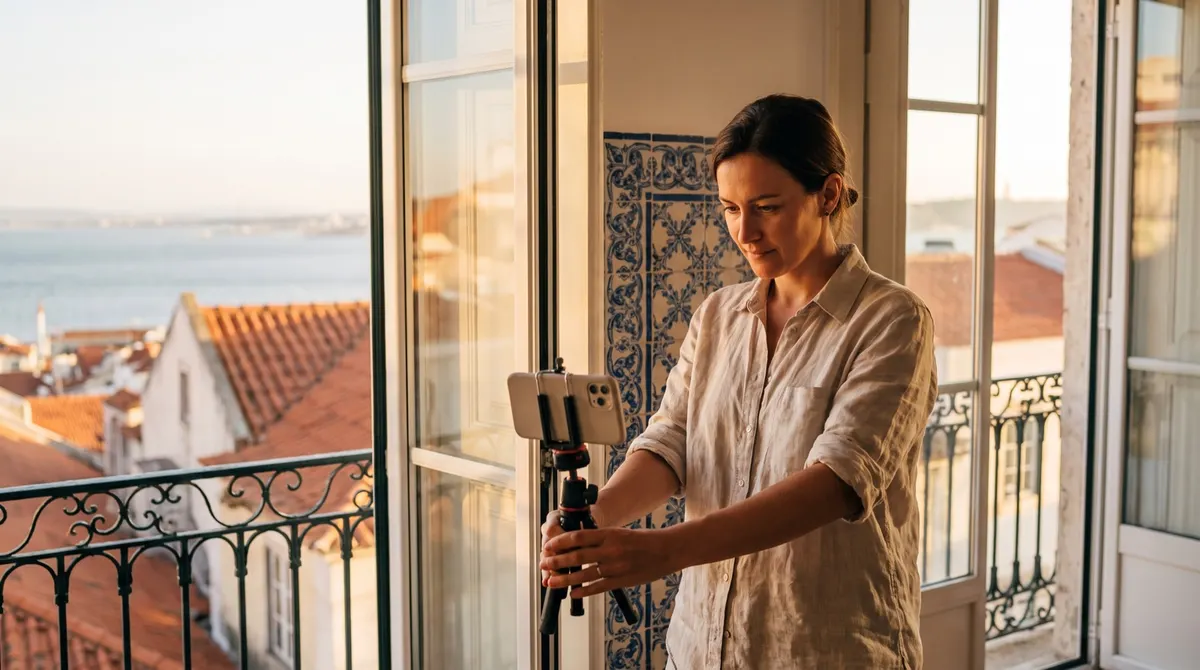
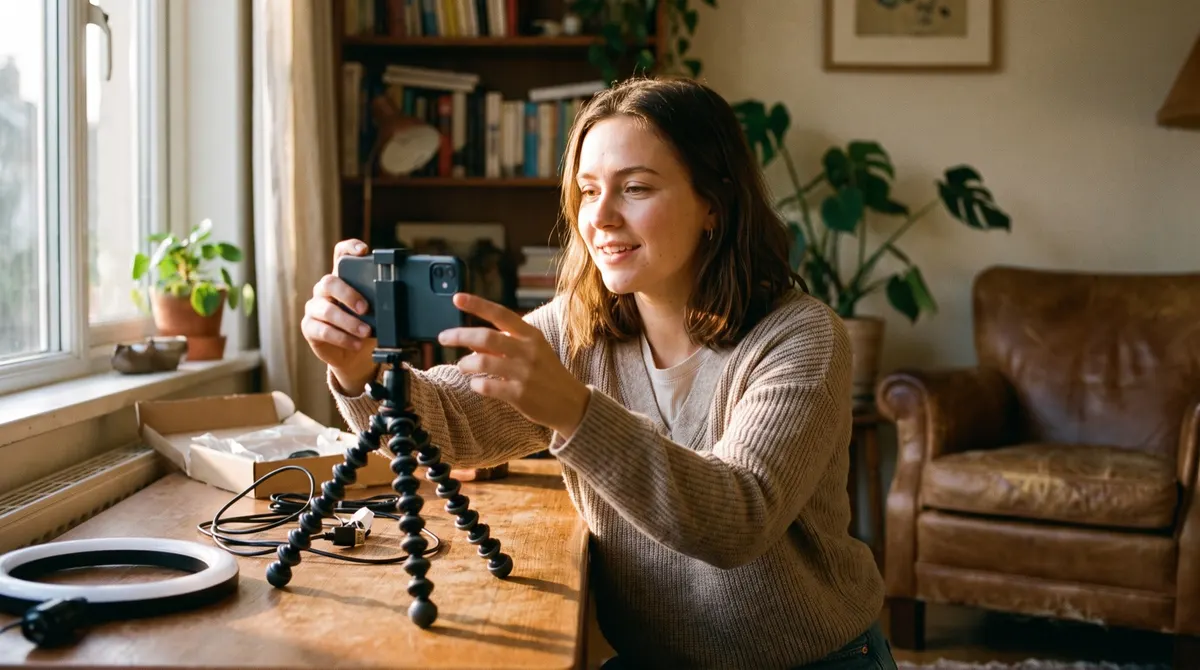
A tripod.
Free editing software.
And three products you already use.
The first three videos to shoot
A demonstration, a nuanced verdict, an answer to an objection. Three different products, the same week, in the same setting. That trio proves the essentials, and nobody will ask whether you were paid to film them.
What each video must prove
Six expected proofs.
That you can frame a shot.
That your sound is audible.
That you speak naturally.
That you show a gesture, not a promise.
That you can hold a short length.
And that you know how to close.
How to build a portfolio with no client
Seven rules.
Six videos maximum.
The best one first.
One dominant category.
Sound on everywhere.
A stated language.
An announced turnaround.
And no video older than a year at the top.
The three skills that get you called back
Six behaviours, more decisive than technique.
Replying within the day.
Asking two precise questions about the brief.
Delivering before the announced date.
Supplying one format more than asked.
Flagging a problem before it is discovered.
And suggesting an idea for next time.
How to price your first videos
Six markers.
Count the real time, filming and editing.
Add the exchange time.
Look at the prices shown in your category.
Invoice the rights separately.
Do not go below your break-even point.
And raise them after five delivered orders.
How to land the first brands
Seven channels, from the fastest to the slowest.
Signing up on a marketplace.
Answering published listings.
Writing to brands you are a customer of.
Spotting those already running ads.
Contacting recent shops in your category.
Joining specialised communities.
And answering any brand that writes to you.
What to put in the first message
Six elements, in six lines.
The specific product name.
A factual observation.
A concrete angle proposed.
A link to two examples.
A starting price and a turnaround.
And one single question at the end.
How to answer a brand asking for your statistics
Six possible replies, with no conflict.
Explain that the brand will distribute the video, not you.
Offer to send three examples instead.
Give the turnaround and the format you deliver.
Recall that the price covers production, not an audience.
Offer a short first format as a test.
And accept that some brands are looking for something else.
Getting paid without getting caught out
Six simple rules.
Never film without a written order.
Ask a new client for a deposit.
Write down the payment date.
Deliver in a private space.
Go through a platform that frames the payment.
And refuse payment conditioned on the video running.
The mistakes that cost future orders
Seven frequent errors.
Underselling yourself and staying at that rate.
Publishing a catch-all portfolio.
Ignoring an instruction in the brief.
Delivering without the requested formats.
Answering three days later.
Accepting unlimited revisions.
And disappearing after delivery.
What not to do to make up for having no audience
Six shortcuts to avoid.
Buying followers.
Inventing past collaborations.
Posting a video as if it had been commissioned.
Copying another creator's portfolio.
Promising views to a brand.
And working for free to build up paid-looking examples.
Your plan for the first week
Seven actions.
Day one, choose three products at home.
Day two, film three videos.
Day three, edit and export.
Day four, create the profile and three packages.
Day five, write to ten brands.
Day six, write to ten more.
And day seven, prepare the invoice template.
How to choose the three products to film
Seven selection criteria.
A product you actually use.
A product that shows in one gesture.
A product with clean packaging.
A product in a category that is in demand.
A product that fits in the hand.
A product that has not expired.
And a product whose brand still exists.
How to set up your space once and for all
Six permanent settings.
A cleared corner of a room.
A neutral table or worktop.
A window on the left or the right.
A light cloth to soften the light.
A tripod left in place.
And an accessible power socket.
What to write in your introduction
Six lines, not one more.
The category, as the first word.
The language and the country.
The kinds of format you deliver.
Your usual turnaround.
A starting price.
And what you do not do.
How to answer a first order
Seven reflexes.
Confirm receipt within the day.
Ask two precise questions about the brief.
Confirm the delivery date.
Recall the number of revisions included.
Ask for the list of forbidden lines.
Confirm the rights granted.
And say when you start filming.
What to deliver with the video
Six elements, in the same message.
The link to the files, with no short expiry.
The list of formats delivered.
The length of each version.
A reminder of the rights granted.
The deadline for a revision.
And a suggestion for what comes next.
How to handle a polite refusal
Six useful replies.
Thank them in one line.
Ask what was missing, without insisting.
Offer to get back in touch in three months.
Note the brand in your table.
Send a new example later.
And move to the next brand the same day.
What to back up after every shoot
Six files, in the same place.
The raw takes, unedited.
The exported final edit.
The versions with no burned-in text.
The subtitle file.
The accepted brief.
And the matching invoice.
The questions beginners ask most
Seven questions and their short answer.
Do you need a face on camera, no.
Do you need a public account, no.
Do you have to pay to sign up, not on a free marketplace.
Do you need a legal status to invoice, yes in most countries.
Do you have to buy the products, no, except for your own demo videos.
Do you need a computer, no, a phone is enough.
And do you need several languages, no, one is enough.
What to do after the first order
Six actions, in order.
Ask for a precise review.
Add the video to the portfolio, if the rights allow.
Note the real time spent.
Write to the client eight days later.
Suggest an idea for the next step.
And raise the price slightly on the third order.
What the brand looks at instead of an audience
| What it checks | How to prove it |
|---|---|
| Consistent quality | Three videos at the same level |
| Voice clarity | One unedited take |
| Meeting deadlines | A stated date, met |
What is built in two weeks
Three videos on products you own, in three different formats, shot with the same care for light and sound. That is the minimum that triggers a first order.
What is useless at this stage
Buying followers, posting daily, or multiplying accounts. The brand buys a usable file, and a personal account's reach does not enter its calculation.
What the platform brings
On UGC MATCH, joining is free and there is no subscription: no follower count is asked for, you publish your own packages, and you are visible by category, language and country. The brand pays at ordering, the funds are not released straight away, and payment goes out on approval. The platform retains 10% of the price on the creator side, who therefore keeps 90%, and charges the brand a 6% service fee, with a minimum of 1.50 EUR.
One last marker: nobody will ask for your follower count if your first three videos answer before the question is asked.
Sources
- Portal do Empreendedor (MEI), Brazilian government
- Receita Federal, Brazilian tax authority
- Simples Nacional, official portal
- Urssaf, official auto-entrepreneur portal
- Service Public, how to become a micro-entrepreneur
- Service Public, crossing the micro-entrepreneur turnover thresholds
Checked on 26 August 2026. Thresholds and rates change: where this guide and the official source disagree, the official source is right.