
Buying the copyright in a video does not give you the right to use the face that appears in it. That is the verdict, and it is the costliest confusion on the French market: two distinct rights, two possible holders, and one contract that usually assigns only one of them.
Two rights that do not protect the same thing
Copyright protects the work, meaning the video itself, its framing, its editing, its script. It belongs to whoever created it, so to the creator who filmed.
Image rights, by contrast, protect the person, meaning the face, the silhouette, the voice. They belong to whoever appears, and they flow from the right to privacy set out in article 9 of the French Civil Code.
In most UGC cases the same person holds both, and the distinction looks theoretical. It stops being theoretical the moment a second person enters the frame.
The case that reveals the difference
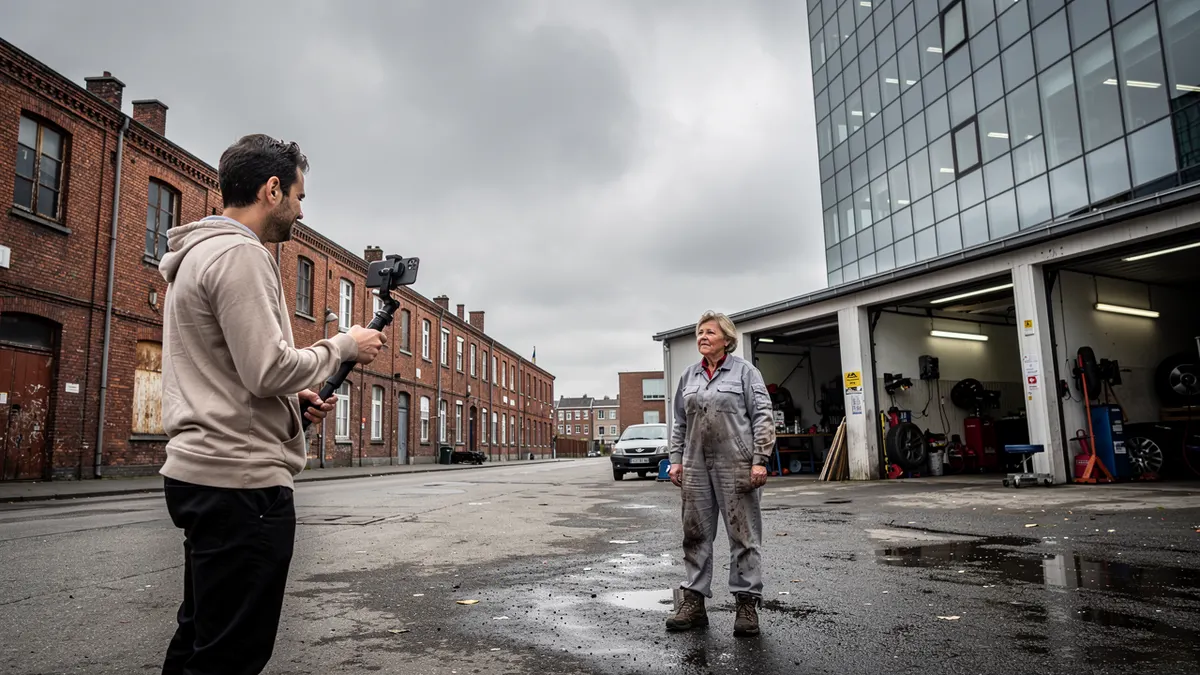
A creator films a video in which her partner appears for three seconds. She assigns her copyright to the brand, which runs the video as advertising for six months.
The partner signed nothing. He is not the author, so he assigns no copyright, but his image is exploited commercially without his authorisation. The brand is exposed, the creator too, and neither thought about it during the shoot.
The same problem arises with a child crossing the frame, a colleague in an office, a customer in a shop. Image rights are not assigned by accident, and they are never presumed.
What the contract has to say, separately
| What is assigned | Who holds it | What the contract must name |
|---|---|---|
| Copyright in the video | The creator who filmed | The media, the duration, the territory |
| The creator's image rights | The creator themselves | The same three items, separately |
| A third party's image rights | The person filmed | A separate written authorisation |
The third line is the one missing everywhere. A standard UGC contract assigns the first two and ignores the third, because it is drafted assuming the creator films alone.
Why a blanket assignment is not enough
A clause saying "the creator assigns all their rights" covers what they hold, and nothing more. It cannot transfer the image rights of someone who is not a party to the contract, for the same reason you cannot sell your neighbour's car.
Under French law, authorisation to exploit a person's image has to be specific: it must state the use, the duration and the medium. A general, perpetual authorisation is fragile, and judges read it narrowly, in favour of the person depicted.
The two rights do not last the same time
Copyright outlives its author and expires seventy years after their death. Image rights are assessed during the person's lifetime and are negotiated for a term the contract sets, most often a few months.
That asymmetry has a practical consequence few brands anticipate. A copyright assignment granted for three years remains valid for three years, but if the image authorisation was given for only six months, the video becomes unusable in the seventh month while the brand still believes it holds its rights. The contract carries two clocks, and the shorter one governs.
Good practice is to align the two durations explicitly, or failing that to treat the shorter one as the real shelf life of the video, and to note it somewhere the team that reruns it will read.
What the brand actually risks
Exploiting a person's image without authorisation gives rise to compensation under article 9 of the Civil Code, regardless of any proven economic loss. A judge may also order the video taken down, which mid-campaign costs more than the damages.
The risk is larger than it looks because it does not expire at the pace of the campaign. A video pulled from advertising but left on a product page or in a newsletter still constitutes exploitation, and the starting point of the limitation period moves with it.
The usual objection
"They agreed, they knew, they smiled at the camera." Tacit consent is consent nobody can prove two years later, once the relationship has changed. Written authorisation is not there to bind a willing person, it is there to establish that they were willing.
Two lines are enough: the name, the authorised use, the duration, the signature. A timestamped written message beats nothing, a form beats a message. What matters is that something dated exists outside the memory of the two people involved.
What changes when the video becomes an advertisement
Image rights travel badly from organic to paid. Someone who agrees to appear in a video posted on an account has not necessarily agreed that their face becomes an advertising asset with a media budget behind it.
That is why an authorisation has to name the type of use and not only the platform. "Instagram" does not say whether the video will be boosted. "Organic posting and paid advertising on Instagram and Meta" does.
The same reasoning applies to moving from a platform to a merchant site. Someone who agrees to appear in a social video has not agreed that their face illustrates a product page for two years, nor that it becomes an in-store poster. Every medium adds a use, and every added use needs either to have been foreseen or to be authorised again.
That is why a well written image authorisation looks more like a list than a sentence. Three lines enumerating the media cost less than a dispute, and above all they avoid the most common situation, the one where nobody remembers what was granted.
Sources
- Civil Code, article 9, respect for private life
- Intellectual Property Code, copyright
- Service Public, image rights and privacy
Checked on 6 September 2026. This guide is not legal advice. Where this guide and the official source disagree, the source prevails.