Almost every Italian brand already has good photographs. The care given to the image of the object has long been part of the trade there, and a product page empty of visuals has become rare.
The question is therefore not choosing between photo and video. It is knowing what your photo library, however good, will never say.
A photo shows an object, a video shows a behaviour
Look at the categories that built the country's reputation: clothing, footwear, furniture, food.
They have one thing in common. What decides the purchase is not the look of the motionless object, it is how it behaves. The fall of a fabric as the person turns. The crease of a leather not yet broken in. A worktop being wiped. A sauce coating instead of running.
None of that can be photographed. It happens over time, and time is what video adds.
What photography still does better
It remains unbeatable on fidelity. The exact colour, the finish, the proportion, the detail of a joint: a well-lit photo renders them better than a compressed video watched on a phone.
It is also the only one that holds where video does not go: a catalogue thumbnail, a comparison site, a marketplace, a printed catalogue.
And it ages slowly. A photo done properly serves for years, where a video follows the codes of the moment.
What creator video adds that neither replaces
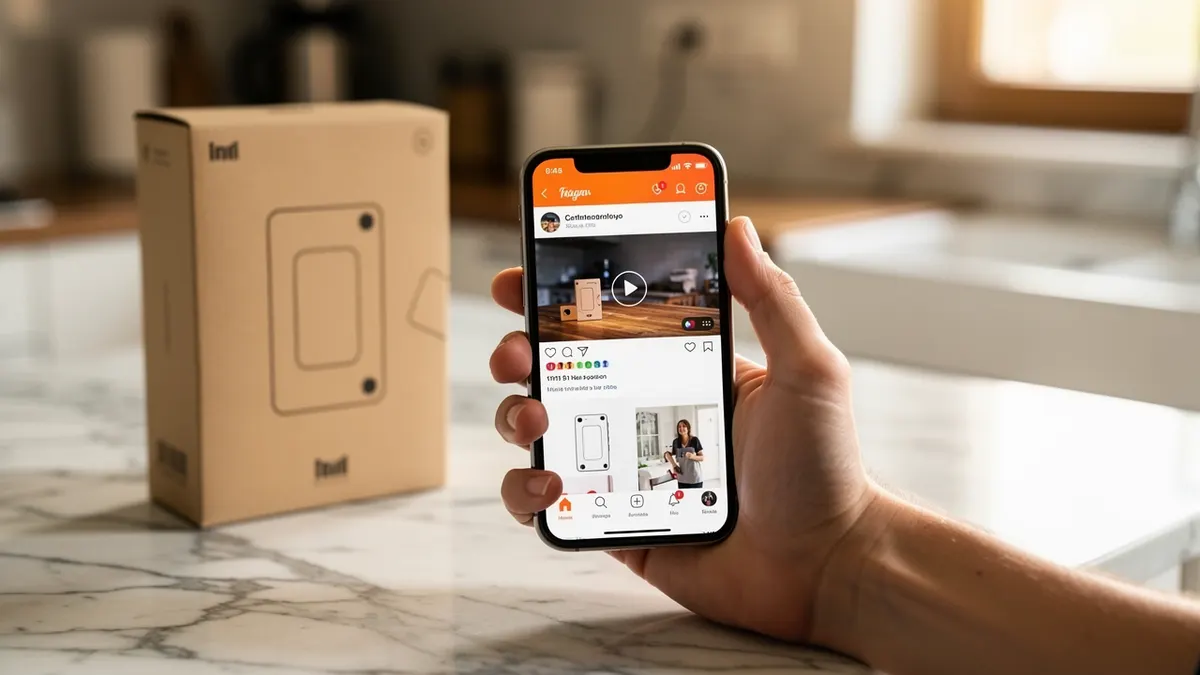
A studio produces a perfect image of the product. A creator produces an ordinary image of the product's life: a real kitchen, a real flat, imperfect light.
It is precisely that imperfection that makes the content believable, and it is what an impeccable catalogue lacks when it comes to convincing someone who is hesitating.
It also brings the voice: someone explaining why they chose it, what surprised them, what they wish they had known beforehand. No photo carries that.
How to split a budget that is not unlimited
Photography covers identity and the catalogue: what must be accurate, clean and durable.
Video covers the moments of decision: the demonstration, the comparison, the answer to an objection, the unboxing. Those are the places where someone is hesitating, and where one more second of attention changes the outcome.
In practice, a brand that already has good photos and no video gains more from shooting three usage videos than from redoing its photo series once again.
The common mistake
Having a video shot that imitates a photo: product on a neutral background, slow rotation, music. It costs the price of a video and adds nothing to a still image.
The reverse exists too: asking a creator for catalogue shots, when what you buy from them is precisely the real context a studio cannot manufacture.
What each one settles
| Need on the page | Photo | Video |
|---|---|---|
| Exact colour | Yes | Approximate if the light shifts |
| Mechanism, opening | No | Yes |
| Size comparison | Yes | Possible |
What one session produces
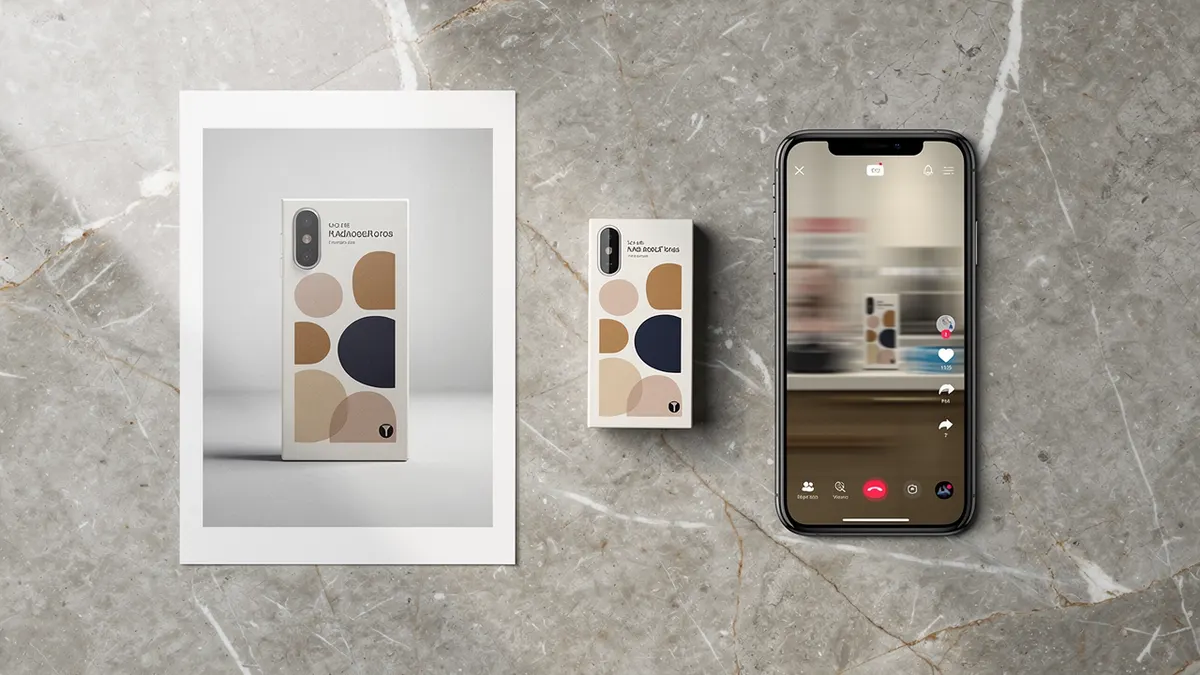
The same lighting setup gives both: film first, photograph afterwards, without moving anything.
What decides in favour of video
A product that unfolds, assembles, pours or makes a recognisable sound.
What to ask for so both serve
From the photographer, files in several crops, vertical included, because the catalogue and the phone do not have the same shape.
From the creator, the original file before compression, and a version without burnt-in text so it can be reused in another language. Two simple requests, almost never made, and they double the life of what you buy.