Equipment, home office, travel and the question of products received, which most creators handle badly.
Equipment is the obvious category
Five points to know.
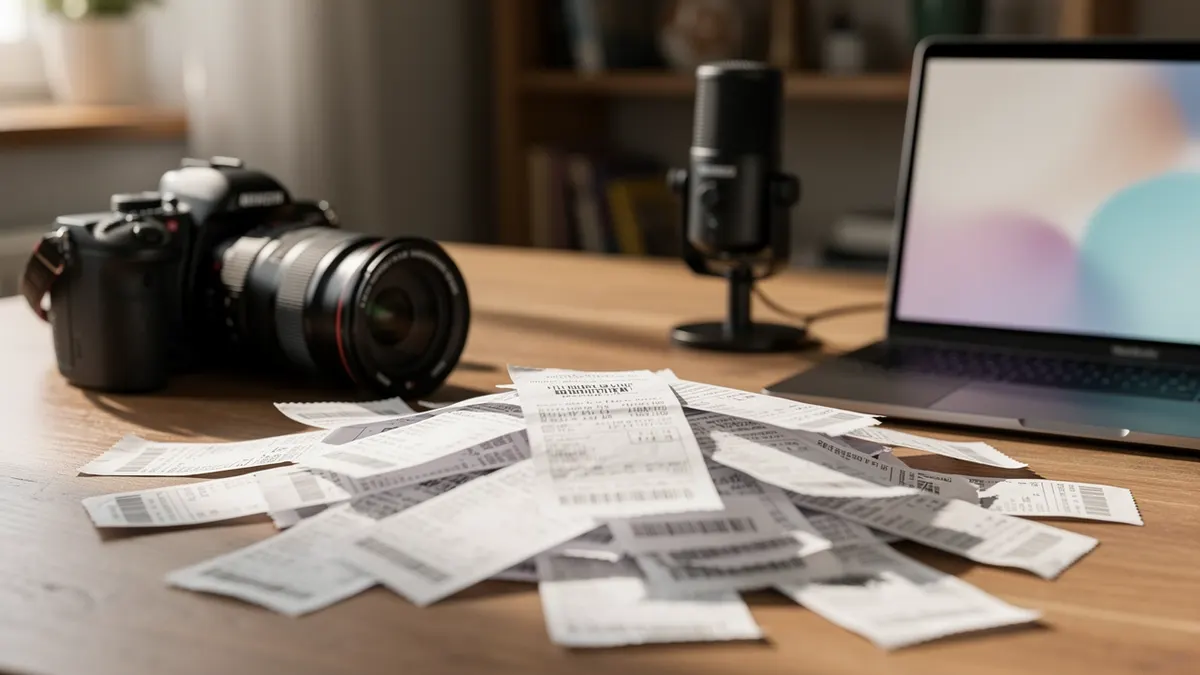
Equipment bought for the activity counts as an expense, but a durable asset is not always treated like a current purchase: it may fall under depreciation over several years.
The personal share is removed, the point dealt with above.
Low-value accessories, memory cards, cables, small lights, are generally treated more simply than the main equipment.
Repairs and maintenance follow the same regime as the asset concerned.
And production software and subscriptions are recurring costs, provided they are paid from the professional account.
The home office is deductible and misunderstood
Four conditions to respect.
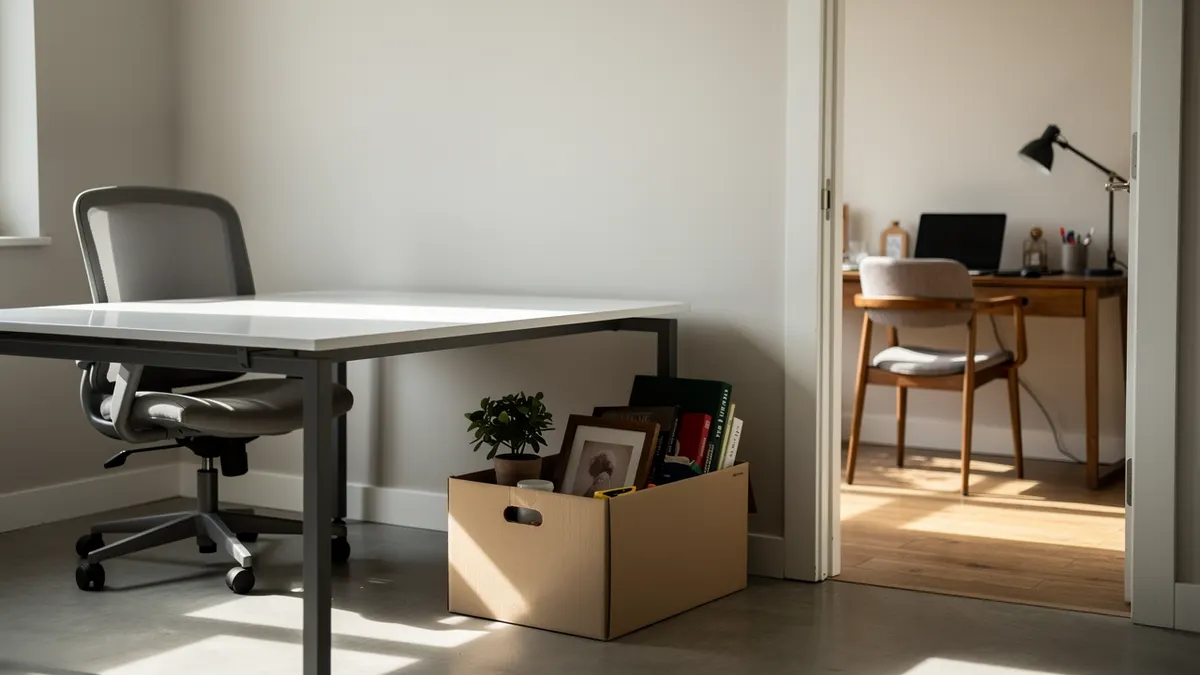
The space has to serve the activity, and the proportion is calculated on an objective basis, most often the floor area.
The costs concerned are proportional: rent or interest, electricity, heating, internet access.
The calculation is documented once, with a plan and figures, then reused each year.
And the exact rule depends on your status and your situation, which is checked with an accountant.
One frequent mistake: deducting a whole room when it also serves as a bedroom or a living room. The proportion has to reflect reality, because that is what will be checked.
Travel and vehicle require a logbook
Five practical rules.
The logbook is kept at the moment of the journey: date, destination, purpose, distance.
A trip to a shoot, a product collection, a client meeting is professional; a personal trip is not, even if it passes by.
Public transport is justified by the ticket kept, with the purpose noted on it.
Meal costs follow particular rules and are not deducted like an ordinary purchase.
And long-distance travel supposes keeping all the supporting documents, accommodation included.
Free products are income before they are an expense
Four points often ignored.
A product received in exchange for a service has a value, and that value counts as income of the activity.
That same value may then constitute an expense, depending on the use made of it, but both operations exist.
That mechanism surprises above all when the product is expensive: an item received can create taxable income with no money having moved.
And the exact treatment depends on your situation, which makes a check with an accountant necessary before accepting regular exchanges.
What is deductible, and on what condition
| Expense | Deductible | The condition |
|---|---|---|
| Shooting gear | Yes, often depreciated | A demonstrable professional use |
| A share of housing | Sometimes | An identifiable space and a calculation rule |
| Travel | Yes | A receipt and a business purpose |
| Meals | Rarely in full | Strict rules and a ceiling |
What decides in an audit
Proof of use, not the invoice. A computer invoiced to the business but used by the family gets reclassified; a dated shoot log is worth more than an argument.
What is confirmed with an accountant
Depreciation rates, the method for calculating the home share and the applicable ceilings. These rules change and a forum binds no one.
The practical version
Six habits, applicable from the first month.
A separate bank account for the whole activity.
An expenses table kept up each week, with the professional share stated.
Supporting documents kept in digital form, named by date and by nature.
The travel logbook filled in the same day.
A written note of the home office calculation.
And a yearly appointment with an accountant, rather than an online search at declaration time.
One last marker: what costs dearly in this category is not the tax, it is the deduction lost for want of proof. An undocumented professional expense is a personal expense, whatever the reality of its use.