How sportswear and fitness fashion brands in Brazil use UGC, the try-on and workout formats.
Why fitness fashion is a category apart in Brazil
Seven reasons specific to this market.
Sportswear is worn outside sport, which multiplies the filmable contexts.
Body types are very diverse, and one demonstration informs nobody.
The fabric is the central argument, and it can only be judged in movement.
The market is huge and highly competitive, which makes proof of use decisive.
The climate raises sweat and drying questions absent elsewhere.
Online buying dominates, with size fear as the main barrier.
And renewal is frequent, which creates continuous demand for content.
The formats that show cut and movement
Seven formats, from the most useful to the most decorative.
The try-on in movement, walking, bending, stretching, with no cut.
The opacity test, dealt with above.
The comparison of two sizes on the same body, a rare and much watched format.
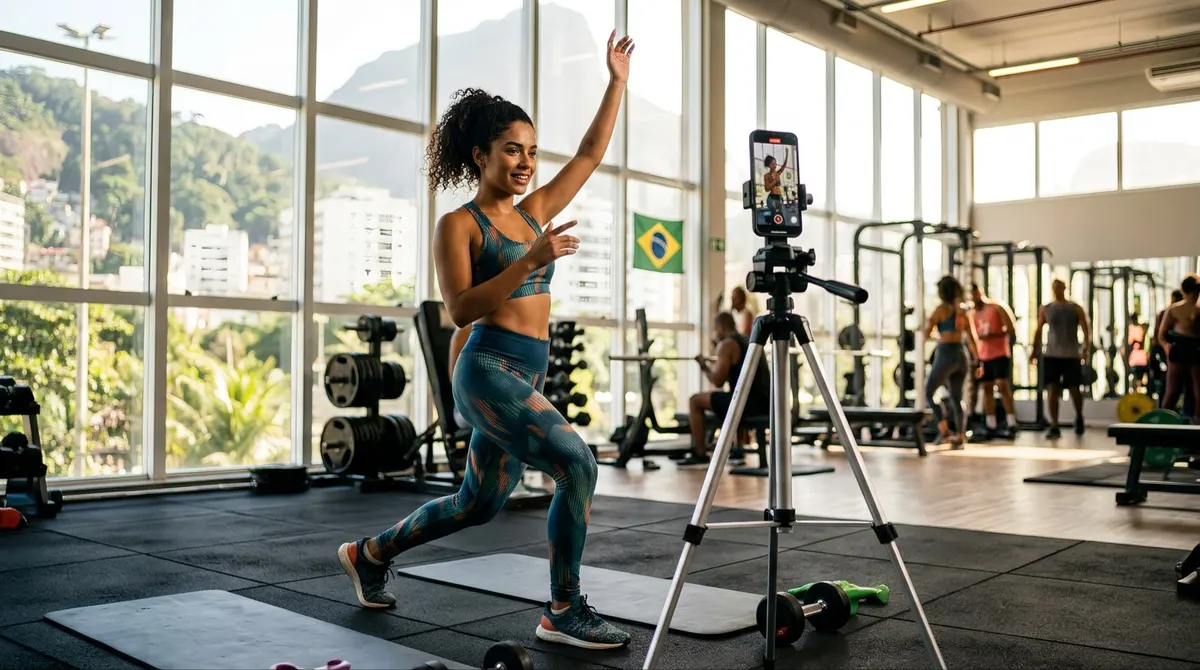
The complete workout, filmed in a wide shot and in one take.
The test after washing, filmed at the tenth wash, which nobody produces.
Wearing it outside sport, which matches the real use.
And the unboxing, useful only if it shows the thickness of the fabric in the hand.
How to show fabric and cut on screen
Seven shooting settings.
Filming in full light, since weak light hides precisely what you want to show.
Filming from the front, from behind and in profile, since the cut changes completely with the angle.
Showing the high waist seated, a position where many models fail.
Coming in to thirty centimetres for texture and stitching.
Stretching the fabric in front of the lens, a simple and much requested gesture.
Filming the waistband after an hour of wear, to show whether it slips.
And stating your usual size and the one ordered, without which the video helps nobody.
The four tests the audience expects
Six concrete checks to build into the series.
Opacity when bending, the most awaited of all.
Support during a fast movement, to be filmed in a full shot.
Behaviour with sweat, visible after real effort.
Drying, filmed the next morning, information much sought here.
Pilling after several washes, which decides the repeat purchase.
And colour retention, compared with the new item where possible.
Filming a workout without a studio
Seven solutions for shooting the movement part where you already train.
Filming outdoors early in the morning, when the light is clear and the place empty.
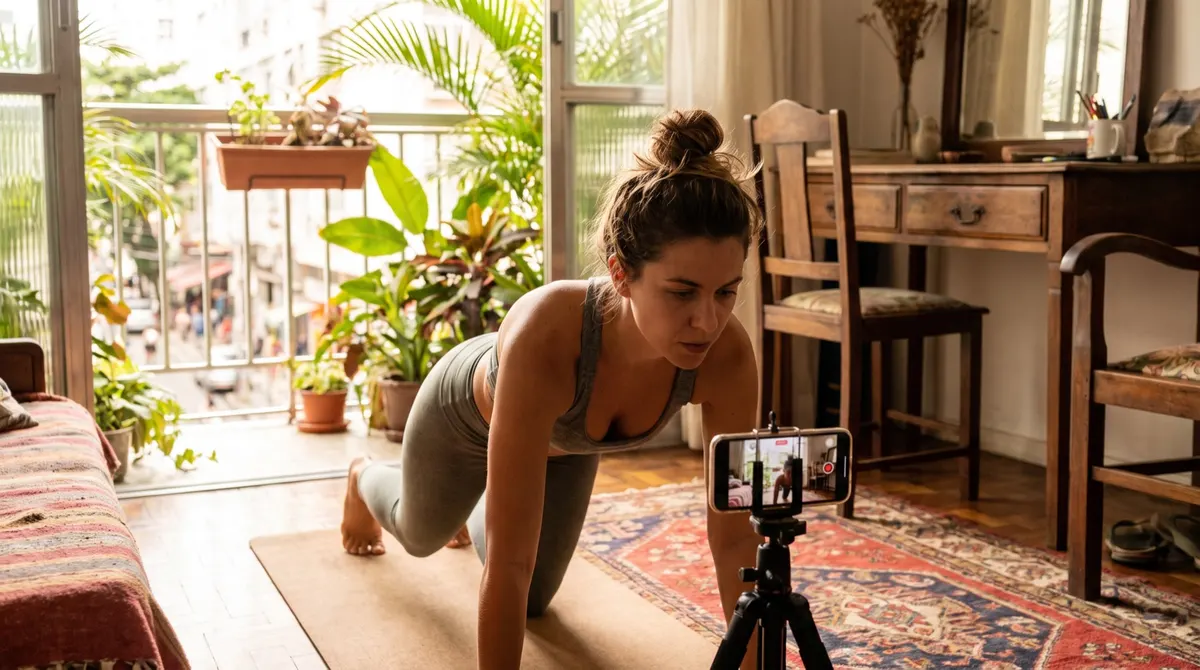
Putting the phone on the ground for low movements, which gives an angle nobody uses.
Choosing a plain wall as background, since the gym is often too cluttered.
Asking permission before filming in a gym, a matter of courtesy and often of rules.
Filming only three repetitions, since the fourth adds nothing on screen.
Keeping the sound of the effort, very effective, and cutting the venue's music, which raises a rights problem.
And planning a towel and a second outfit, because sweat changes the look of the fabric between takes.
Where the content runs and how the licence works
Six uses, with their effect on the contract.
The product page, the first use requested and the most durable.
Paid advertising, invoiced separately with a written duration.
Marketplaces, where video strongly reduces size returns.
Retailers and partner online shops, to be included explicitly if intended.
In-store screens, often forgotten in the contract.
And reposting by the brand on its own accounts, distinct from paid distribution.
How to brief and respect the bodies filmed
Seven rules that protect everybody and improve the result.
Ordering the series from different body types, without making it a marketing argument.
Letting each creator choose their angles and their outfit for the shoot.
Never asking for the silhouette to be retouched, which destroys credibility and trust.
Banning any comment about the body in the script, including positive ones.
Describing the garment, never the person wearing it.
Providing a written right of withdrawal for the creator, particularly in this category.
And avoiding any claim of bodily transformation, wording to be checked with a lawyer before the shoot.
What is filmed on technical sportswear
| Shot | What it proves | The condition |
|---|---|---|
| Movement under effort | How the fabric really holds | Film during the exercise, not after |
| The material close-up | Visible breathability | Raking light |
| After the session | Behaviour with sweat | The same garment, not changed |
What sets this type of video apart
The effort. Sportswear filmed standing still says nothing, because everything you buy plays out in movement: the seam that holds, the fabric that follows, the cut that does not ride up.
What is never promised
A performance, a recovery, a thermal regulation or an effect on pain. A technical specification is read on the label and confirmed with the manufacturer, never inferred from one session.
Building a series that lasts
Six steps for turning one shipment into a programme.
Keeping the same setting and light across the whole series, so the pieces can be compared.
Filming each piece on two people, which doubles the value of the same shipment.
Planning the tenth-wash follow-up from the start, which is the rare content.
Documenting the size ordered and the useful measurements, with the person's agreement.
Delivering the unedited rushes, often reused when the collection is renewed.
And offering a follow-up next season, which brands in this category buy willingly.
One last marker: in Brazil the fitness fashion video that sells is not the one where the garment looks perfect, it is the one that answers the question the buyer is asking silently. Three seconds of honest bending are worth more than a minute of beautiful shots, and it is also the only content a brand cannot produce itself without losing all credibility.