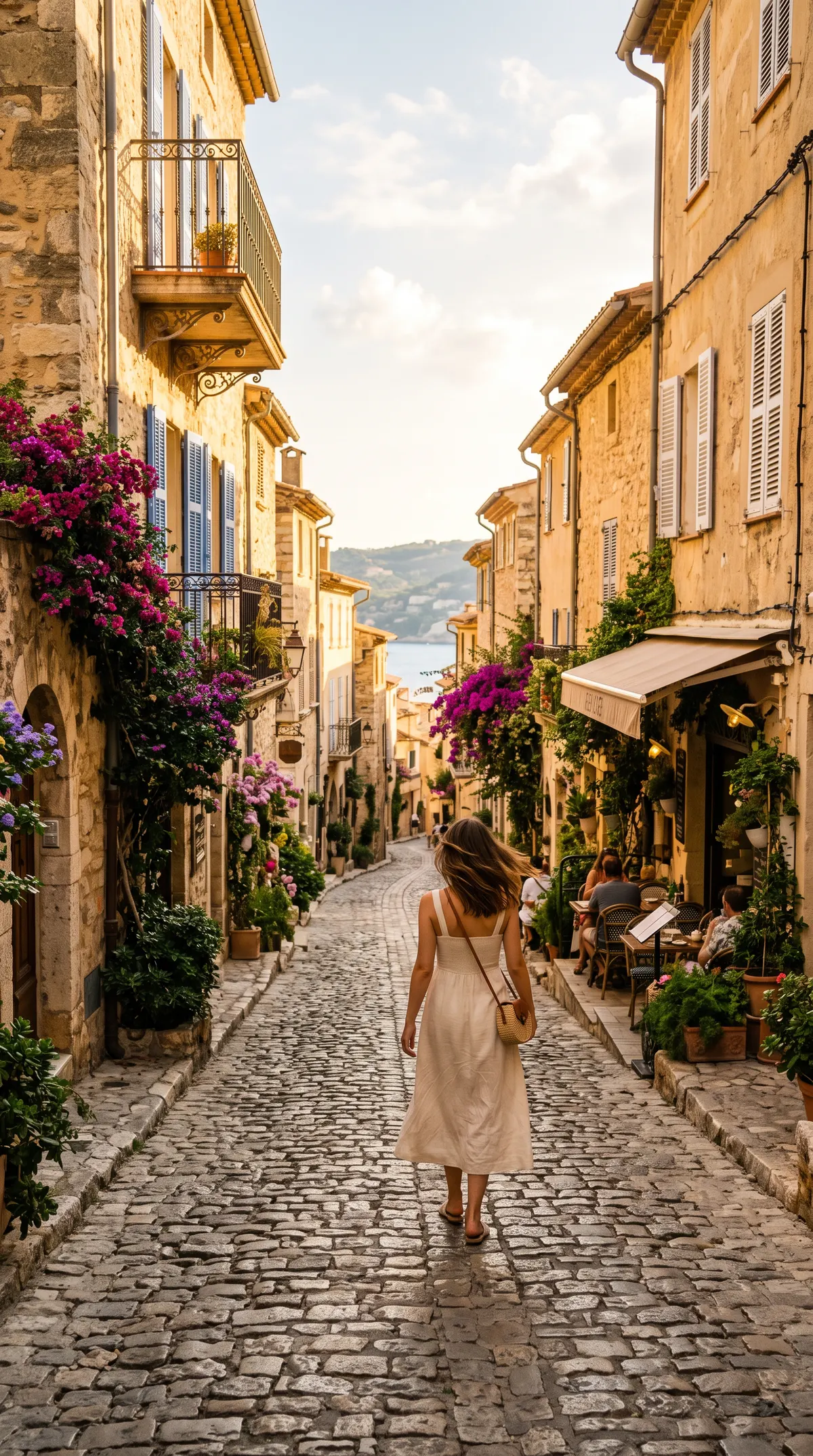

Cascais has two customer bases that look similar from the outside and behave nothing alike. One is passing through. The other lives here, shops here every week, and often does not speak Portuguese.
Most of the content produced by businesses in this town is made for the first group, which is why so many of them describe the same problem every January.
A resident buys fifty times
The arithmetic is not subtle. A visitor might spend well and will do it once. A resident with a dog, a car, a gym and children spends a smaller amount every week for years.
Content aimed at visitors is built around discovery: the view, the atmosphere, the reason to come. Content aimed at residents is built around convenience and trust: opening hours, whether you can book, whether the person there speaks their language, whether the thing they need is in stock today.
Those two videos have almost nothing in common, and a business that only makes the first one is invisible to the customers who would have made its year.
Which language actually decides
The person who decides is not always the person who speaks
In a foreign resident household, the buying decision often sits with the partner who has the least Portuguese, because they are the one doing the research online in the evening. That is who your content reaches, and it is why English content converts here at rates that surprise businesses used to thinking of English as a tourist language.
Subtitles are not the same as speaking
A video in Portuguese with English subtitles says the business is Portuguese and tolerates you. A video in English says the business expects you. For a service where someone has to explain a problem, that difference decides who they call.
The reverse is also true, which is why the answer is not simply to switch.
Portuguese still does the heaviest lifting
The local Portuguese customer base is the one that keeps this town open in February, and a business that becomes visibly English only loses it slowly and does not notice until it matters.
The workable answer is both, produced from one shoot, with the same person on camera saying it twice. That costs an extra ten minutes and it is the single most useful production habit in this market.
| Who is buying | What they need to know | Which language |
|---|---|---|
| A resident who lives nearby | Hours, booking, stock, whether it is easy | The language they research in |
| A visitor for four days | The view, the reason, how to get there | English, and one more |
| A local Portuguese customer | The same practical things, plus trust | Portuguese, always |
| A newcomer in their first month | Everything, patiently | The language they arrived with |
| A returning seasonal owner | What changed since last year | Both, briefly |
The last row is specific to this coast and almost nobody films for it. People who spend part of the year here come back in spring wanting to know what closed, what opened and what moved, and a two minute update in April is one of the cheapest pieces of goodwill available to any business in town.
What sells all year
The seasonal trap in Cascais is not that the summer is busy. It is that the content calendar follows the summer and then stops.
The material that works in the quiet months is the least glamorous: the workshop that repairs, the delivery that runs in winter, the class that continues, the service that is easier to book when nobody else wants it. That content is cheap to make, it has no competition in January, and it reaches exactly the audience that is still here.
The risk of speaking only to foreigners
There is a version of this town where a business drifts into being entirely for the international resident, and it is a fragile position.
That population moves. Contracts end, families relocate, a currency shifts and a group leaves within a year. A business whose entire content and customer base assumed they would stay has no second leg to stand on.
The stable configuration is to be genuinely legible to both: Portuguese for the base, English for the significant minority that decides in English, and the same practical information in both. It is not a compromise, it is what this specific town actually is.