It is the category with the most constraints, and paradoxically the one where they produce the best videos: because they force you to show real use rather than a promise.
What the video must show
Five elements, all verifiable on screen.
The complete assembly, from box to usable object, with the real time displayed.
The real size relative to a child, with a scale reference.
The storage, because bulk is the second cause of giving up after price.
The cleaning, filmed, including what stays stained.
And the length of use: from what age, until what age, and what happens as the child grows.
What does not need filming
That is the most misunderstood part, and it lightens production.
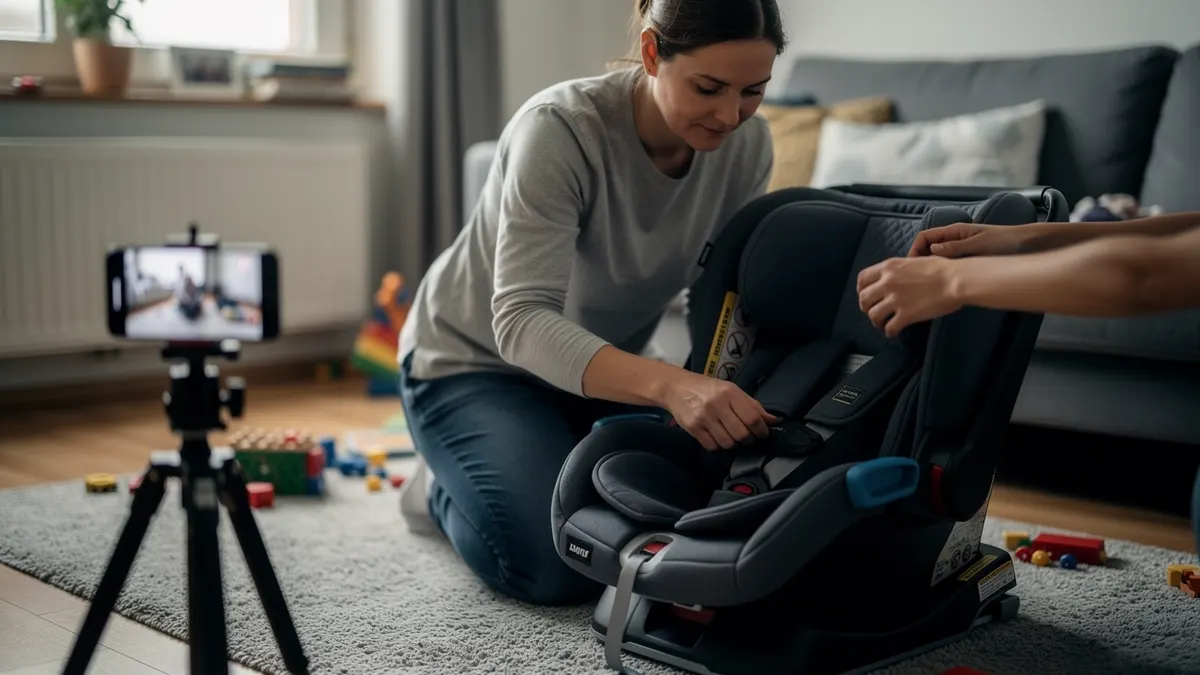
The child's face is not necessary. A hand, a back, a three-quarter silhouette, a shot of the object in movement are enough to show use.
Two immediate advantages. The video stays usable for years, whereas a child's face ages and raises the question of long-term consent. And the family filmed stays protected, which considerably simplifies the agreement.
When a child does appear, the written agreement of those holding parental authority is required, with the precise uses, the duration and the media. The rules applying to personal data and image rights are strict here and are checked with a lawyer before publication.
The tone that sells
It is a parent-to-parent tone, never a brand tone.
What works: tiredness, time pressure, doubt, the solution found after two attempts.
What does not work: perfection, the tidy house, the child obeying first time, the promise of peace and quiet.
One briefing rule is enough: ask the person to say what they would have liked to know before buying. It is almost always the best line of the video.
Who to film
The criterion is the phase, not the audience.
Somebody currently living the age concerned speaks accurately; somebody whose children are five years older speaks from memory, and it can be heard.
So favour small accounts in the middle of parenthood, and accept a less polished result. In this category, that is an advantage.
Markings and safety
That is what distinguishes this category from the others, and what is checked before any shoot.
The safety markings, recommended ages and warnings on the packaging must stay legible and accurate. A stated age is not a commercial suggestion: it is safety information.
Three practical prohibitions. Never show a use contrary to the instructions. Never remove a protective element for the sake of the shot. And never suggest that a product watches the child in place of the adult.
What is filmed without showing a child
| Subject | The shot | What it proves |
|---|---|---|
| A toy | An adult's hands, from above | The use and the parts |
| A garment | The fabric, the seam, the size | The quality |
| An item of equipment | The full assembly, in one piece | The safety of the gesture |
What is required when a child appears
Written consent from both parents, a short shoot outside school hours, and no data that could identify the school or the home.
What is never said in this sector
A direct appeal to the child, a promise about development, an unproven educational benefit. Those three fall under a strict rule, to be confirmed with a lawyer.
What to buy for a test
Four kinds of content are enough to cover a range.
The assembly and first use.
The typical day with the object, filmed in real conditions.
The three-month update, the most credible format in the category.
And the answer to the questions asked in the comments, shot afterwards.
That last format costs half an hour and answers what the other videos left aside.