Brazil's key commercial dates for planning UGC across the year, from Carnival to Black Friday and Christmas.
The dates that really move the figures
Seven windows, with what characterises them.
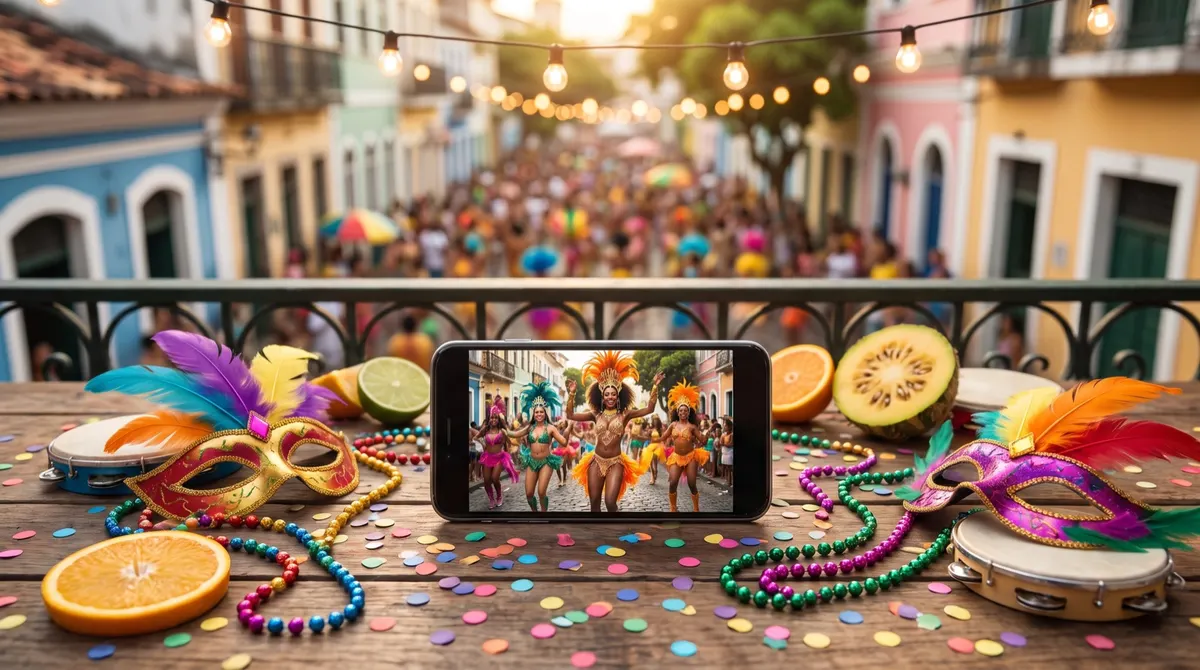
Carnival, the most intense and most regionalised, whose dates move every year.
Mother's Day, one of the biggest buying peaks of the year.
The June festivals, very strong in some regions and often ignored by national brands.
Father's Day, more modest but well established.
The late-autumn promotion days, including Black Friday.
The end-of-year holidays, dealt with above, with the climate constraint.
And the school year start, a moment of useful purchases and equipment.
Work the plan backwards from the date
Five back-planning steps, valid for every window.
Set the ad submission date, always earlier than the date of the operation.
Move back by the brand's internal approval time.
Move back by the editing time and the planned round of corrections.
Move back by the shooting time and the product shipping delay, longer in a saturated period.
And finally move back by the time to find creators, who become unavailable as the date approaches.
What to film by season
Six angles that change with the calendar.
In gift season: who to give to, what budget, what order deadline to be delivered in time.
In popular festival season: preparation, outfit, personal logistics.
In promotion season: proof of price and the answer to the fake-discount objection.
At the school year start: durability, value for money, the list of what is really needed.
In full heat: how the product holds, perspiration, storage, hydration.
And out of season: permanent content, answering fundamental objections and running all year.
The southern hemisphere trap
Six adaptations to make systematically, beyond the setting.
Clothing: light, including in end-of-year festive scenes.
Places: outdoors, terrace, beach, open house, rather than a closed interior.
Drinks and dishes: cold and served outside, not the northern codes.
The shooting hour: late-afternoon light replaces low winter light.
Seasonal vocabulary: winter words mean nothing at that time of year.
And the school calendar, shifted relative to the northern hemisphere, which changes holiday periods and therefore habits.
Buy rights that outlive the date
Four licensing principles for seasonal content.
For a video dated by its setting, buy a short duration ending with the period, with a renewal option priced for the following year.
For a neutral video, shot with no seasonal marker, buy a long duration: it is the most profitable content of the year.
Systematically order both in the same session: the seasonal version and the neutral one, which doubles the value of a single shoot.
And check the licence really covers the planned rerun period, with platforms named one by one.
The rhythm of a shooting year
| Period | What you shoot | What is released |
|---|---|---|
| The first quarter | The evergreen catalogue | The back-to-work videos |
| The second | The mid-year operations | The evergreen stock |
| The third | The year-end campaigns | The seasonal videos |
| The fourth | Nothing new | Everything shot before |
What must be shot two months ahead
Anything tied to a date. Carriers, creators and internal approvals saturate at once, and there is no catching up in November.
What fills the quiet weeks
Videos with no season or price mention. They are shot when the schedule is calm, and they prevent the content outage at the moment budget is still available.
An annual plan that stays workable
Five principles for not being dictated to by the calendar.
Choose three windows a year, not seven: a brand chasing every date prepares none properly.
Produce the neutral version at the same time as the seasonal one, dealt with above.
Build a reserve of permanent content, filling the quiet periods with no production budget.
Book creators in advance for the two most important windows, before they are taken.
And report separately by window, without which the annual average hides what really worked.
One last marker: in Brazil the calendar is not endured, it is chosen. Three well-prepared windows, with content shot in advance and rights set to the right duration, return more than seven improvised operations, and cost less to produce.