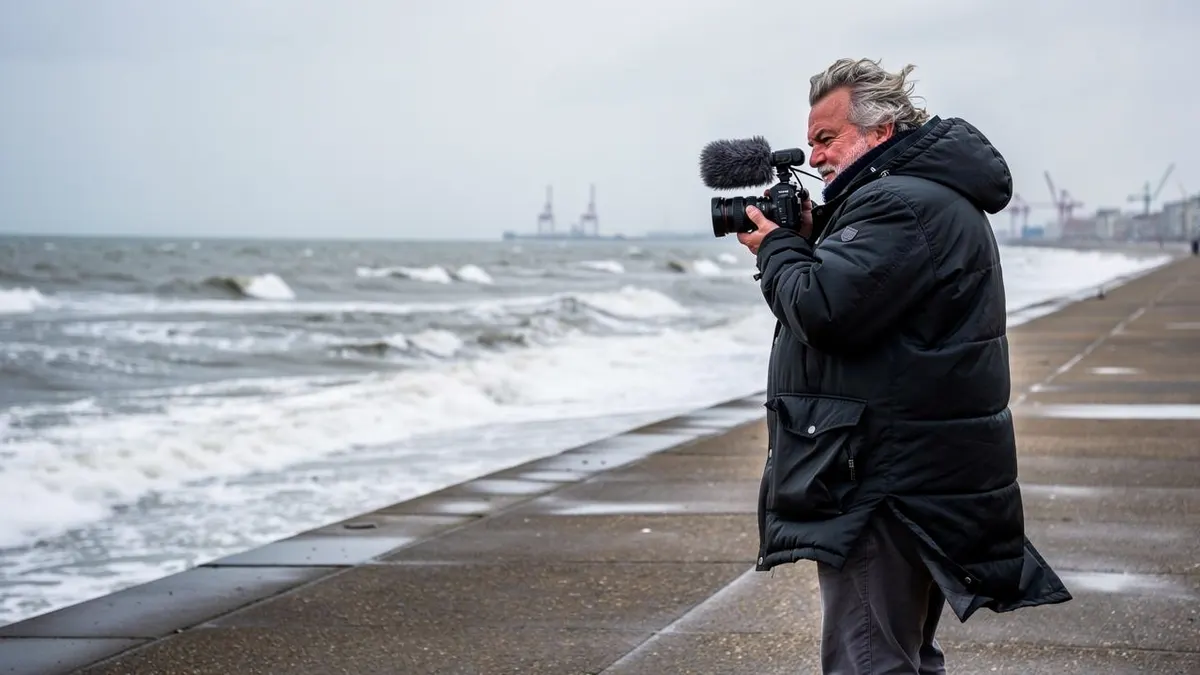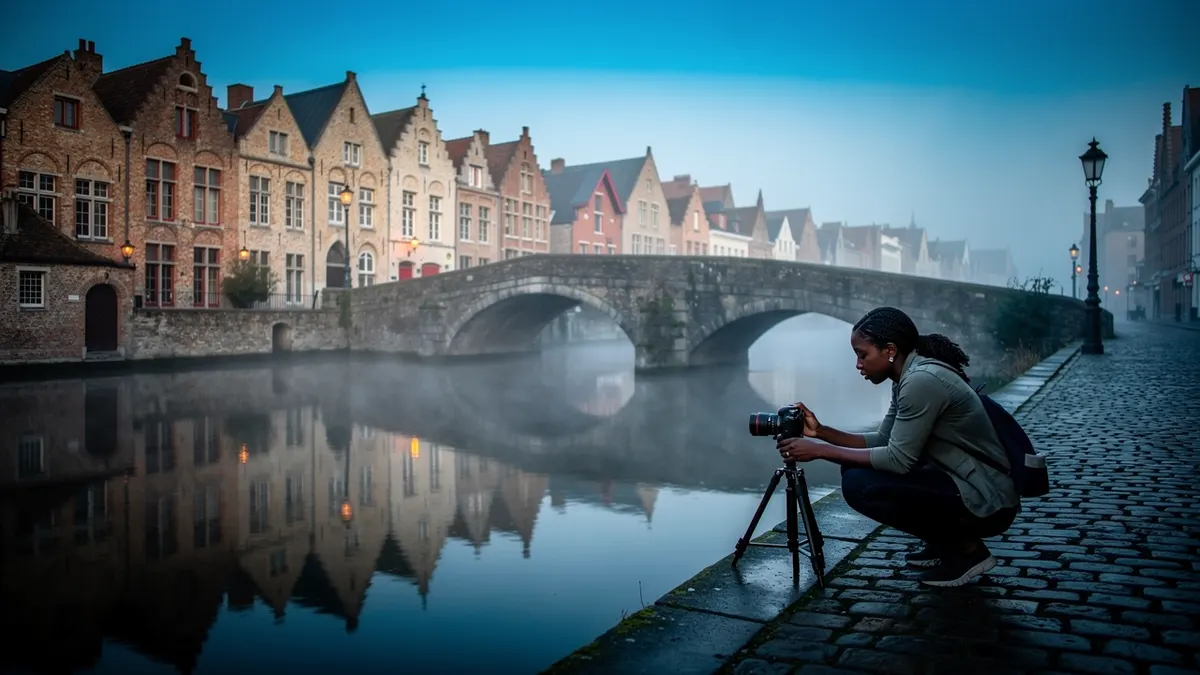

A French brand needing six videos for the September push has two quotes on the table. A production studio offers a shoot day, a crew, professional editing. A creator marketplace offers six people who film at home. Both answer the same request and are not selling the same thing.
What each one actually sells
A studio sells control. Controlled light, steady framing, clean sound, editing that stays consistent from one video to the next. The result looks like what was ordered, because a shooting plan exists and a crew executes it.
A creator, by contrast, sells credibility. Their kitchen is not lit, their phone moves, and that is precisely what makes the viewer believe what they see. The result never looks exactly like what was planned, because nobody is executing a plan: somebody is telling a story.
Confusing the two leads to the most disappointing order on the market, the studio asked to make UGC. It then produces a video that imitates the amateur with professional means, which shows immediately and convinces nobody.
The table that settles it
| Production studio | UGC creator | |
|---|---|---|
| Cost for 6 videos | 1 quote, often four figures | 6 separate engagements |
| Lead time | 1 shoot date, editing after | 7 to 15 days, in parallel |
| Variety of faces | 1 or 2 | 6 |
| Control of the result | High | Low, by design |
| Perceived credibility | Low in social advertising | High |
| Redo if it fails | Renegotiated, expensive | The next creator |
| Rights | Negotiated once, often broad | To be negotiated six times |
Two lines almost always decide. Variety of faces, because a campaign testing six angles needs six people and not one filmed six times. And the redo, because a failed studio has to be renegotiated whereas a failed creator is simply replaced.
The rights line, which favours the studio
It is the only point where the studio clearly wins. A production contract usually assigns broad and lasting rights in one go, whereas six creators mean six assignments, six durations, six scopes to keep track of.
A brand planning to reuse its videos for two years in display, in email and on product pages will find the studio's administration simpler. A brand running three months of social advertising does not have that problem.
The lead-time line, which reads badly on a quote
A studio announces a shoot date and an editing lead time, which gives the impression of a controlled schedule. It is controlled, as long as nothing moves: a postponed shoot pushes everything else, because there is only one date.
Six creators work in parallel and fail in parallel. If two deliver late, four videos still arrive on the planned date. That is a difference in kind and not in duration: the studio is faster and more fragile, the creators are slower and more robust.
When the studio is the right choice
It is right when the filmed object demands control. A product that shines and photographs badly, a texture, a mechanism, a garment whose cut is lost on a phone. It is also right when the video has to live for a long time in one place: a homepage, a trade show, an in-store screen.
It is right, finally, when the brand has nobody to run six relationships in parallel. Six creators means six briefs, six product shipments, six follow-ups and six invoices. The studio concentrates that load into one contact, and that simplification has a real value people forget to count.
The luxury product case
A house selling a four-figure product faces an uncomfortable trade-off. The credibility of UGC rests on imperfection, and imperfection damages the perception of a product whose price rests on mastery.
The way out is not to pick a side but to separate the uses: the studio for everything showing the product, the creator for everything showing the use. A bag filmed by a studio, and the same person explaining at home why she bought it.
When the creator is the right choice
It is right as soon as the video serves social advertising, which covers most needs. It is also right when the brand does not yet know what works: six creators produce six angles for the price of a studio day, and that is the only way to learn quickly.
It is right, finally, when the product is told rather than shown. A service, a subscription, an app have nothing photogenic about them: what sells them is one person's account of using them, and no studio manufactures that better than someone who lives it.
The control objection
"We cannot let six strangers talk about our brand." It is the most frequent objection and the least founded, because it confuses control of the result with control of the frame.
A brief naming the prohibitions, the legal disclosure and the single message frames six creators more effectively than a shooting plan frames a crew. What the brand loses is mastery of the form. What it keeps is everything that binds it legally and commercially.
The calculation missing from both quotes
Neither includes internal time, and it is not remotely the same. Six creators require several working days spread over two weeks. A studio requires dense preparation up front, then almost nothing.
A brand whose marketing team is already saturated will pay less on paper with creators and more in reality, because the load will fall on someone who has no time. That point appears on no quote and yet decides one case in three.
The useful test is to count contacts rather than videos. One contact, whatever the number of shots taken, occupies a person for a few hours. Six contacts occupy the same person for several days, split into small interruptions that cost more than their combined duration. A brand ordering six videos a quarter should ask that question before comparing prices, because it stops asking once the quote is signed.
Sources
- Law no. 2023-451 of 9 June 2023 on commercial influence
- French Intellectual Property Code, copyright
- DGCCRF, influencers and commercial influence
Checked on 6 September 2026. Rules change: where this guide and the official source disagree, the source prevails.