One video outperforms all the others, so you order five like it. What made it work is generally not the visible part.
What you copy is the surface
Five elements brands reproduce that explain almost nothing.
The setting: the flat, the kitchen, the colour of the wall.
The creator themselves, whose face is assumed to explain the result.
The editing: the rhythm, the cuts, the font of the on-screen text.
The music, often chosen afterwards and with no measurable effect.
And the length, copied to the second as if it had a virtue.
What really explains the result lies elsewhere: the question the video answered, the moment it was published, the audience targeted and the objection it lifted.
What really has to be reproduced
Copy the device, not the flat
Four elements to take up again.
The question handled, phrased as the viewer asks it.
The order of the information: what is shown first, what is kept for the end.
The proof used: a demonstration, a figure, a gesture, an honest before-and-after.
And the implicit promise of the opening, which has to be kept before the end.
Ask the creator what they think
Three reasons to ask before ordering the follow-up.
The person who filmed knows what was improvised and what was planned, information the brief does not contain.
They have read the comments, so they know the audience's real objections.
And they know what they will not be able to reproduce, which avoids ordering the impossible.
Keep one variable, change the rest
Four rules of testing.
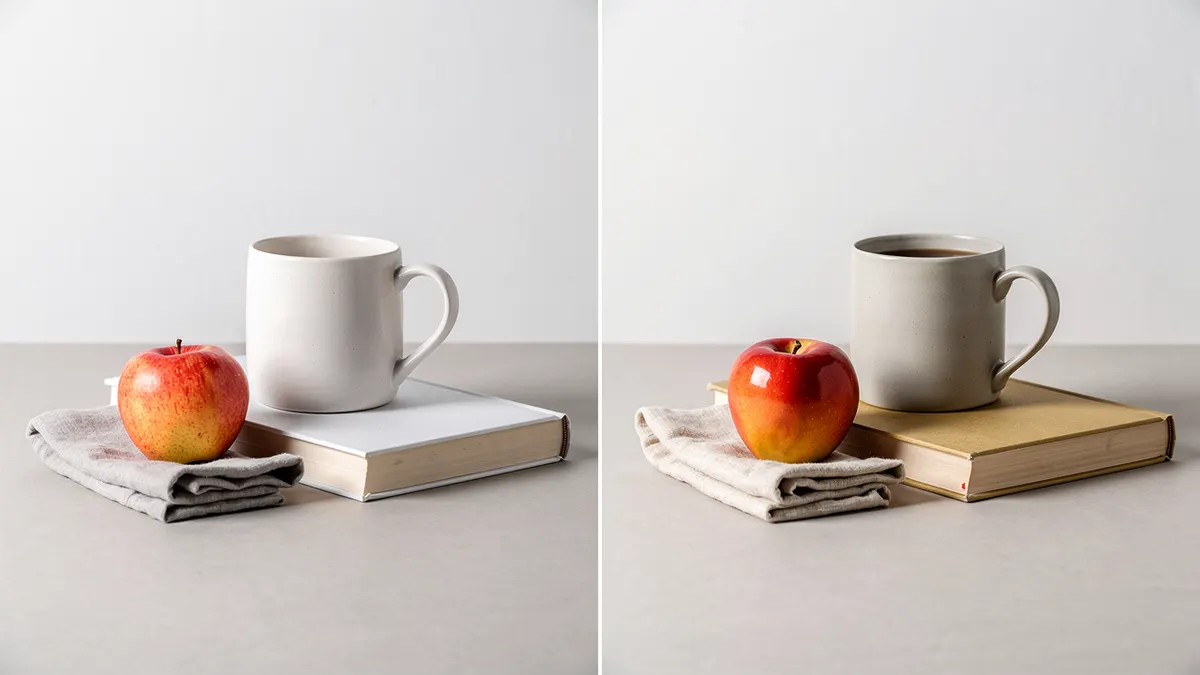
Change only one element at a time, otherwise no learning is possible.
Compare on the same audience and with the same budget, otherwise the comparison means nothing.
Let it run long enough to get past the randomness of the first days.
And note what you were testing, without which the result will be forgotten by the next quarter.
What you keep and what you change
| Element | Keep | Change |
|---|---|---|
| The first three seconds | Yes, that is what worked | No |
| The face on screen | No, it wears out | Yes, another creator |
| The core argument | Yes | No, only its wording |
How to know a video is worn out
The cost per result climbs over three consecutive days while budget and audience have not moved. That is the only reliable signal, the rest is impression.
What produces the best variation
Reuse the hook that works and have someone else say the rest, in another setting. You keep what hooked, you refresh what tired.
When repeating really works
Five situations where repetition is the right choice.
When the winning video is not yet worn out: extending it costs less than remaking it.
When the same question arises for another product in the range.
When another audience has not yet seen the video, a frequent and underused case.
When a version in another language opens a market.
And when the format, not the content, is what worked.
Five situations where it is better to move on.
When performance has been falling for three weeks despite a stable budget.
When the comments are about the person rather than the product.
When the video has been copied by competitors, which neutralises the surprise effect.
When the product has changed, even slightly.
And when you cannot explain why it worked: in that case, any new shoot is a bet.
One last marker: a creative that works is not a model to photocopy, it is a validated hypothesis. What has to be redone is not the video, it is the experiment that produced it, with one single thing changed at a time.