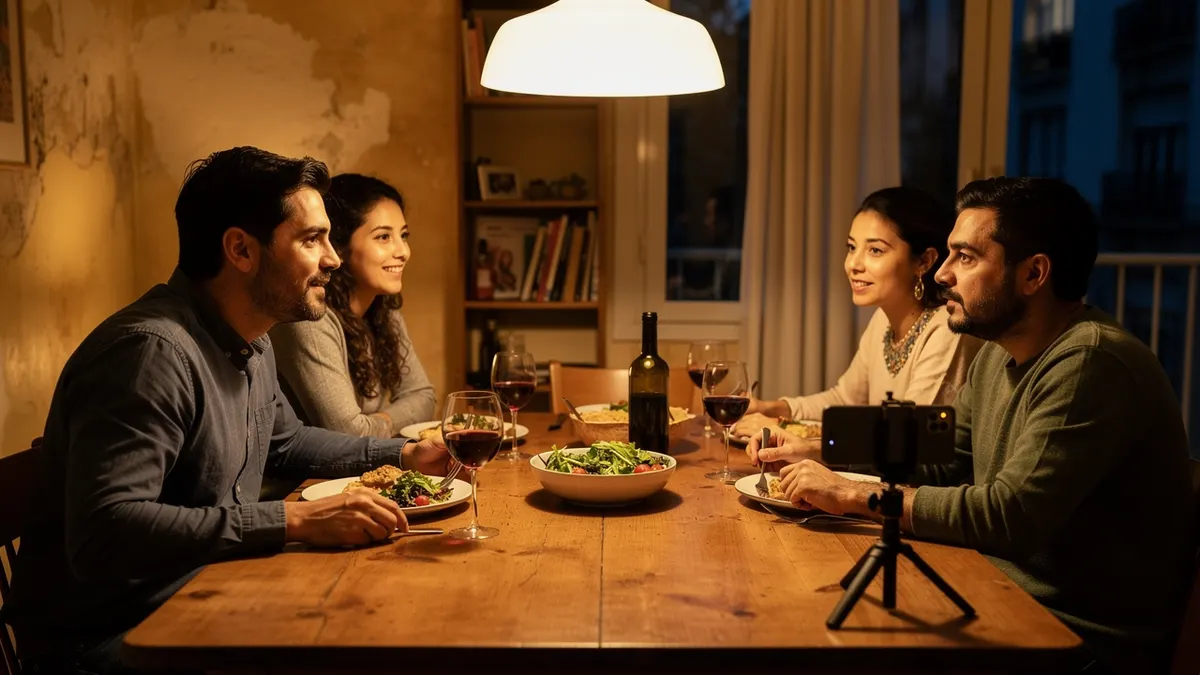

Three separate regimes, one single question. In Argentina, what a video may do when the audience is children is not set out in one rule: it is spread across the front of pack labelling law, the alcohol law and the gambling rules of each jurisdiction. But all three are triggered by the same question, and it is the one almost never answered in writing.
The question is not "do children appear?". It is "is this piece specially directed at children?". They are two different things, and confusing them loses campaigns on both sides: pieces that were fine get rejected, and pieces that were not get published.
The same question, with different consequences
For packaged foods and non alcoholic drinks carrying at least one warning seal, a yes triggers a total prohibition: that product may not be advertised in a way specially directed at children and adolescents. It is the hardest case and it is developed in front of pack labelling and UGC.
For alcoholic drinks, advertising may not be directed at people under eighteen or use minors drinking. It is a prohibition on content and on audience at once.
For betting, the piece may not target minors, and on top of that sits the question of authorisation by jurisdiction, which is a separate problem.
What changes between the three regimes is the sanction and the scope. What does not change is the test: somebody will watch the finished piece and decide who it was speaking to.
How it is decided whether a piece targets children
There is no closed list, and waiting for one is the surest way to get it wrong. You read the whole, and three layers carry weight.
What the piece shows and how it sounds
Child characters, animation, drawings, mascots, flat saturated colours, children's music, high pitched voices, very short editing rhythm, playground humour. None of those decides on its own; three together decide almost every time.
The quick test is to show the piece without sound to somebody who does not know the product and ask what age the audience is. The answer they give in two seconds is worth more than the brief.
Where it lives and who it is shown to
The same piece changes nature depending on the format and the account it is published on, and above all on the targeting behind the media spend. A correct video on an adult account can become an infringement through a media decision the creator did not take and sometimes does not know about.
Which is why the targeting question goes before the shoot and in writing, not afterwards in a report.
What the brief says, and what it does
Briefs rarely say "for kids". They say "family", "for the whole family", "fun", "fresh". Those words describe a tone, not an audience, and they protect nothing.
When a brief uses them it is worth returning a concrete question: which ages will the piece be shown to. The written answer changes the conversation, and if it never arrives, that is information too.
The minor appearing in the video is a different problem
Worth separating, because they always get mixed up. A child appearing in the piece does not automatically make it advertising directed at children, and a piece directed at children may have no minor in it at all.
Filming a minor opens its own set of obligations. Law 26.061 protects their rights, including those covering their image, their privacy and their dignity, and that protection is not settled with a generic permission signed in a hurry.
In practice that means three things. The authorisation comes from those holding parental responsibility, in writing, and preferably from both. The scope of use is written down as it would be for an adult: which media, for how long, in what territory. And the minor has the right to be heard about what is done with their image, which on a shoot translates into not filming a child who does not want to be filmed, even with the permission signed.
There is a fourth layer that depends on the jurisdiction and on the kind of participation, and it concerns the conditions under which a minor may work. It is not settled by reading one article: it is checked before committing to a shoot date.
What a note in the description does not fix
Writing "content for over 18s" under the video, switching on an age restriction on the platform or putting a warning at the start are useful measures, and none of them turns a piece directed at children into one that is not.
The reason is simple: those tools act on who can see the content on a platform, and the rule looks at who the piece is speaking to. A video with animated characters and children's music is still directed at children even if the platform flags it as adult content.
They do serve what they actually are: reducing real reach among minors. They are a mitigation layer, not a defence.
How long a minor's permission lasts
An authorisation signed today does not cover forever, and with a minor that difference weighs more than with an adult: the person who may object to the use of their image years from now is not the person who signed.
Which is why it is worth writing a short, explicit term instead of the "perpetual and worldwide" that appears by default in assignment contracts, and planning what happens when that term ends. A brand that wants to keep using the piece renews; one that does not takes it down.
It is the clause that meets the most resistance and prevents the most trouble, precisely because it forces a decision today on something normally left open.
Before filming
- Write in the brief which ages the piece is aimed at. One line. If nobody wants to write it, that is where the problem is.
- Review the visual and audio elements one by one, and remove those pointing at children if the product does not allow it.
- Ask for the media plan with age targeting, in writing, before accepting.
- If a minor is on camera, settle the authorisations before booking the date, not on the day of the shoot.
The brands' objection is that this test shuts out families, the natural audience for many products. It does not: you can speak to an adult buying for their family without using the codes aimed at the child. The piece showing a mother sorting out an afternoon snack is not directed at children; the one using an animated character and a catchy jingle is.
Sources
- Law 27.642 on the Promotion of Healthy Eating, full text
- Law 24.788 on the Fight against Alcoholism, full text
- Law 26.061 on the Comprehensive Protection of the Rights of Children and Adolescents
- Decree DNU 274/2019, Lealtad Comercial
Checked on 12 September 2026. This guide is not legal advice. Where this guide and the official source disagree, the source prevails.