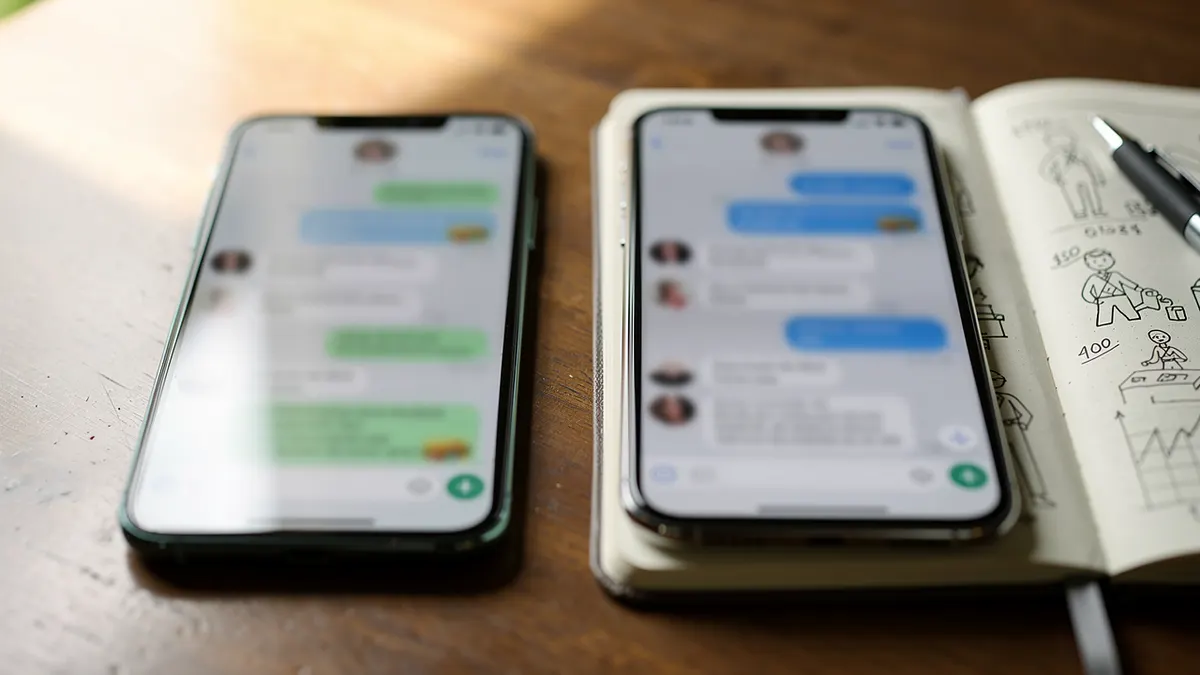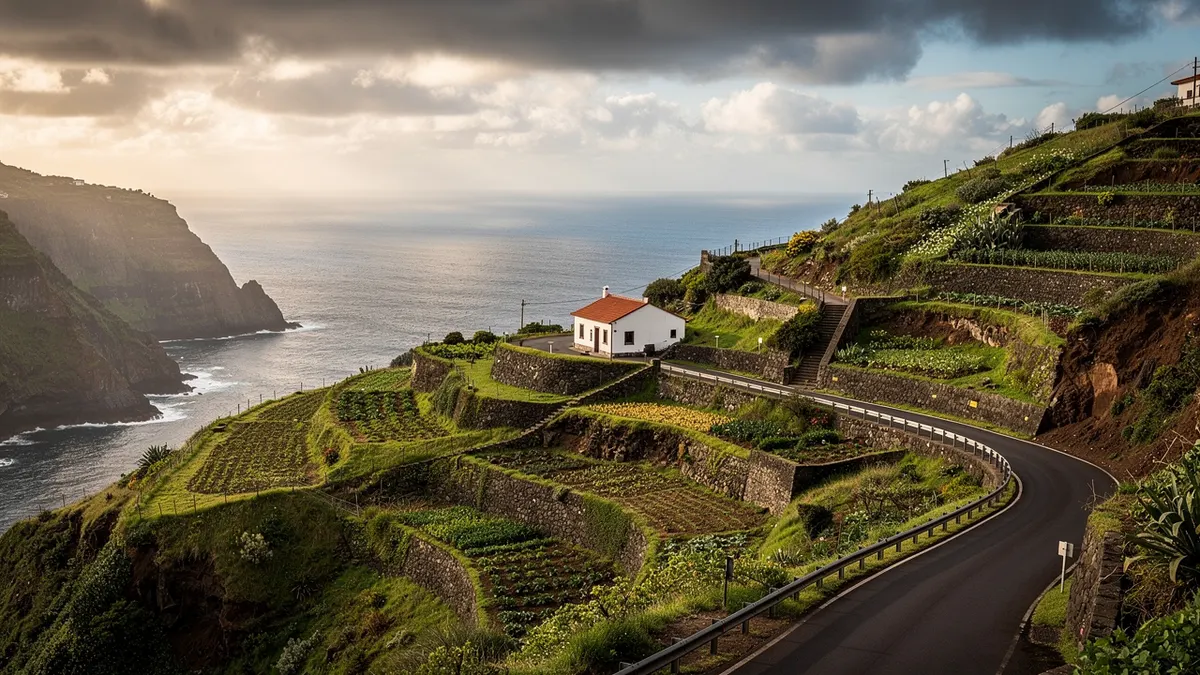
They are also the two hours when most people are free. The light everybody envies here is the one that destroys takes, and the usual advice makes it worse.
Why beautiful light is a problem
Hard sun does the opposite of what UGC needs
Direct light creates violent contrast, in which skin burns out and detail disappears. Yet this format lives precisely on what can be seen: a product's texture, a hand handling it, a legible face. Midday sun removes all three. What makes lovely holiday photos makes poor demonstration videos.
Golden hour has a meaning, and that meaning is holiday
The light at the end of the day is magnificent, and that is the problem. It tells a context: rest, travel, leisure. A demonstration video filmed in that light talks about the place, not the product, and the viewer remembers the sea rather than the cream. Keep it for the rare videos whose subject is precisely the atmosphere.
The two windows that really work
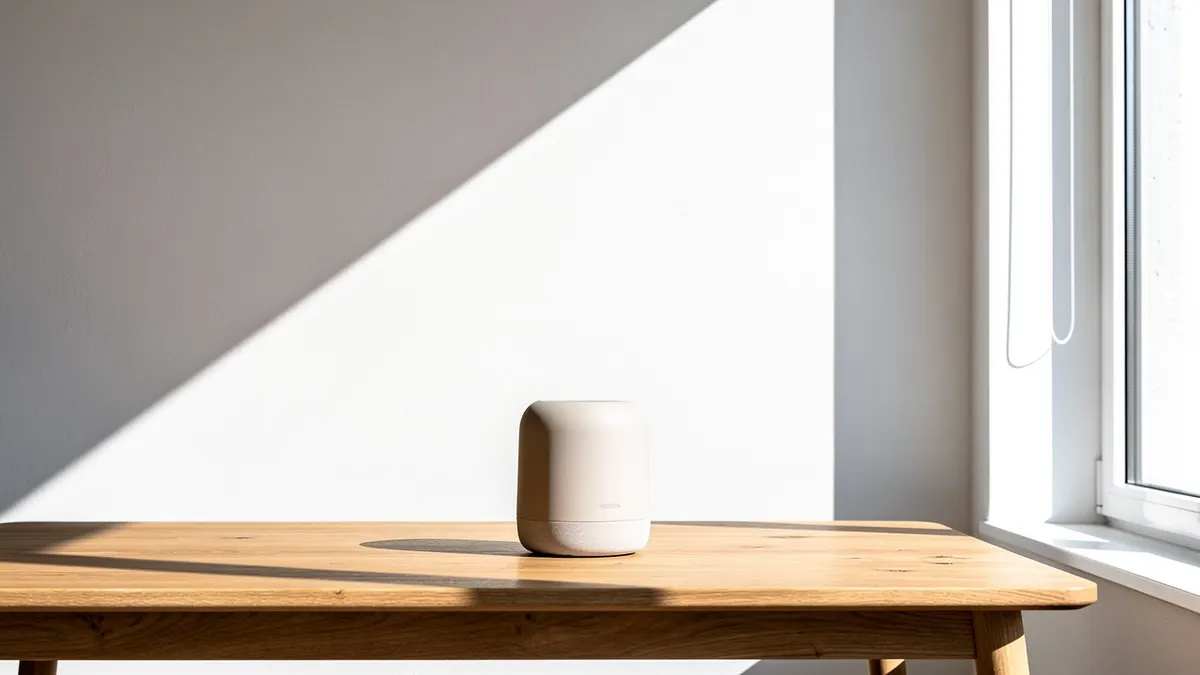
The indoor window, back to the sun
Seven settings for the morning window and the late afternoon one, the only two genuinely usable all year.
Standing one metre from the window, never pressed against it.
Turning your back to the direct sun and your face towards the lit surface.
Closing the thin curtains rather than opening wide, which softens without darkening.
Locking the exposure on the face before the first take.
Switching off ceiling lights, whose colour mixes badly with daylight.
Placing a white sheet on the opposite side, dealt with above.
And refilming the same shot thirty minutes later if the sky changes, which happens fast here.
When you do not choose the hour
Seven solutions when the shoot is imposed in the middle of the day.
Filming in a building's shade, facing a light facade.
Using a parasol or stretched fabric as a diffuser above the subject.
Standing under a canopy, with light bouncing from the ground.
Filming indoors with the door open, which gives beautiful side light.
Choosing a background in shade to avoid an overexposed backdrop.
Filming the product afterwards, separately from the face.
And accepting to reschedule, which a brand always understands when the reason is explained.
The Portuguese interior, case by case
Six frequent situations and their correction.
The through-flat, where you have to choose one window and close the other side.
Light tiling, which returns useful but cold light, to be corrected in the white balance.
Coloured walls, which tint the face and call for a neutral background.
The marble or light stone kitchen, an excellent bounce surface.
The small dark flat, where filming from the corridor towards the lit room works better.
And the deep shade of narrow streets, where the only solution is to film at the edge of the lit area.
What cannot be fixed in the edit
Six problems no correction repairs.
A burnt-out area, which no longer contains any information.
A hard shadow across half the face.
A change of light in the middle of a continuous shot.
An overexposed background that pulls the eye off the subject.
A different skin tone between two shots meant to follow each other.
And the sun's reflection on a shiny product, which hides exactly what had to be shown.
The minimal kit that changes everything
Six modest purchases, in order of usefulness.
A sheet of white card, the cheapest and most effective.
A tripod, without which none of the above holds.
A thin white fabric, used as a diffuser in front of a window.
A clamp to fix the fabric or the card.
A small supplementary light panel, useful at the end of the day in winter.
And a microphone, which changes nothing about the light but solves the other half of the problem.
What each time of day allows
| The moment | The light | What you shoot then |
|---|---|---|
| Early morning | Soft and raking | Faces and exteriors |
| Full midday | Hard, vertical | Nothing outside, everything inside |
| Late afternoon | Warm and long | Wide shots and movement |
What is corrected with no gear
The harsh midday contrast. A white wall placed on the shaded side bounces back enough light to open the shadows, and it costs nothing at all.
What is planned across a shooting day
Exterior shots at the ends of the day, interiors in the middle. That organisation doubles the number of usable shots without adding a single minute.
What to tell the brand
Five pieces of information to communicate, which avoid misunderstandings.
The planned shooting time, which explains the look.
The possible need to postpone if the sky is changeable.
The fact that the light will not be identical between two videos shot on different days.
The deliberate choice of neutral rather than golden light, with its reason.
And the possibility of refilming one specific shot if the look does not suit, rather than the whole video.
One last marker: in Portugal the difficulty is not finding light, it is finding light that does not say holiday. A window, a light wall opposite and a tripod are enough to produce usable images all year, and it costs less than any lamp.