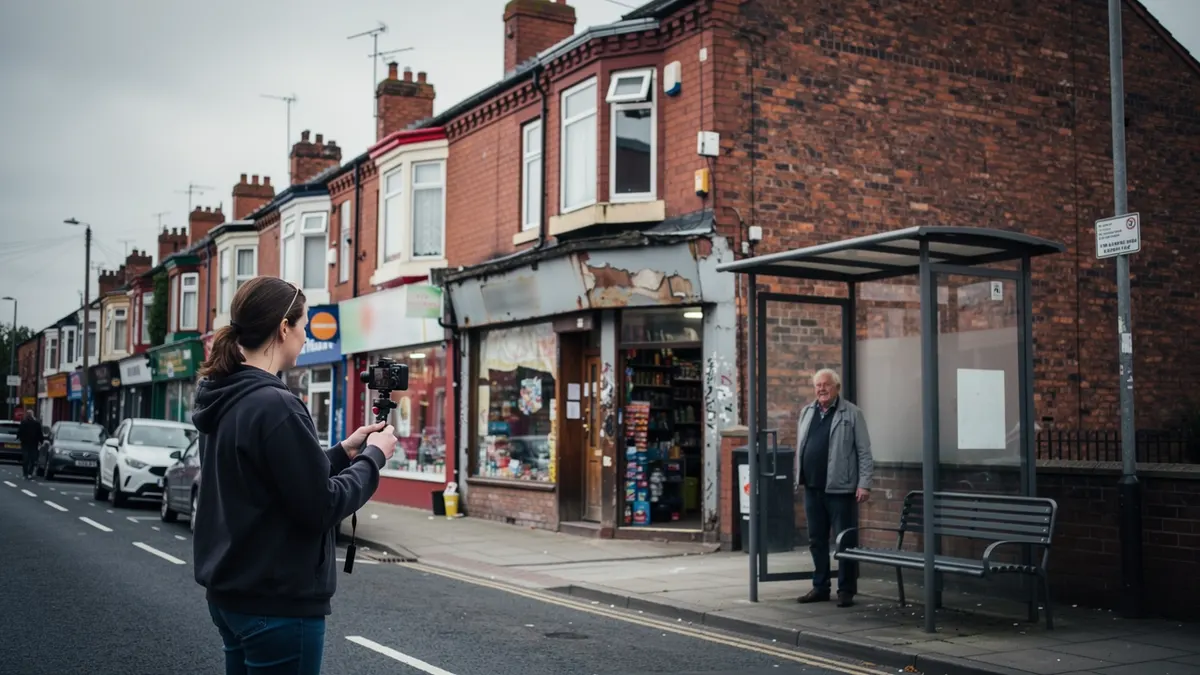
You are filming at a market, the take is running, and behind you somebody stops and looks into the camera. The take is good, the sound sits, the light will not come back. The question that arises at that moment is not meant as a legal one but as a practical one: can this be used.
The principle, in one sentence
Portraits may in principle only be distributed or publicly displayed with the consent of the person depicted. That is the rule, and everything else is an exception to it.
Two things about it are frequently misremembered. The consent concerns distribution, not recording: filming and publishing are two different acts. And it is bound to no particular form, which does not mean that a verbal assurance proves anything later.
What that means on the shooting day
The decision is not made at the edit. Anyone filming in a public space settles the question at the moment the person is in frame, because afterwards they are gone and can no longer be asked.
The four exceptions, and what they achieve here
The law names four cases where consent is not required. Knowing them helps; relying on them for a commercial UGC shot is a different matter.
| Exception | What it covers | How far it carries in commercial UGC |
|---|---|---|
| Contemporary history | Portraits from the sphere of contemporary history | Presupposes an event of contemporary history, which a product video generally is not |
| Incidental element | Persons appear only as an incidental element beside a landscape or locality | Requires genuine incidentality; somebody visibly acting in frame is rarely incidental |
| Gatherings | Images of assemblies and similar events in which the persons took part | Concerns the event, not an advertising shot filmed alongside it |
| Higher artistic interest | Portraits not made to order, whose distribution serves a higher interest of art | A commissioned production is by definition made to order |
And one limit that applies to all four. The exceptions do not apply insofar as distribution infringes a legitimate interest of the person depicted.
How to read that in practice
Not as "none of the four ever applies", but as: in an ordinary commercial UGC shoot these exceptions are a weak basis and must not be presumed applicable. The assessment remains fact-dependent and turns on the specific shot, on recognisability, and on how central the person is in frame.
Anyone wanting to rely on one should be able to explain why, and to do so before the video is online.
Why "it was public" is not enough
This is the most widespread error, and it is wrong twice over.
Public space says something about where filming is allowed. It says nothing about whether a recognisable portrait may be distributed. The two questions are not connected.
Then there is the commercial context. The same shot in a private holiday video and in a paid product video is not assessed alike, because the interests of the person depicted change as soon as their image is used to advertise.
What you actually do on set
Four moves, ordered by effort, and the first solves most cases.
Reshoot. At a market a second take costs three minutes. It is almost always cheaper than any other solution.
Reframe. Go tighter, go lower, lose the background. What is not recognisable does not raise the question.
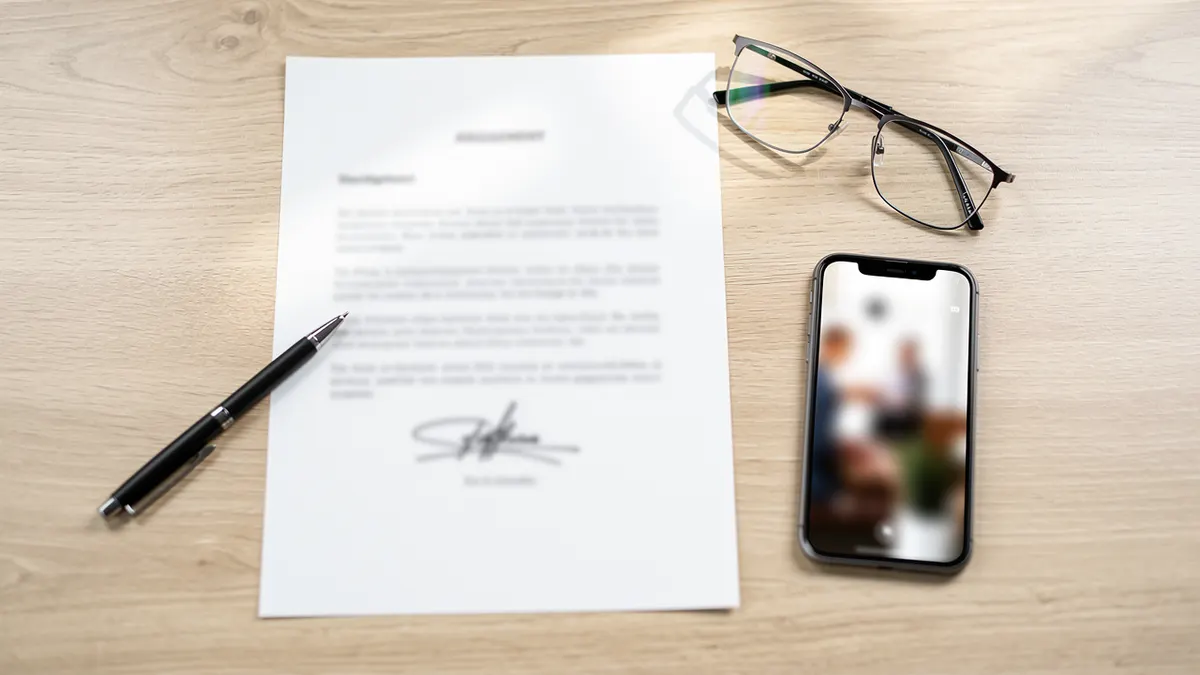
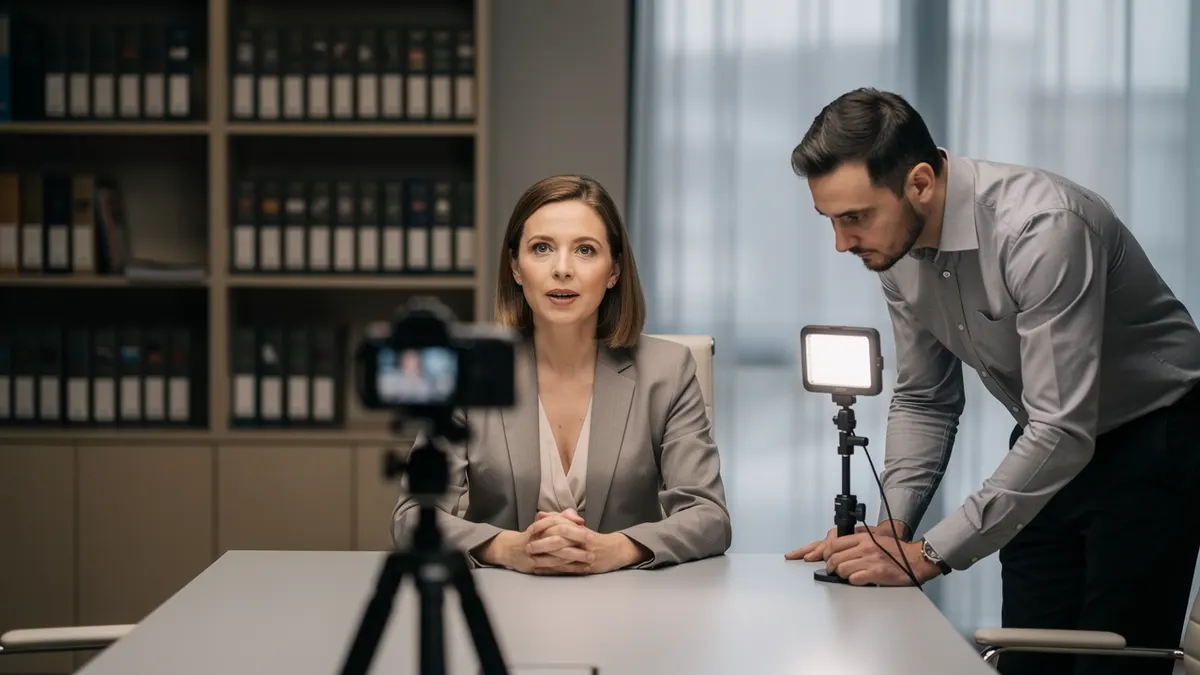
Ask. Briefly, politely, mentioning that it is for an advertising video. Anyone who agrees is confirmed briefly on video: name, date, what for. That takes twenty seconds and is the only evidence you have later.
Obscure. Possible in the edit and the worst of the four, because it is visible and devalues the shot.
The case that always gets forgotten
Children. Here the child's agreement is not enough, and a parent standing nearby is not automatically the sole decision-maker. Where a child is recognisable in frame, the shot is generally redone, because the effort of settling it cleanly exceeds the value of the take.
What a usable consent contains
Consent is bound to no particular form, and the formless kind is nonetheless the least valuable, because nobody can evidence it later. What counts is not the paper but that the scope is clear.
Four items suffice, and they fit into twenty seconds of video:
- Who. The person's name, said out loud.
- What for. An advertising video for a company, not "for my channel".
- Where. Which platforms it is to appear on, and whether paid distribution is included.
- For how long. A period, not "forever".
The fourth is the one everybody leaves out, and it is the one that counts later: an open-ended assurance is more vulnerable than one limited to twelve months.
Why a video recording beats a form
Producing a signed form at a market takes minutes and feels awkwardly formal. A short recording, by contrast, takes twenty seconds, shows the person, the date and the wording at once, and nobody has to find a pen.
What the brand expects from you
A brand distributing your video carries the risk with you. That is why good commissions now contain a line about it, and where it is missing, it is in your interest to add it.
In practice: you deliver material in which nobody but you is recognisable, or you deliver the consent with it. There is no third route, and "somebody was in the background, nobody will notice" is not a delivery, it is a transfer of the problem.
Sources
Checked on 8 September 2026. This guide is not legal advice and does not replace an assessment of the individual case. Where this guide and the official source disagree, the source prevails.