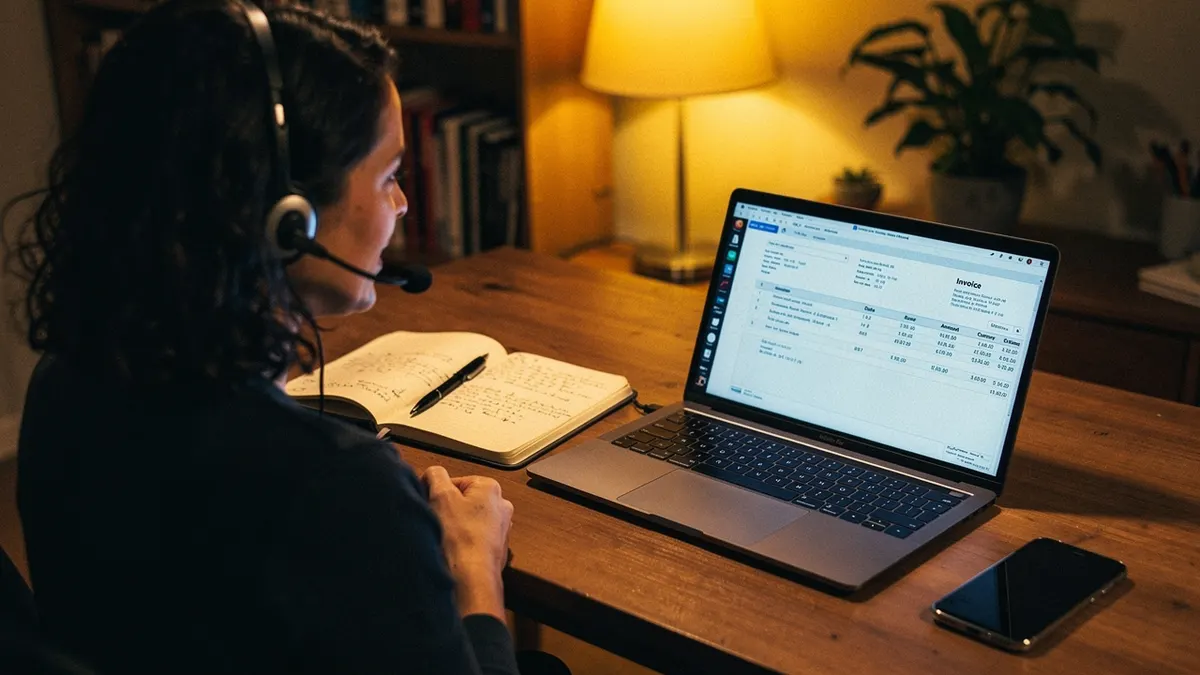
From this country, three outside markets are within reach without changing trade. What changes is what you deliver and how you invoice.
The three outside markets
They buy neither the same things nor at the same pace.
Europe
It is the closest market administratively and the most demanding on formats. The buyers there are brands selling online in several countries and needing localised versions of the same campaign.
Your advantage there is not price, it is the ability to deliver fast and to produce versions.
Latin America
It is the market where your language is both an advantage and a trap, for the reason described in the box. Brands there often look for more careful production than they find locally, at a controlled cost.
Watch the calendar: commercial seasons, holidays and even climatic seasons do not coincide with yours.
The United States and global brands
Those are the largest budgets and the slowest processes. You rarely enter by the front door: you enter through an agency, through an intermediary, or because a brand is looking for a Spanish-language shoot for its own domestic market.
What changes when invoicing abroad
Three questions, in this order.
Where the client is established, and what their status is: company or private individual, inside or outside the European Union.
Which statements must appear on the document, and what returns follow from it.
And what proof you keep of all that.
The applicable regime, the reporting obligations and the supporting documents expected depend on your situation and are checked with an accountant, before the first invoice. It is not a formality: it is the part of the work that decides whether a well-paid job stays well paid.
How to get paid
Four points, written on the quote.
The currency, and who bears the conversion.
The transfer fees, which can absorb the margin on a small job.
The payment calendar, with a deposit, especially for a first distant client.
And the exact name of the paying entity, which is not always the one who wrote to you.
Add a simple rule: test the circuit on a small invoice before committing to a large order.
What changes in the brief
Two things, often forgotten.
The setting must match the market of distribution. An electrical socket, packaging, a street sign or a banknote is enough to give away where it was shot.
And the advertising rules follow the country of distribution, not yours. What may be asserted, how the commercial nature is identified and which claims are permitted depend on your situation and are checked with a lawyer, before the shoot.
Your real advantage
It is neither price nor language alone.
It is being able to deliver a complete campaign for two different Spanish-speaking audiences, from a single shoot, with clean files and written rights.
A supplier selling that is no longer compared with a cheaper local creator: they are selling a capacity the client does not find elsewhere.
What a clean kick-off with a distant client contains
| Stage | What gets fixed | Support |
|---|---|---|
| Agreement | Price, lead time, usage | A signed quote |
| Framing | Script, shots, product | A single document |
| Delivery | Formats, naming, drop point | A shared folder |
What makes up the delivery pack
The final edit, a subtitled version, a version with no on-screen text, the source files and one file listing what each folder holds.
What avoids the most common misunderstanding
Writing in plain words how many revisions are included, and from what point a change becomes a new order.
How they find you
Through what you show, and what you write next to it.
Three examples visible without signing up. The languages and variants you deliver, stated in black and white. Your usual timescale. And the fact that you invoice properly.
Add, for distant buyers, your availability window expressed in their own time.