A brand prints Made in Portugal on the box and expects the words to do some work. They rarely do. A buyer in Munich or Chicago has no way to check them, and has read the same three words on a product that was finished somewhere else and stamped here.
The claim is not weak because it is false. It is weak because it describes a place the buyer will never stand in, and nothing on the product page shows that place. Video is the only format that can, and most brands commission the wrong one.
Two brands share the same workshop
Walk into a shoe factory near Felgueiras or a knitwear unit outside Guimarães and you will usually find two kinds of client on the same line, with opposite problems.
The workshop that became a brand
It has made shoes for other people for thirty years and now sells its own, direct, mostly abroad. Its advantage is enormous and invisible: it owns the making. Its weakness is that it talks about the making the way an engineer would, in operations and machine names, to a customer who wants to know whether the shoe will still look good in two years.
The foreign label that manufactures here
It designs elsewhere, produces here, and wants the origin to mean something. Its advantage is that it already knows how to talk to its customer. Its weakness is that it has no footage of the place, has visited twice, and cannot photograph anything without permission from a supplier who has other clients to protect.
The two need different videos from the same room, and a brief that does not say which one it is will get a video that serves neither.
What the claim actually has to prove
The doubt is not about quality
Nobody abroad seriously doubts that Portugal can make a good shoe. The doubt is narrower and rarely spoken: the buyer suspects the label describes a final assembly step and nothing else, because that is what it has meant on other products they bought.
So the job of the video is not to say the work is excellent. It is to show that the work happened, at a scale and in a sequence a viewer can follow.
A gesture is evidence, a finished shelf is not
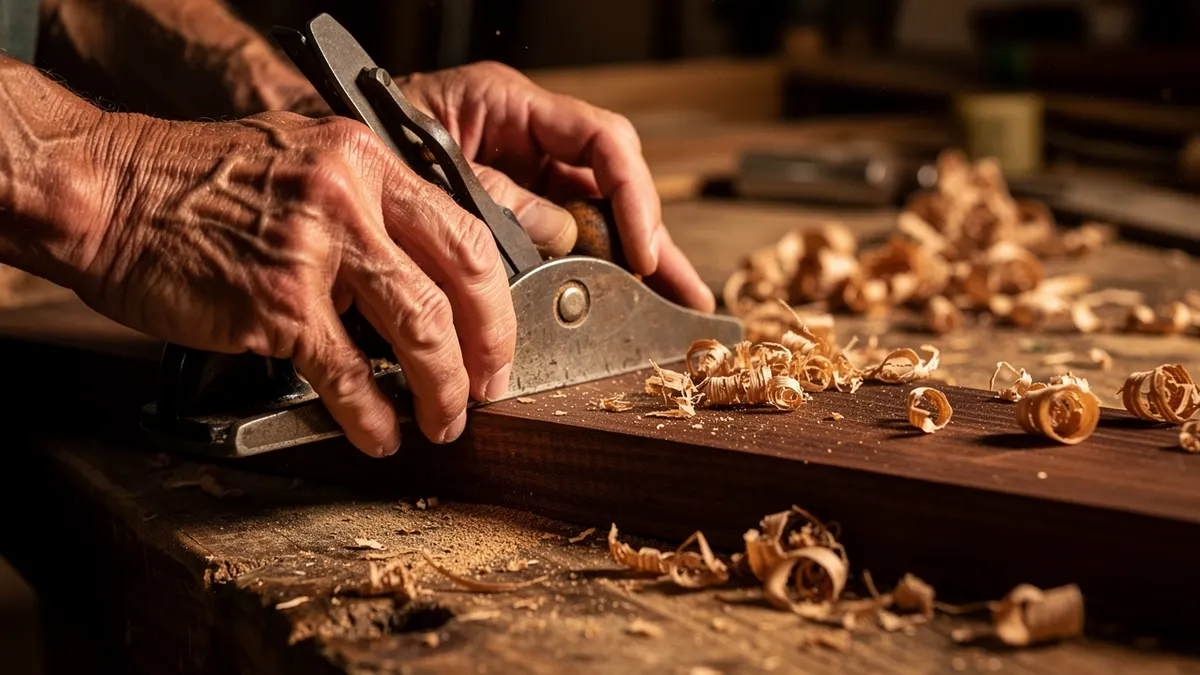
A rack of finished product proves nothing. It looks identical whatever continent it came from, which is exactly the problem. A pair of hands doing one operation, in real time, without a cut, proves something a caption cannot.
Pick the operation the eye can read. Lasting a shoe, stitching a moccasin by hand, setting a knit on the machine, trimming a sole: each of these is legible in eight seconds to someone who has never seen it. Dyeing, pressing and quality control are just as skilled and look like nothing on camera.
| What the brand wants to say | What the camera has to catch | Where it is filmed |
|---|---|---|
| The product is made here | One full operation, uncut, hands in frame | On the line, at working pace |
| The people are skilled | A worker correcting something by feel | Close, over the shoulder |
| The materials are good | Leather or yarn before it becomes product | Stock room, natural light |
| The scale is real | Racks, trolleys, the volume of a working day | Wide, from the aisle |
| The relationship is long | The same person, named, in two seasons | Anywhere, but returning |
The last row is the one nobody plans, and it is the cheapest of the five. Filming the same worker again a year later turns a one-off shoot into a claim about continuity, which is the part a buyer cannot fake and a competitor cannot copy quickly.
Filming inside a working factory
The line does not stop for you
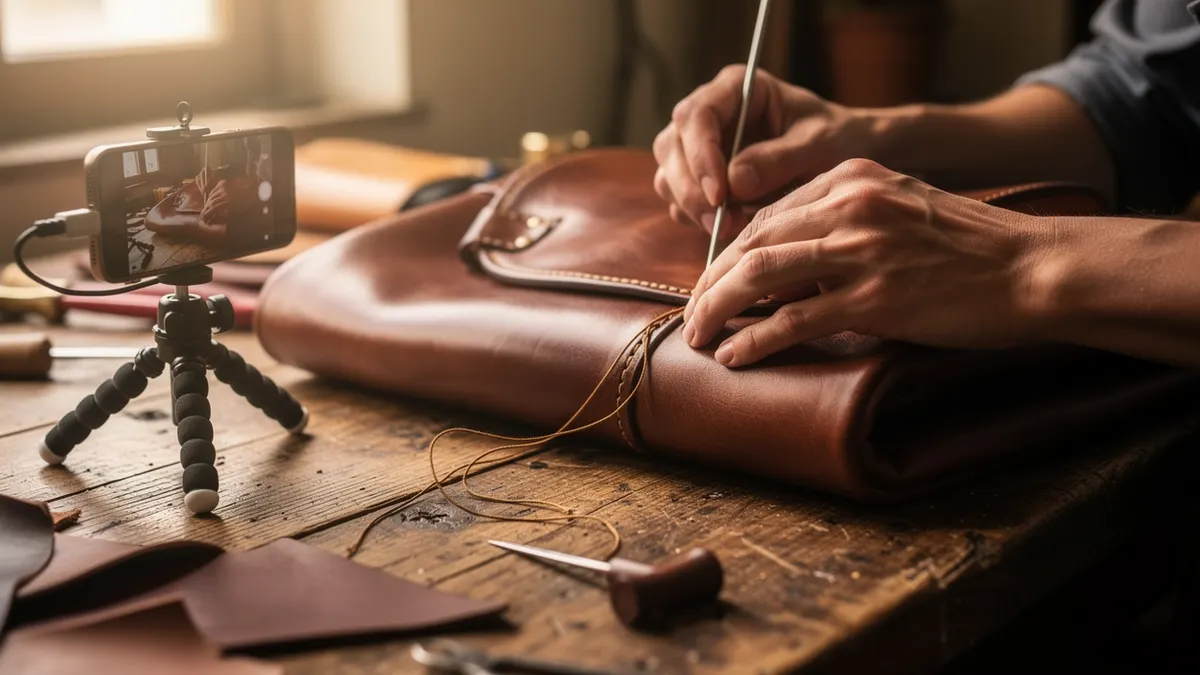
A shoe line runs to a daily figure and a shift ends when it ends. A creator who arrives expecting to direct will get twenty polite minutes and nothing usable. The way this shoot works is the opposite of a studio: the camera adapts, the work continues, and the good frame is the one the operator did not perform.
Practically, that means arriving with a shot list of five operations and the humility to lose two of them. It also means a second visit is worth more than a longer first one, because the first visit is where you learn what actually happens in the room.
Half of what you can see belongs to someone else
This is the constraint that surprises every brand, and it is the one that ends shoots early. A workshop that makes your shoes also makes shoes for three other labels, and their lasts, patterns, order sheets and boxes are all in frame. Some of those clients have contracts that forbid exactly this.
Settle it before the day, in writing, with the factory rather than with the worker: which areas are filmable, which racks have to be cleared or avoided, whether faces need consent, and who reviews the cut before it goes out. The answer is usually generous. The problem is asking on the day, when the person who could say yes is not there.
The sound is the real loss
Machine noise makes on-site speech unusable more often than not, and the room tone is fantastic. Record the room, record the machines, and record any spoken part somewhere quiet, even in a car. A voice recorded on the line and re-recorded later never matches, and viewers hear the seam even when they cannot name it.
Who should hold the camera
The instinct is to hire the creator with the biggest following in fashion. For this shoot the better hire is someone who films objects and hands well, and who is comfortable being ignored for two hours.
Language decides the rest. If the buyer is German, French or American, the video works better in the buyer's language, spoken by someone who sounds like the buyer, over Portuguese footage. Filming here and speaking there is not a compromise: it is what the claim needs, because the person being reassured is abroad.
The video that does not exist yet
Almost every brand in this vertical commissions launch content and stops. The material with the longest life is the one after the sale: how the product is repaired, how it is cleaned, what it looks like after two years of use.
That footage is easy to get because it needs no factory access, it answers the objection that actually blocks a purchase at this price, and it makes the origin claim retrospective rather than promotional. A shoe that can be resoled says more about where it was made than any wide shot of a workshop.