The honest answer is not a simple yes. Starting from what the brand buys when it asks for a face, you see what can replace it and what cannot.
What a brand buys when it asks for a face
Five distinct things, often confused.
Attribution: somebody answers for what is said, dealt with above.
Resemblance: the public has to be able to recognise itself.
Expression: surprise, hesitation, satisfaction, which carry the emotion.
Proof of use: the person really held, wore, ate, applied the product.
And continuity: the same face returning across several videos creates familiarity.
Of those five, three can be obtained without a face, one partly, and one not at all. That distribution should guide the conversation with the client.
Four ways of working without
Hands and product
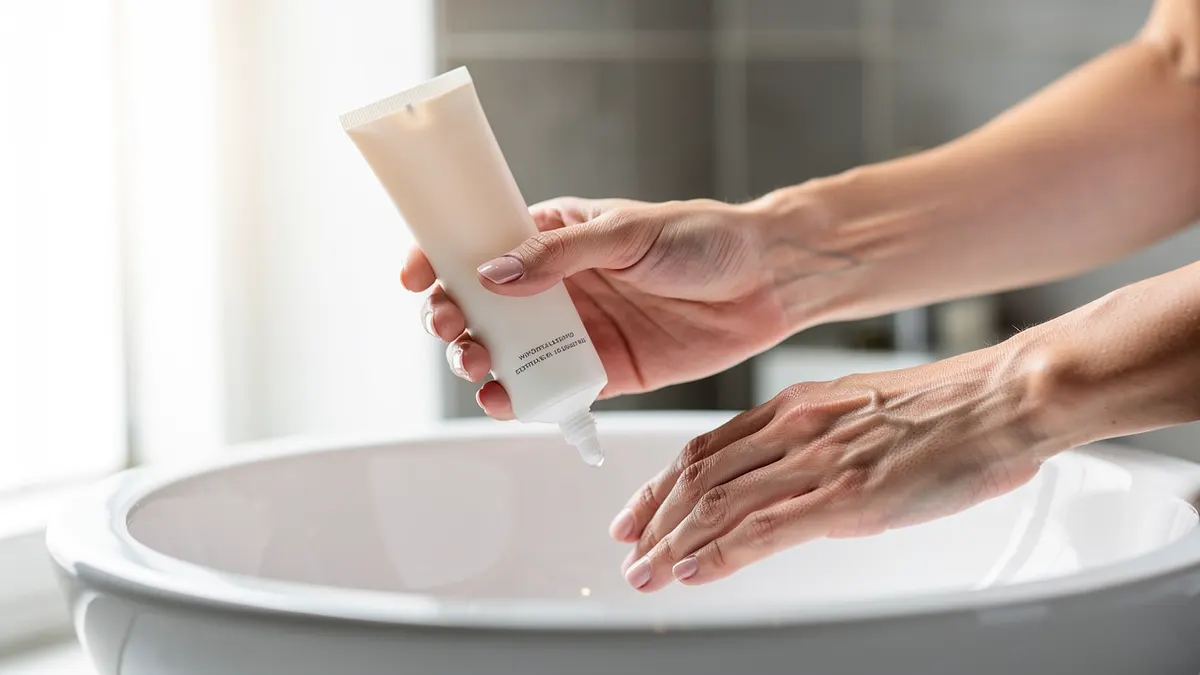
The most requested faceless format. It works perfectly for demonstration, unboxing, preparation, the technical gesture. It loses expression, but it fully keeps proof of use.
Voice over your own footage
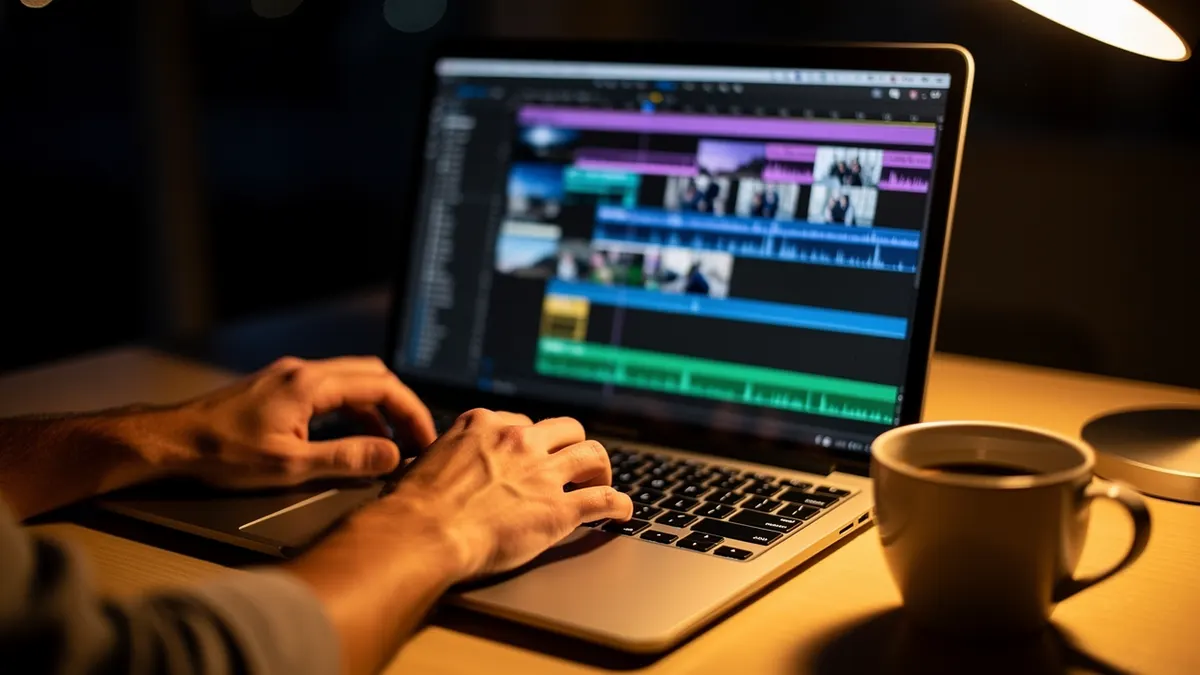
The most underestimated format. You film, you narrate, you stand behind what you say. Attribution is preserved, which explains why this format converts almost as well as a piece to camera in several categories.
The camera at eye level
Filming what you see, with your hands in frame. The viewer adopts your point of view, creating a closeness the hands-only shot does not have.
Your production, somebody else's face
You write, film, edit, and another person appears. That is a legitimate service, but it changes your trade: you become a producer, with the rights and payment questions that supposes.
What it closes off, said frankly
Five doors that close, wholly or partly.
Campaigns where casting is the subject: diversity, age, body type, regional origin.
The strong personal testimonial, where facial expression carries half the message.
Beauty categories where the result is judged on the face.
Building continuity across several videos for the same brand.
And part of agency orders, whose briefs mention a face by default, even when it is not necessary.
Three doors stay wide open: technical demonstration, voice-over, and every category where it is the product being looked at.
The Portuguese part of the decision
Six elements specific to the Portuguese market.
The market is small, and a face becomes identifiable there very fast, which explains part of the requests for discretion.
Many orders come from exporting brands, which want a voice in the target language more than a face.
Technical and industrial sectors, numerous in Portugal, ask for hands and gestures, not faces.
Tourism and hospitality often buy point of view, a format that does very well without a face.
Local agencies are few, which makes direct approach more important and lets you explain your positioning.
And word of mouth travels fast, which works in your favour as soon as two clients have been satisfied.
What is filmed without ever showing a face
| Shot | What it replaces | What it demands |
|---|---|---|
| Hands on the product | Expression | Slow, clean gestures |
| The first-person viewpoint | The look to camera | A steady camera |
| The product alone, in motion | Human presence | A rhythmic edit |
What the voice must compensate for
Everything else. With no face, intonation carries the emotion, so a decent mic and a take without hesitation become half the work.
What market it opens
The sectors where anonymity reassures: health, finance, the intimate, the professional. A voice without a face is often preferred there, and those niches pay above average.
How to present it to a client
Six sentences to prepare once and for all.
Say what you do, never what you do not do.
Name the formats you deliver: hands, voice, point of view.
Supply an example of each, which is worth more than an explanation.
Offer a precise alternative when the brief asks for a face, rather than refusing.
State that your voice is real and that you stand behind what is said, which answers the client's real question.
And write it on your profile, which filters requests upstream and saves you time.
One last marker: working without a face is neither a handicap nor a pose, it is a positioning. It closes a third of the market and makes you identifiable in the other two thirds, provided you explain what you are replacing, and above all with what.