The video is already paid for, already shot, already approved. Putting it back where the purchase is decided costs nothing more and often brings in more than the original campaign.
Where to put it back
Five placements, in decreasing yield.
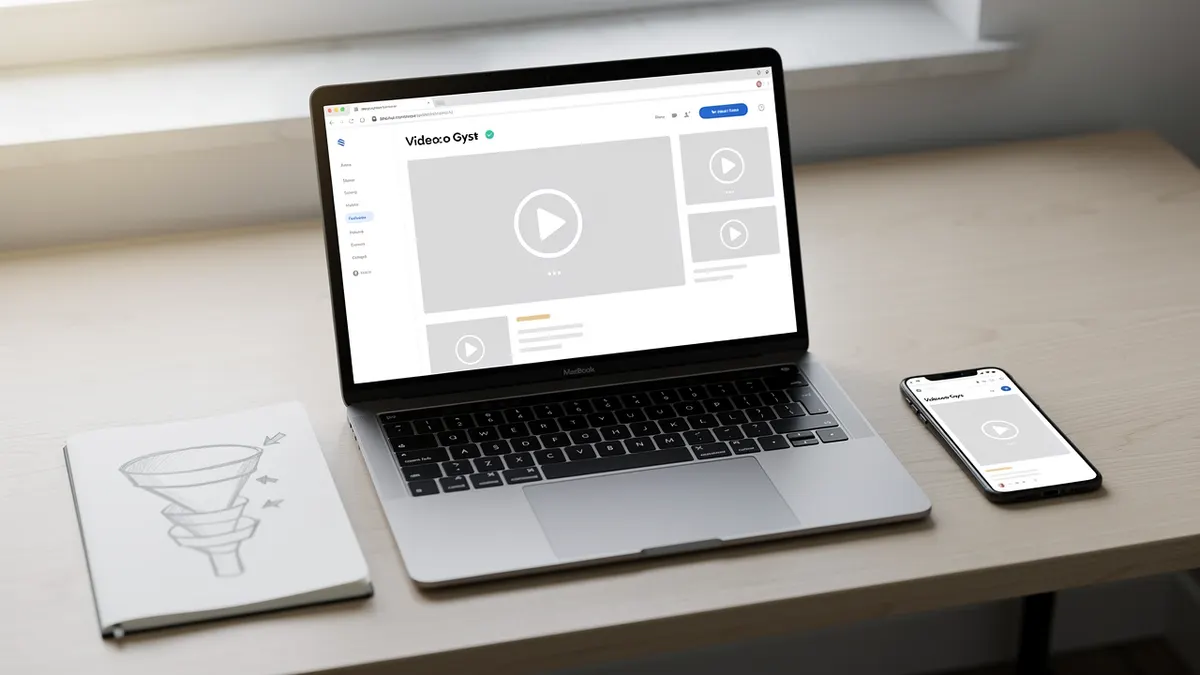
The product page, under the photos: that is where doubt is lifted, and the only place where the video really replaces a description.
The basket page, with a short format answering the last-minute objection: size, material, lead time.
The abandoned-basket reminder email, where a moving image does better than a price reminder.
The home page, as a banner, to set the tone.
And marketplace listings, when the platform accepts them, which is checked case by case.
What integration requires
Four technical requirements, all simple.
A compressed and resized file, not the master. A product page that loads slowly cancels the gain.
A chosen start thumbnail, not the first frame of the file: it decides whether playback starts.
Burnt-in subtitles, because viewing is silent in the majority of cases.
And a vertical version and a square version from the same rushes, prepared in the edit, never cropped on the fly by the site.
The contractual point
That is the part that sticks, and it is settled at quotation time.
A video shot for a post on a creator's account is not automatically usable on a shop site, in email, or in paid advertising.
Three elements must be written down: the duration, the media, the territory. Failing that, use on the site is a grey area nobody wants to discover afterwards.
Add the image rights of every person appearing on screen, and the fate of the music used, which has its own licence. The exact scope of a transfer depends on its wording and is checked with a lawyer before going live.
What not to do
Four frequent mistakes, all costly.
Autoplaying the video with sound: the best way to have the tab closed.
Cropping a vertical video to horizontal by cutting off heads.
Leaving online a video showing a price, a finished promotion or an out-of-stock reference.
And presenting commissioned content as a spontaneous customer review. The distinction between paid creator content and a consumer review falls under precise rules, which are checked before publication.
Where the same video still works
Six places outside social media.
On the product page, under the photographs.
In the confirmation email after a purchase.
On a screen in the shop.
In a proposal sent to trade buyers.
At a fair, with the sound off.
And in the support team's answer to a question.
Where the same video keeps working
| Placement | What it does there | Adaptation |
|---|---|---|
| Product page | It lifts a doubt | Twenty seconds, subtitled |
| Follow-up email | It recalls the use | A cover image, no autoplay |
| Home page | It proves the product exists | Short format, silent |
What is checked before reusing
The licence duration granted, the authorised media and the territory. A video paid for an advertising campaign is not paid for the home page.
What is prepared from the order onwards
Ask for a version with no burned-in text and one with no music. Both allow every future reuse without ever going back to the creator.
The only indicator to follow
One, measurable in two weeks.
Compare the conversion rate of the product page with video and without video, over the same period and the same traffic.
Look at neither the number of plays nor the average duration: those are content indicators, not sales indicators.
And let it run long enough to get out of the noise. A low-traffic page takes several weeks before saying anything useful.