How to turn one shoot into product listings, advertising creatives and fewer returns, in a market where returning is a right.
Film to avoid the return, not only to sell
Three dominant causes, all treatable.
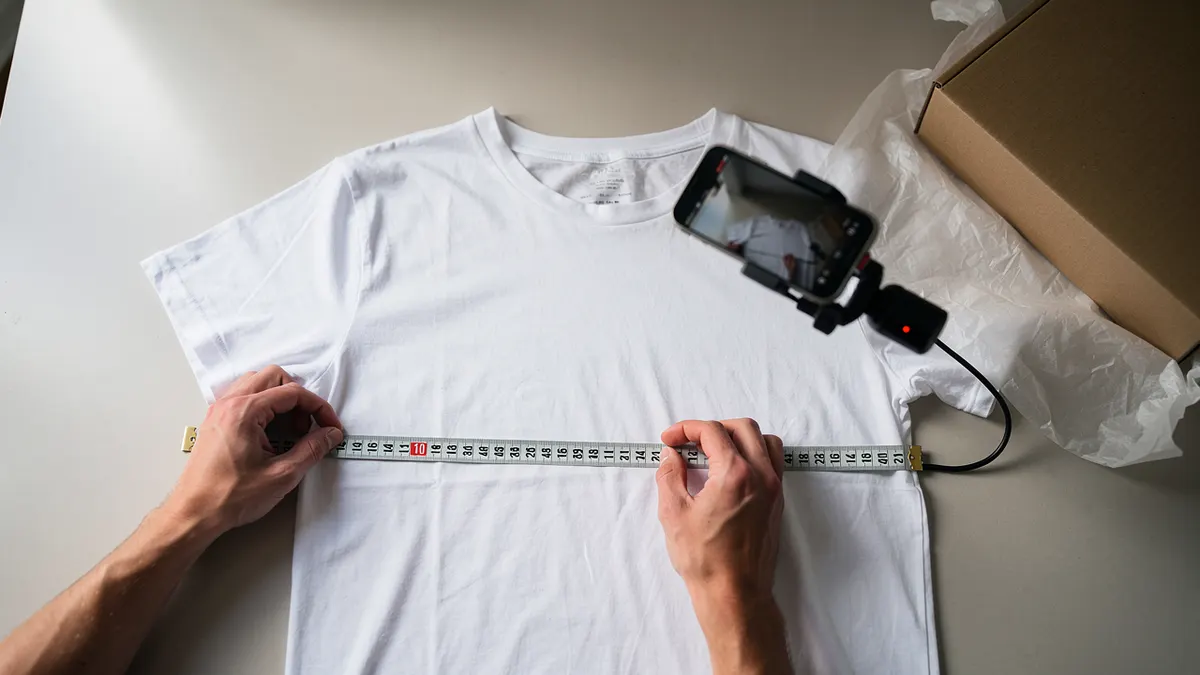
Size and dimensions: treated by showing the product next to a known object, and by giving the person's measurements when it is clothing.
Material and finish: treated by an honest close-up in daylight, with no filter.
And the gap between the photo and reality: treated by filming the product as it comes out of the box, with no prior staging.
One consequence for the brief: explicitly ask the creator to show what could disappoint. That is counter-intuitive, and it is what brings the return rate down.
Where to place the videos
Four placements, in decreasing profitability.
On the product listing, in second position after the photos.
In the message following the order, to reassure even before delivery and reduce impulse returns.
In paid advertising, with two formats delivered separately.
And in the basket reminder, with a video answering the most frequent doubt about that reference.
One production note: those four placements are fed by one single shoot, provided it is planned in the brief.
What the product listing never says
Five pieces of information only video provides.
The felt weight and the handling.
The noise the object makes, when it makes one.
The real installation or assembly time.
What is left in the box after unpacking, and what to do with it.
And the behaviour after a few weeks of use, which answers the durability question.
One shot to add systematically in this country: the product put back in its original packaging. Since returning is a right, showing that the box closes again easily reassures as much as the product itself.
The French calendar
Four moments structure the commercial year.
The sales, whose dates are regulated and which concentrate a large share of turnover.
The September return, a period of rational buying.
The end-of-year festivities, whose content is delivered in early November.
And the between-seasons, where advertising competition is weaker and the acquisition cost lower.
One economical practice: order spring videos in February and autumn ones in July. The offset looks absurd until the day it saves you from hunting for an available creator in high season.
Who to film
Three criteria, in this order.
Somebody representative of the real customers, in body shape as in life situation.
An ability to film steadily, in natural light, in an ordinary setting.
And ease with saying what is not right, without it becoming a criticism of the product.
One criterion not to overweight: the follower count. On a product listing and in advertising, it changes nothing.
What to check before publication
Four points, to be taken seriously.
The advertising disclosure, said and shown in the video.
Claims about composition, origin and care, which have to match the label.
Environmental claims, particularly regulated, to be checked with a lawyer.
And the image rights of visible people, documented with the same duration as the usage rights.
Where the video sits on a product page
| Placement | What it must answer | Useful length |
|---|---|---|
| Above the gallery | What the product looks like for real | 10 to 15 s |
| Under the description | How it is used | 20 to 30 s |
| In the cart | Why that size or quantity | Under 10 s |
What is actually measured
The add-to-cart rate of the page with video against the same page without, over the same period and the same traffic. The rest is noise.
What is refused on a product page
A result promise, a before-and-after, a price shown on screen and a stock figure. The first three create legal exposure, the fourth expires within a week.
What to measure
Three indicators, in this order.
The return rate per reference, before and after going live, over two full months: that is the figure that decides.
The conversion rate of the listing, measured over the same period.
And the number of customer-service questions about that reference, which should decrease.
One last marker, valid for any shop: a video that sells slightly less and is returned far less earns more. In this market, the margin is decided at the return, not at the click.
Sources
Checked on 4 September 2026. Thresholds and rates change: where this guide and the official source disagree, the official source is right.