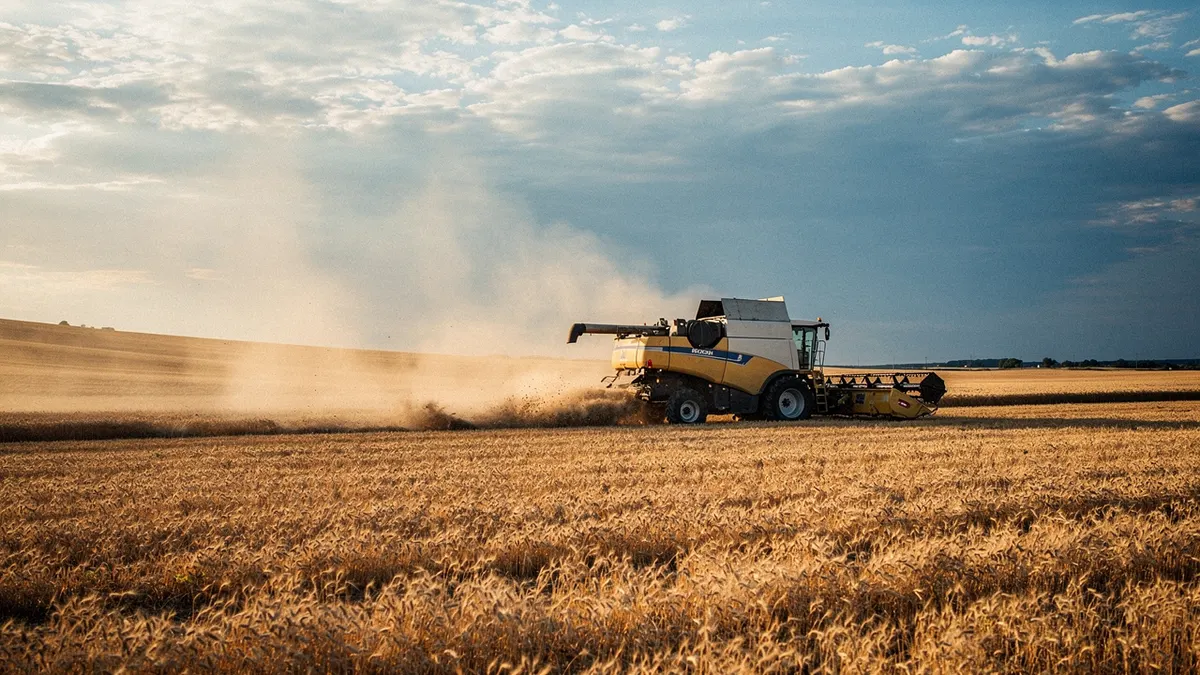
It is a huge sector, with a calendar dictated by sowing and harvest, and almost no creator serves it.
The shooting window is very short
Two to three weeks per season, and they do not move.
Shooting depends on the weather, on soil moisture and on how the work is progressing. One rainy day shifts everything, and nobody will stop a harvest for a film crew.
Three consequences. Plan a broad date rather than a precise one. Accept being called the day before for the next day. And pay a postponement fee rather than imposing a slot: it costs less than a failed shoot.
Decisions are made in winter
That is when the content is actually watched.
During the season nobody looks at videos: the days run fourteen hours. In winter, by contrast, comparisons are made, quotes circulate, shows are held and orders are signed.
Two publishing rules. Publish heavily between December and March, not at the time of the shoot. And plan long formats: here an eight-minute video gets watched in full, which is rare elsewhere.
It must be filmed in the right region
The country is too vast for one image to serve everywhere.
Crops, soils, farm sizes and season length bear no comparison from one province to another. A video shot on the Prairies does not speak to a dairy farm in the East, and it shows in three seconds.
So film by region, with a producer from that region, and accept doubling the shooting budget rather than running a generic image that will convince nobody.
Who is credible
Three profiles, in order of weight.
The producer who actually uses the equipment or the input, and gives their figures.
The agronomist or technical adviser, able to explain a mechanism.
And the farm worker, often the most watched in short formats, because they show the daily gesture.
What does not work: an actor in a new shirt in a field. This audience recognises never-worn boots in one second.
Recruitment is a growing need
It is the fastest rising demand, and almost nobody covers it.
Farms and companies in the sector struggle to recruit, and video content has become their best tool: a typical day filmed, an employee telling their story, the housing, the real hours, the pay stated plainly.
These videos cost little and last for years. They are also shot out of season, which solves part of the calendar problem.
What is filmed depending on the season
| Period | What is visible | Window |
|---|---|---|
| Spring | Sowing and soil preparation | Two weeks |
| Summer | Growth and upkeep | Several months |
| Harvest | Work in the field, day and night | A few days |
What is agreed with the farmer
The hour of real work, access to the fields, safety equipment, an escort and the consent of those filmed. The shoot fits the field, never the reverse.
What is verified before any claim
A certification, a production method, a yield or an origin. Each is proven by a document, to be confirmed with the farmer and a lawyer.
Claims need support
That is the part exposing the brand most.
Yield, fuel saving, input reduction, durability, safety: every figure put forward must come from a documented trial, and be presented as what it is, a result obtained in specific conditions.
The rules applicable to advertising inputs, seeds and equipment vary by product and by province, and are checked with the competent authorities before publication.