Why cleaning products are made for UGC in Brazil, the satisfying formats that convert, and how to brief them.
Why cleaning products are made for UGC
Six reasons specific to the category.
The result is visible immediately, which is rare and films naturally.
The doubt is about real effectiveness, a question no packaging photo settles.
The gesture is simple and repeatable, so the viewer projects themselves effortlessly.
The purchase is repeated every month, which makes a won customer lastingly profitable.
The unit price is low, so the decision comes quickly after the video.
And the content is shared a lot, because it is useful beyond the brand.
The formats that convert
Seven formats, ranked by effect on sales.
The before and after in one take, dealt with above.
The test on the hardest stain in the house, chosen by the creator and not by the brand.
The comparison with the usual method, on two halves of the same surface.
The real dosage: how much product for how much surface, the question that decides the cost of use.
The duration: how long it has to be left to work, information the product sheets give badly.
The smell and texture, described by somebody who has just used it.
And the yield: how many cleanings in one bottle, the category's most effective price argument.
How to film it to be believed
Six technical rules.
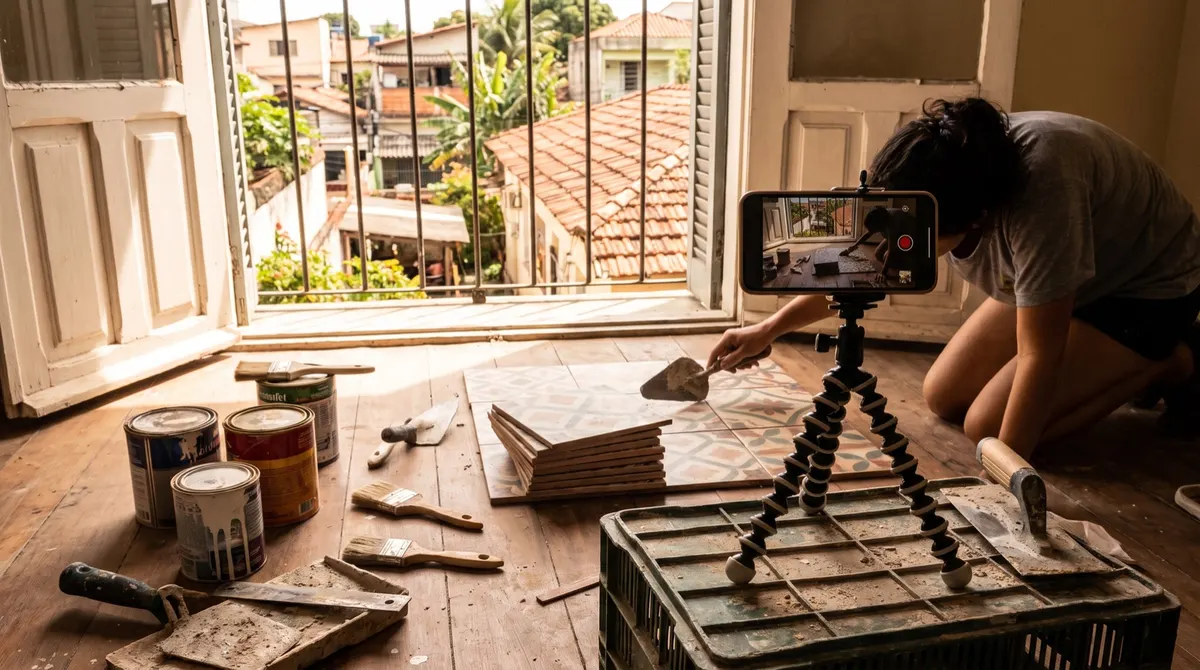
Fixed frame and phone on a support, without which continuity is lost.
Natural light from the side, which brings out shine and dirt better than a lamp.
A real, ordinary surface, with its flaws: a kitchen that is too clean cancels the effect.
Direct sound kept, because the noise of scrubbing and spraying carries the sensation.
Wide shot first, then a separate close shot, never a zoom during the action.
And no filter or colour correction, which would make the result suspect.
The rules of safety and of promise
Seven points to respect, all verifiable.
Never mix two products on screen, whatever the idea.
Show the gloves and the ventilation when the product requires it, even if it weighs the shot down.
Do not film an off-label use, even if it works, because it will be copied.
Respect the label's mandatory mentions and never hide a hazard symbol.
No promise of disinfection, of eliminating bacteria or of a health effect that is not authorised for the product concerned: that point is checked with the competent authorities and with the brand before the shoot.
No unsupported environmental claim, a particularly watched category.
And clear identification of commissioned or paid content.
Where the videos run
Five placements, from most to least profitable.
Retargeting, where the remaining objection is almost always the price per litre.
The product page, where the before and after replaces a list of characteristics.
Discovery advertising, effective in this category because the format holds well.
Marketplaces, where the video distinguishes one item from ten identical products.
And collection pages, to show yield and volume to scale.
What makes a demonstration credible
| Element | What it proves | The condition |
|---|---|---|
| The real mess | That the scene is not staged | A stain made on camera |
| The continuous shot | That there is no cut | No edit between before and after |
| The displayed time | An honest dwell time | A visible timer |
What instantly destroys credibility
A cut between the gesture and the result. The viewer immediately assumes something else happened, and the video becomes counterproductive.
What is verified before talking about the product
A composition, use on a surface, a precaution of use or an environmental claim. Those four are read on the label and confirmed with the manufacturer, never approximated.
What to order
A reasonable initial order for a cleaning products brand.
Two before-and-afters in one take on different kinds of dirt, one dosage test, one yield shot and one comparison with the usual method. Five videos, two creators, two different households.
Three points to write into the brief.
The closed list of authorised wordings, particularly about effectiveness.
The forbidden surfaces, those where the product must not be used.
And the obligation to film continuously for any before and after, dealt with above.
One last marker: in this category the brand is not buying a beautiful video, it is buying proof. One single, slightly long take on a real stain in a real kitchen converts better than five edited shots, and it stays publishable for months.