In paid advertising, the creative has become the targeting. What decides the result is no longer the settings, it is the number of things you have learnt.
One variable per variant
That is the rule that makes a test readable.
If you change the hook, the face, the format and the music at once, you will know that one version performs better, but never why. The next batch then starts from scratch.
The useful method: an identical video body, and four different openings. Then, in the next round, the best opening with two different bodies.
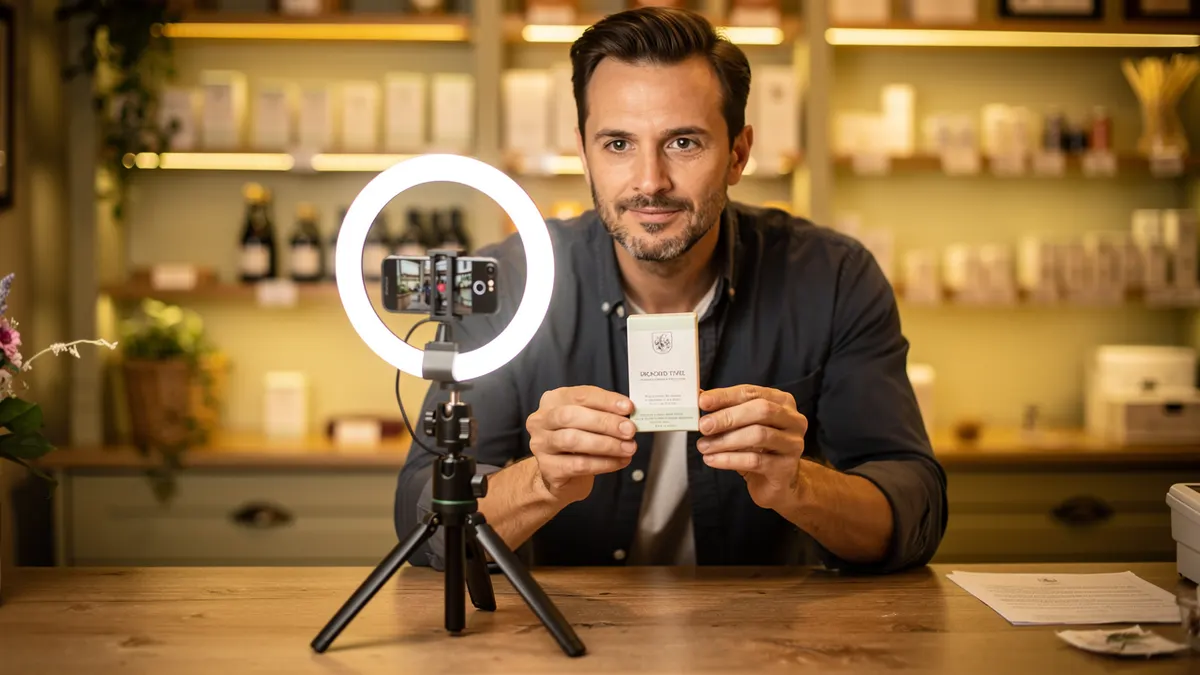
That requires shooting with the edit in mind: identical light and sound conditions on every take, so the pieces are interchangeable.
What the script must contain
Four elements, in this order.
A first sentence understandable without sound and without context.
A recognisable problem, expressed in the customer's words and not the brand's.
A demonstration, filmed in full, showing instead of asserting.
And an ending that says what to do, with no promise of results.
What must not be in it: unverifiable claims, named comparisons and regulated statements. What may be said depends on the product and on your situation, and is checked with a lawyer before the shoot.
The advertising disclosure is planned at the framing stage
That is the particularity of this market, and it is settled before, not after.
A commercial communication must be identifiable as such. In practice that means the disclosure must remain legible for somebody arriving in the middle of the video, and it cannot be relegated to a description nobody opens.
Two shooting consequences. Leave a free zone in the frame to host it. And deliver a master with no burnt-in text, so the disclosure can be adjusted by channel and as the framework evolves.
The exact obligations, their form and the respective responsibilities depend on your situation and are checked with a lawyer, before publication.
The renewal rhythm
A creative wears out, and the speed of wear depends on the size of the audience.
The signal is not the team's boredom, which always comes first. It is the rise in cost per result over several days, at constant budget.
So plan a flow: a batch of variants available before the current batch tires. A brand ordering its videos once the campaign is out of breath goes three weeks with no creative.
Finally, keep the best creative of the previous period online, as a point of comparison. Without it, you do not know whether a batch is good or whether the market has changed.
What changes between two versions
| Variable | What you modify | What stays identical |
|---|---|---|
| The hook | The first three seconds | Everything else |
| The face | A different creator | The script, word for word |
| The format | Vertical or square | The edit |
What makes a test readable
One variable at a time, an equal run time and an identical budget. Three simultaneous changes say nothing about what worked.
What makes a creative wear out
Repetition with the same audience. Planning two new hooks a month costs less than restarting a whole campaign.
The rights to write before launching
Three lines, and they condition everything else.
The duration, counted from a date, with a renewal price fixed in advance.
The channels, explicitly distinguishing the brand's account from paid distribution.
And distribution from the creator's account, which is a separate service and is negotiated separately.
A campaign stopped because a licence expires at the best moment is the most expensive mistake in this category, and the easiest to avoid.
Sources
Checked on 4 September 2026. Thresholds and rates change: where this guide and the official source disagree, the official source is right.