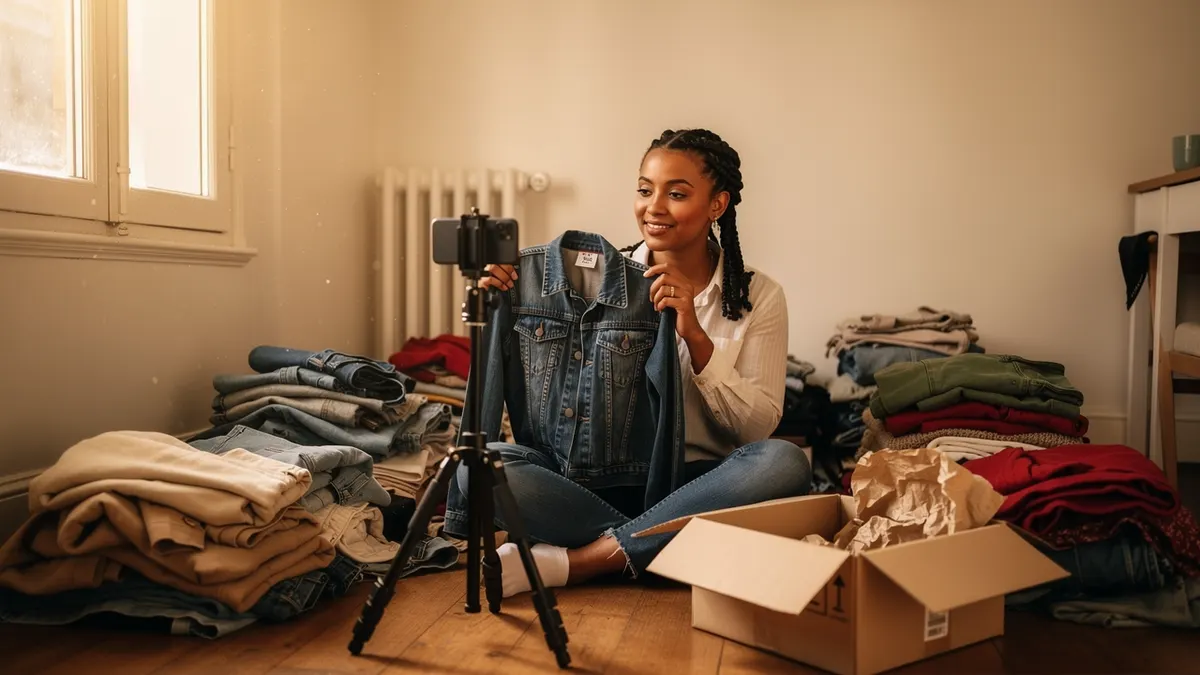
This market is huge here, and it is not filmed like new goods. The buyer is not after a beautiful image, they want to know what they are going to receive.
What content really sells second-hand
Four formats, and none looks like an advert.
The commented selection: five pieces found, shown one after the other, with the price, the real condition and what comes with them.
Wearing it on the body or the object in situation, which replaces measurements nobody visualises.
The comparison with new: the same model, the original price, today's price, what changed in between.
And the restoration: the cleaning, the small repair, the object before and after. It is the most watched format in the category, because it turns a second-hand purchase into a good decision rather than a compromise.
The common thread is precision. An exact figure, a named material, a flaw shown are worth more than three adjectives.
Claims and traps
Four points, all concrete.
Do not fake a discovery
Filming a supposed find when the piece comes from a partner is the opposite of what sells this category. The second-hand audience is used to comparing, and it spots the inconsistency.
Careful with claims about condition
"As new", "never worn", "no flaws" are assertions, not impressions. They commit the seller and they are proved on screen, not in the caption.
Counterfeiting is a real risk
See the box. Add a shooting rule: if a detail seems doubtful to you, do not frame it in close-up to make it flattering, and do not comment on it.
Paid partnerships are disclosed
A paid video remains a commercial communication, even when it looks like personal content. The identification obligations depend on your situation and on the channel, and are checked with a lawyer, before publication.
Practical notes for the brand
Five points that improve the result.
Send the pieces early enough for them to be worn or used before the shoot.
Give the object's history when you have it: provenance, year, repairs. That is what feeds the commentary.
Accept that flaws are shown. A listing that hides them produces returns, and returns cost more than an honest video.
Provide the information that reassures: returns policy, authentication service, guarantee, dispatch time.
And plan the short format for advertising, plus a long version for the product page, which is the only place where the buyer watches all the way through.
What a buyer wants to see before buying second-hand
| Doubt | The shot that answers it | Length |
|---|---|---|
| The real condition | The flaws filmed close up, not hidden | 10 s |
| Authenticity | The label, the number, the stitching | 8 s |
| Size and weight | The object held, compared to a hand | 5 s |
What is said out loud
The year of purchase, the number of uses, what has been repaired and what has not. A declared flaw reassures more than an object that looks too perfect.
What is checked before publishing
No personal data on a label, no unrelated third-party brand in frame, and a description matching what is shown.
The resale season
It is regular and predictable.
Sorting and moving periods feed the supply, the new school year and the end of the year feed the demand. A campaign is therefore prepared out of step: you film when the stock arrives, you run it when the buyers are looking.
Finally, keep the most generic videos, the ones about care, sizing or authenticity. They serve all year, while the specific object will have sold in three days.