Around Atlanta, warehouses that once held freight now hold sound stages, and the people walking out of them at six in the evening are grips, gaffers, camera assistants and production coordinators. Georgia's film tax credit brought the studios, the studios brought the crews, and the crews stay between productions because there is always another one. A creator here is working in a city where professional production is ordinary, plentiful and, compared with Los Angeles, affordable.
That is the Atlanta advantage: not that brands here want cinema, but that the infrastructure of cinema is available at rates a brand can actually pay, and a creator who knows how to use it, or how to compete with it, has an advantage no other city in the country offers at this price.
The credit built the town, and the town is for hire
The Georgia film incentive is the reason the state became a major production center, and it is not a creator's concern directly: the credit is claimed by productions with budgets far beyond a brand video, and its rules are not the creator's rules. What matters is the side effect. A market with that much production has equipment rental houses, studios of every size, freelance crew between jobs, and editors and colorists who take short work when the series wraps.
For a creator, that means two things that are rare elsewhere. First, when a brand wants a step up from phone footage, a half-day with a camera operator and a small studio is a phone call and a modest budget, not a production company's minimum. Second, the brand knows this too, and some briefs that would be a solo phone shoot in another city arrive here with a crew attached. The creator's role on those days is the face and the voice, not the camera, and the fee should reflect that the creator is talent, with usage rights priced as such. The distinctions in the guide to usage rights for UGC matter more when a brand has paid for a crew: it will want to use the footage widely, and it should pay for that.
Competing with a crew, and when not to
The other consequence is that a creator's phone video is compared with what a crew would have produced for not much more money. The comparison is fair, and what usually stops a creator from winning it is trying to imitate the crew. The way to win it is to be what the crew cannot be: fast, first-person, filmed the day the product arrived, in the creator's own space, with no call sheet. Brands here buy both, for different reasons; a creator who is clear about which one she sells gets the briefs meant for her.
The brands, and the community they hire from
Atlanta is a headquarters city for beverages, logistics, home improvement and media, and a center for Black-owned brands and for the creators, agencies and audiences that grew up around its music and entertainment industry. The two overlap: a beverage company's national campaign and a founder's haircare brand may be filmed by the same creator in the same week, and the second job is often where the creator's audience actually is.
Authenticity has a specific meaning here. Brands come to Atlanta creators for a voice and a culture that their agencies in other cities cannot manufacture, and a creator who flattens that voice to sound like a national ad has removed the reason she was hired. The brief will sometimes push in that direction, because a brand's compliance reflex is to make everything sound the same. The creator's job is to keep the video hers while meeting the brief's actual constraints, which are usually about claims and disclosure, not about tone.
Filming in the city, and the sound stage down the street
Outdoor filming here is administered by the city and by the suburban jurisdictions around it, some with their own film offices; this guide does not state their rules, and when a brand wants a genuinely public location, the brand's contact with the relevant office is the clean route.
The small studio as home base
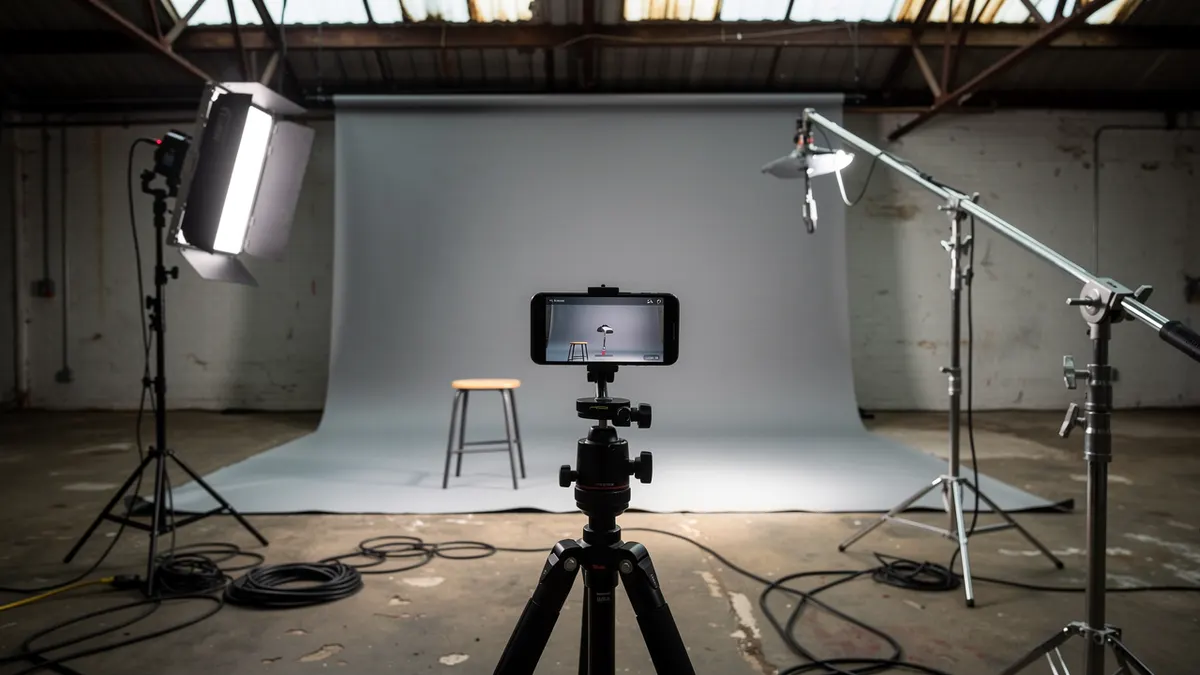
The alternative, unique to this market at this price, is to skip the sidewalk. Studio space, rental sets and the back rooms of production facilities are available by the hour, and a brand that wants a controlled look can have one for less than a permit dispute costs. Creators who build a relationship with one small studio have a location, a light and a sound-treated room on demand, which is the Atlanta version of the home setup other cities' creators rely on.
Paid like talent, labeled like a creator
A crewed shoot changes two things a creator might assume it does not. The disclosure obligation stays with whoever posts: if the creator publishes the result on her own account for a fee, the Federal Trade Commission's guidance wants a material connection stated with the post and hard to miss, whatever the production budget behind it. And the money runs through production payroll: companies here pay crew and talent every week, the creator is paid through the same channel, on the same terms, with a W-9 first and a Form 1099-NEC at year end once payments reach $2,000 under the 2026 instructions. Nothing a creator asks will surprise the production's accountant.
Sources
- Federal Trade Commission, Disclosures 101 for Social Media Influencers
- IRS, Instructions for Forms 1099-MISC and 1099-NEC (12/2026)
Checked on 19 September 2026. This guide is not legal or tax advice. Where this guide and the official source disagree, the official source prevails.