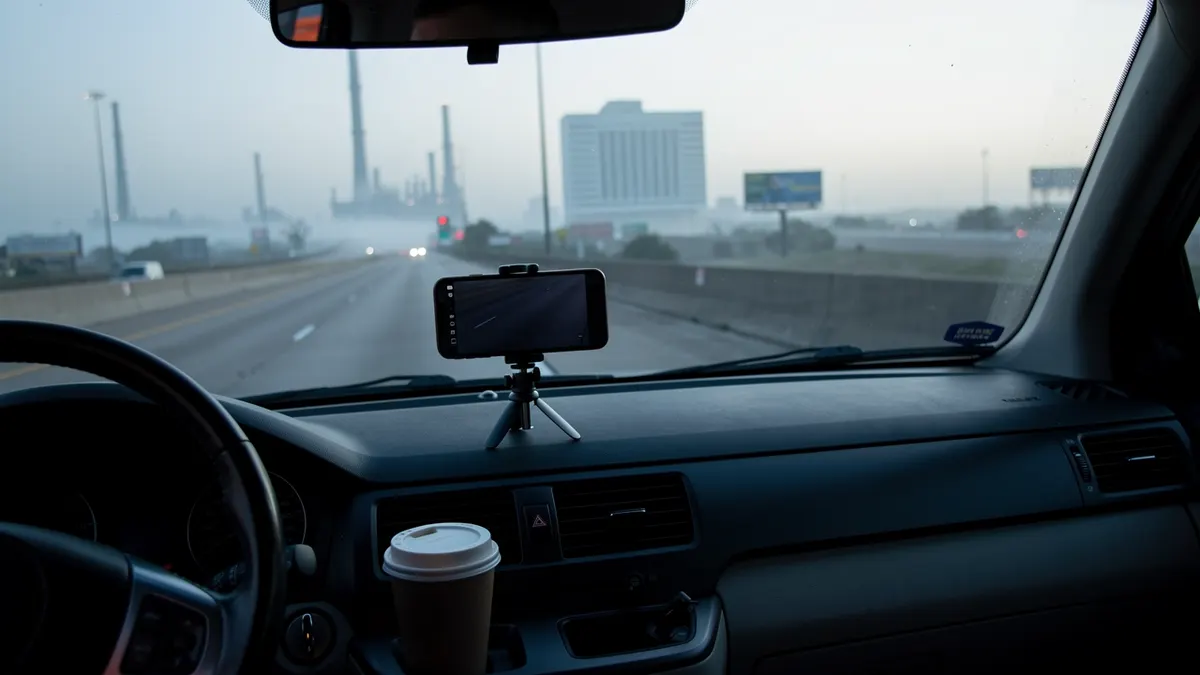
Drive Houston's freeways for an hour and you pass refineries, hospital towers, a port, a space center, engineering campuses and mile after mile of suburbs, and almost nothing that looks like the set of a UGC video. There is no boardwalk, no creator district, no coffee shop where brand founders sit with their laptops. The objection every creator arriving from Austin or Los Angeles raises within a month is that there is no work. There is a great deal of work. It does not look like content.
Houston's economy is energy, medicine, logistics and engineering, and its brands sell to other businesses, to patients, to plant managers and to procurement teams. The creator who does well here stopped waiting for lifestyle briefs and learned to make the video a safety manager or a clinic director actually needs.
The buyer sells to businesses, and the video has a different job
In consumer markets, UGC does one thing: it makes a stranger want a product. In Houston, most of the companies with a marketing budget are not selling to strangers. They sell industrial equipment, engineering services, medical care, software for the energy sector, logistics capacity and training. Their video needs are real and their production budgets are large, but the brief is not "show us using it on your kitchen counter".
The briefs that exist here are recruitment videos for companies that cannot hire fast enough, explainer content for products no consumer will ever buy, testimonial-style pieces with real customers and employees, and event coverage from the trade shows and conferences the city hosts continually. The creator's skill set is the same, a phone, a face, a way of talking that does not sound like a corporate script, but the client is a communications director, and the person on camera is often not the creator at all. The guide to UGC for B2B brands describes the format; Houston is where it is a full-time market.
The medical center is a market, and a regulated one
The Texas Medical Center and the companies that supply it are an economy of their own, and they generate a steady demand for patient-facing and staff-facing video: what a procedure involves, what a clinic looks like, why a nurse should apply. It is also a category where a creator cannot improvise. Anything that reads as a health claim is subject to rules the client's compliance team will enforce, and anything filmed inside a facility involves patient privacy, consent and access rules that the creator does not set.
The working rule is simple: the client supplies the words, the creator supplies the delivery, and nothing said on camera about outcomes, results or comparisons comes from the creator's own experience unless the client has cleared it. That is a narrower job than consumer UGC and a better-paid one, because the people who can do it without creating a compliance problem are rare.
What a "Texas rate" is made of
Creators in Texas tend to quote lower day rates than creators in California and New York for the same work, and clients sometimes take that to mean the work is cheaper. Part of the difference is real cost of living, and part is arithmetic: the Texas Comptroller notes that Texas has no personal income tax and that sole proprietorships are exempt from the state's franchise tax, so a Houston creator keeps more of the same gross than a Los Angeles creator does. A rate that looks low on the invoice can net the same.
The federal side is unchanged, a W-9 first and a Form 1099-NEC once payments reach the $2,000 threshold in the 2026 instructions. What is different is the buyer: a communications director, not a marketing team, and a company whose supplier systems were built for equipment vendors, so the onboarding starts the day the first brief is agreed, not the day the first invoice is due.
Filming in a city built for cars
Houston is spread out and driven, and that shapes the shoot more than any permit. Locations are far apart, parking is part of the plan, and a "quick exterior" can mean forty minutes on a freeway each way, so the drive is priced into the day.
The heat is the other constraint. For much of the year, outdoor filming after mid-morning means sweat on camera, harsh light and a phone that overheats in the case. The working rhythm is early: exteriors at first light, interiors by ten, and the afternoon for editing in air conditioning. Clients who are local know this and schedule accordingly; clients from elsewhere ask for a golden-hour shot at six in the evening in August and are surprised by the answer.
Where the consumer work is
There is consumer work in Houston, and it is not small: a large and diverse population, restaurants and food brands that reflect it, fitness and beauty businesses, real estate and home services, and retailers headquartered in the region. The creators who win it are usually the ones who also do the B2B work, because the B2B work pays the rent while the consumer briefs are seasonal. A creator who only wants lifestyle briefs will find them, but in the volume of a mid-sized market, not of a city this size.
The disclosure rule does not care who the audience is
The Federal Trade Commission's guidance on endorsements applies whether the viewer is a shopper or a plant manager. If a creator is paid, gifted or otherwise connected to the company whose product or employer brand she is promoting, the post needs a disclosure placed with the message and hard to miss. B2B clients sometimes assume the rule is for consumer influencers only. The guidance carves out no exception for B2B or employer content: a creator paid to praise a company on her own account has a material connection with it, and the safe reading is to disclose. Saying so early, and building the disclosure into the video, is part of what the client is paying a professional for.
Sources
- Texas Comptroller of Public Accounts, Starting a New Business
- IRS, Instructions for Forms 1099-MISC and 1099-NEC (12/2026)
- Federal Trade Commission, Disclosures 101 for Social Media Influencers
Checked on 19 September 2026. This guide is not legal or tax advice. Where this guide and the official source disagree, the official source prevails.