Industry, design and gastronomy make this a market of its own, with corporate budgets few creators cover.
An industrial economy that looks after its image
Six client families.
Industrial companies and subcontractors.
Design studios and engineering offices.
Gastronomy and retail players.
Cultural and tourism institutions.
Business service companies.
And schools and training centres.
What they order
Six frequent formats.
A site or know-how presentation.
A recruitment video.
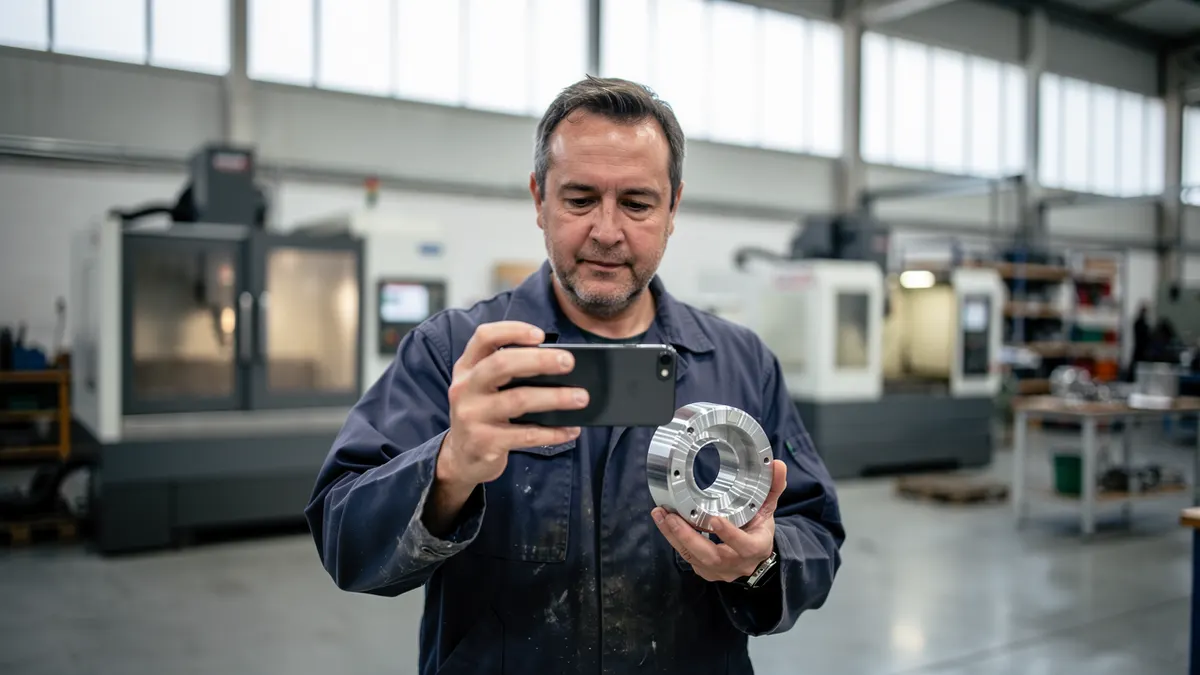
A product or machine demonstration.
A team testimonial.
Trade-fair coverage.
And a short series for social media.
What an industrial company wants to show
Six goals behind an order.
Explaining what an invisible product is for.
Reassuring a buyer committing a long budget.
Recruiting in a trade nobody applies to.
Showing a certification without listing it.
Presenting a recently modernised site.
And existing somewhere other than a trade-fair stand.
How to work the industrial client
Seven reflexes that reassure.
Ask for the visual guidelines in the first exchange.
Get the figures approved before the shoot.
List the zones and items forbidden on camera.
Deliver a short test before the full series.
Follow safety instructions without arguing.
Provide exactly the formats requested.
And keep deadlines even when approval drags.
The details that get a delivery refused here
Seven mistakes to avoid.
A logo cut by the edge of the frame.
A colour that drifts between two shots.
A typeface that is not the company's own.
A background that shows a competitor's product.
Burnt-in text too small to read on a phone.
An interview recorded with echo.
And a format that does not match the announced channel.
Design as a selection criterion
Six points looked at in your profile.
The visual consistency of your samples.
Colour fidelity from one video to the next.
The care taken with framing.
The legibility of burnt-in text.
The sound quality on interviews.
And the cleanliness of the cuts between shots.
Gastronomy, the other way in
Six clients reachable quickly.
Restaurants and tapas bars.
Food trade craftspeople.
Delicatessens and wine shops.
Local food brands.
Cookery schools.
And organisers of food events.
Filming where rain is the norm
Six local habits.
Plan an indoor alternative every day.
Protect the gear from the moment it leaves the bag.
Announce a window rather than an hour.
Shoot exteriors as soon as the light allows.
Put a fallback date in the quote.
And clean the lenses after every outing.
How to build a price here
Six lines to show.
Preparation and reading the guidelines.
The real time on site.
The number of deliverables and their formats.
The number of revisions included.
The rights line, with duration and territory.
And the option of an English version.
What a transformed industrial city orders
| The buyer | Their typical order | What they require |
|---|---|---|
| An industrial group | Demonstration and recruitment | Internal sign-off |
| A cultural venue or hotel | The architecture and the experience | A very polished result |
| A restaurant or producer | The gesture and the plate | An off-service shoot |
What the architecture brings to a shot
Strong lines and reflective surfaces. A shot using those lines gets noticed, but the reflections mean checking what appears in the material before approving the take.
What the local language changes about a job
A video in the regional language has particular value for a client from here. That is not a constraint but an argument, and stating it in the profile is enough to attract enquiries others do not get.
What the platform brings
On UGC MATCH, joining is free and there is no subscription: you are visible by category and country, and the order keeps a record of the brief and the delivery. The brand pays at ordering, the funds are not released straight away, and payment goes out on approval. The platform retains 10% of the price on the creator side, who therefore keeps 90%, and charges the brand a 6% service fee, with a minimum of 1.50 EUR.
One last marker: here visual care is an entry requirement, not an extra. One coherent series is worth more than ten scattered samples.
Sources
- Agencia Tributaria, Spanish tax authority
- Spanish Social Security, self-employed registration (RETA)
Checked on 26 August 2026. Thresholds and rates change: where this guide and the official source disagree, the official source is right.