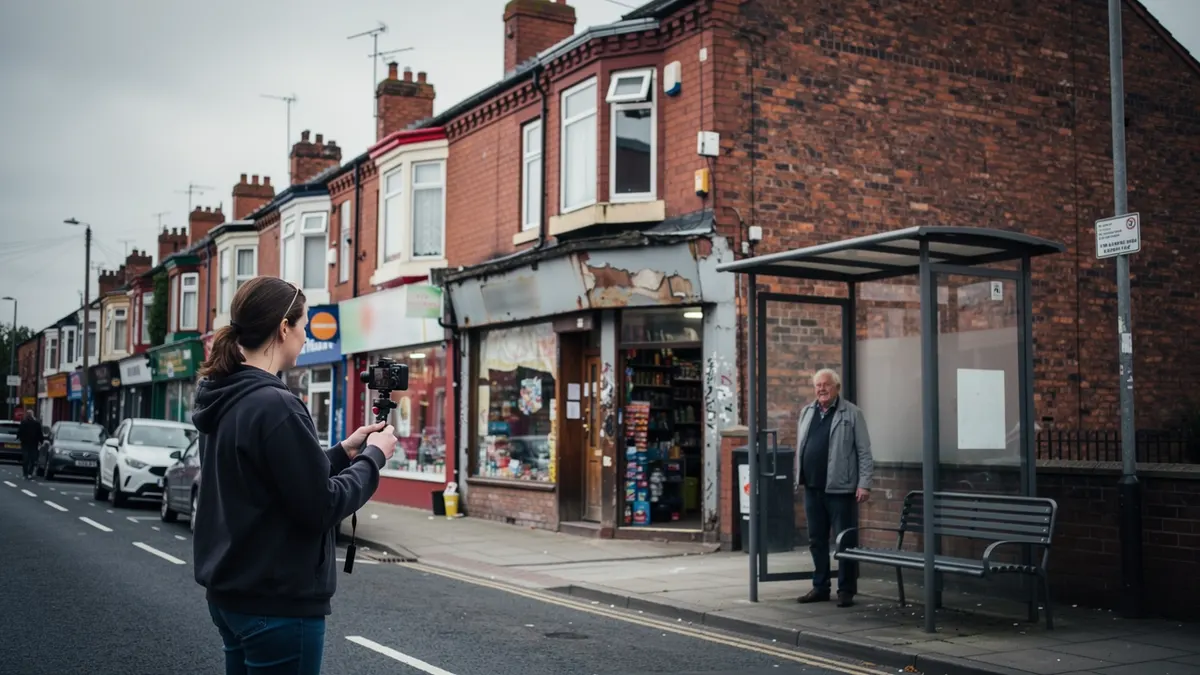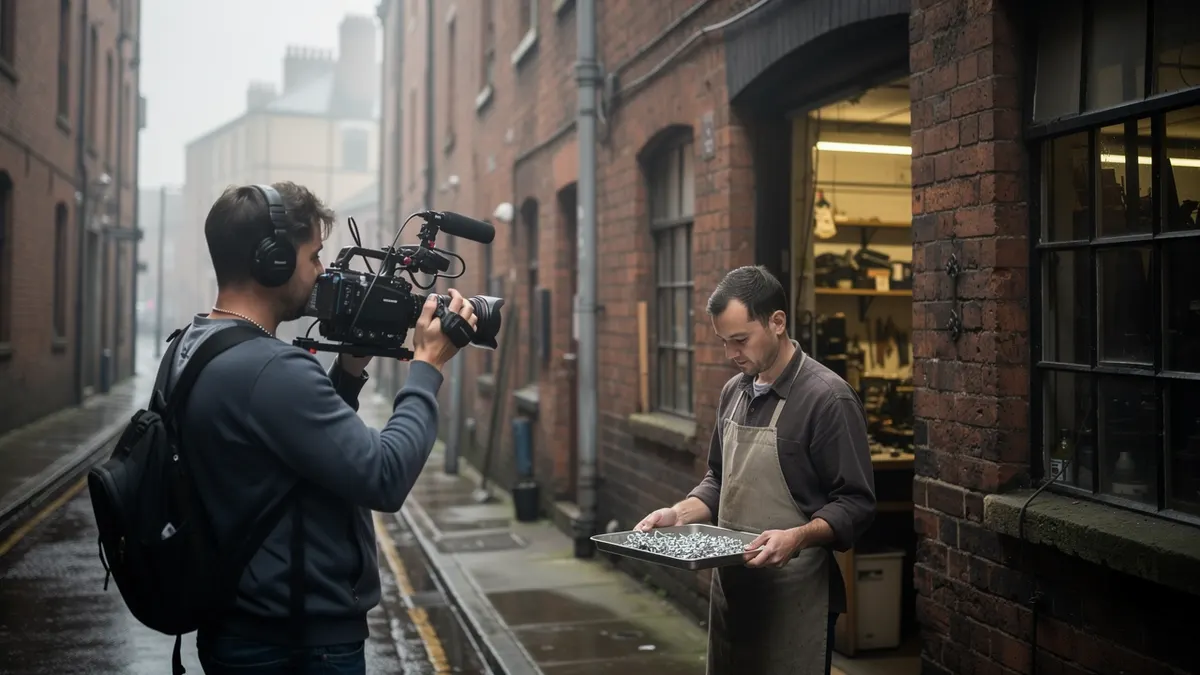
Birmingham is the second largest city in the United Kingdom and it does not feel like a capital of anything. It has no single centre, its wealth is spread across a ring of towns that are technically separate, and the businesses that matter are often in a unit on an industrial estate rather than on a high street.
For a creator that is good news badly understood. The city has more companies with budgets than almost anywhere outside London, and almost none of them are looking for lifestyle content.
A second city without a centre
Manchester has a core you can walk. Birmingham has a business district, a jewellery quarter, a canal-side leisure area, a huge student population to the south, and an industrial belt that runs for miles in every direction.
What that changes about the work
You cannot build a practice on being in the middle of things, because there is no middle. What works is picking a corridor, learning it properly, and being the person who serves it: the Jewellery Quarter, the Black Country manufacturers, the professional services blocks, the university cluster.
It also means travel time is real. Two shoots in one day is common in Manchester and awkward here, and a creator who prices as though everything is fifteen minutes away is losing an hour to the ring road every time.
What the city actually buys
| Segment | What they need | Why they buy it |
|---|---|---|
| Manufacturing and engineering | Recruitment, process, trade fair loops | They cannot hire, and a job advert does not show the work |
| Professional services | Explainer video, partner profiles | Judgment is the product, and it has to be seen |
| Jewellery and small makers | Product, craft, hands at work | Their whole difference is how it is made |
| Retail and hospitality | Short repeat clips | The ordinary local rhythm |
| Universities and colleges | Open days, recruitment, research | Two clear seasons and real budgets |
The row that decides a career here
Read the table again with your own year in mind, because one of those five segments will provide most of your income and the other four will provide variety.
The first row is the one that decides whether a creator does well here. The West Midlands has a manufacturing base that is quietly enormous, its firms have a shortage of people rather than of customers, and video that shows a real shop floor does more for them than any campaign.
The ninety minute trap
London is ninety minutes away by train, which produces two mistakes in opposite directions.
The first is charging London rates. Birmingham clients compare you to local suppliers and to what they paid last year, not to a Soho production company, and a number that arrives without context reads as an insult rather than as a price.
What to say instead
Give the price and give the reason in the same breath: what is included, how many deliverables, how long the day is. Midlands clients are not cheap, they are careful, and a well explained number lands where a bare one does not.
The second mistake is the opposite: treating London as a market you can serve from here. You can, for the right jobs, and the ones worth taking are those that pay for the day rather than the hour, because two hundred minutes of travel has to come from somewhere.
Where people film
The Jewellery Quarter is the most useful square mile in the city for a creator. Workshops, small manufacturers, red brick, tight streets, and a density of makers who all need the same kind of content and talk to each other.
Digbeth gives industrial texture, murals and warehouse interiors, and it is where most of the creative businesses have ended up. The canals give water and brick with no crowds if you go early. The business district around Colmore Row gives the clean corporate backdrop that professional services want and that nowhere else in the city provides convincingly.
The one to plan around
An industrial estate visit is a different day from a city centre one. Expect a security process, a car park, protective equipment, someone accompanying you, and a client who is genuinely busy. Budget more time than the filming suggests and confirm what can be shown before you arrive, because a competitor's part on a bench can make a whole sequence unusable.
What it means for a career here
Birmingham rewards specialism faster than it rewards range. The city is too spread out to be everywhere and too full of similar businesses to be a generalist for long.
A creator who becomes the person who films manufacturing, or care homes, or jewellery, or student recruitment, is in a market where the next ten clients are three miles from the last one and already know each other. That is a much shorter path to a full year than trying to be the general creator for a city that does not have a centre to be general in.