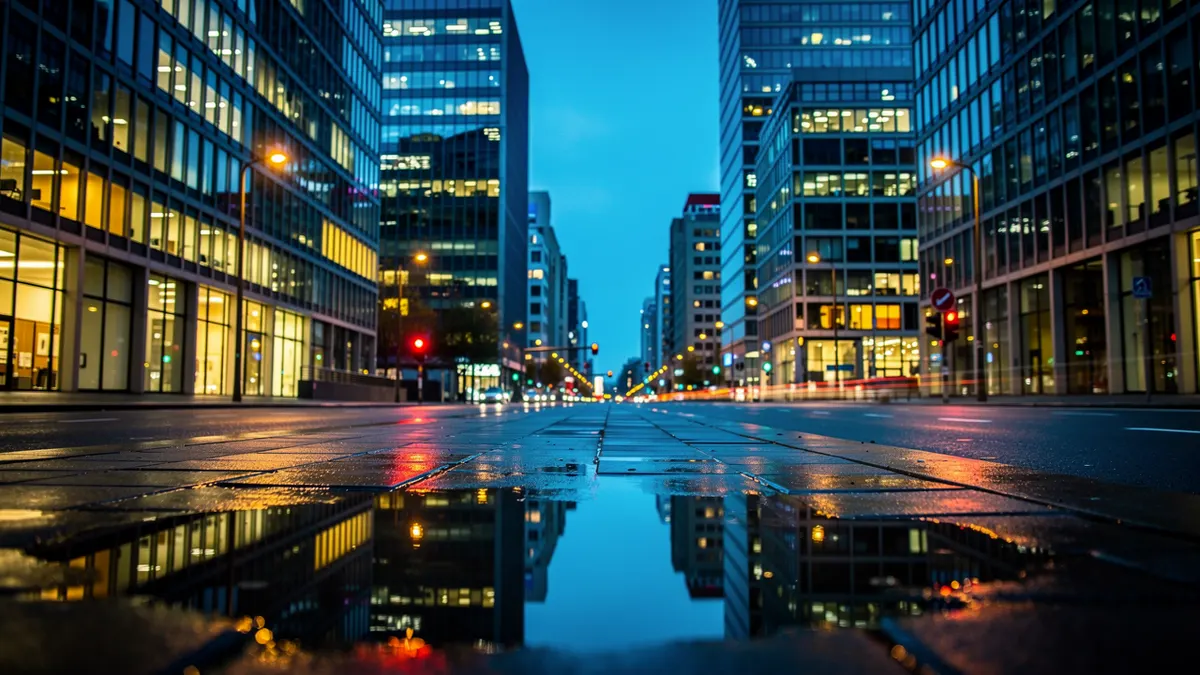
Brussels is small enough to cross on foot and dense enough that a morning of walking passes more potential clients than a day of driving anywhere else in the country.
The catch is that those clients do not share a language, a calendar or a way of buying.
Three markets sharing a postcode
There is the French speaking city, the Dutch speaking one, and the international one that works in English and often has no local reference at all. They overlap on the same streets and they buy differently.
For a creator this is the only place in Belgium where being comfortable in three languages is a normal job requirement rather than a bonus. It is also the only place where you can serve all three without moving.
The buyers nobody approaches
Brussels holds a dense layer of institutions, federations, associations and representative offices. They have communication budgets, a permanent need to explain complicated things simply, and a recurring problem attracting staff.
What they buy
Explanatory video and recruitment content, almost never advertising. The register is different: no hooks, no urgency, no selling. Clarity is the product.
How they buy
Slowly, on their own calendar, and often through a formal process. That sounds discouraging and is actually the advantage: a slow process filters out everyone impatient, and the ones who stay get renewed.
The nineteen communes
Brussels is not one municipality. It is nineteen, each with its own administration, and that has a practical consequence the first time you set up outside.
Whether you need permission to film in a public space depends on where exactly you are standing and on what you brought. A phone in your hand is not the same as a tripod, lights and a small crew, and the threshold is not identical across the region.
The workable habit is to ask the commune where you plan to shoot rather than assume, and to shoot handheld when you have not asked. It costs one email and it avoids the conversation that ends a shoot halfway.
What to check before each shoot
| What you are filming | The language expected | What to confirm first |
|---|---|---|
| A local shop or restaurant | The language of the neighbourhood | Whether customers will be in shot, and their consent |
| An international company | English, almost always | Who owns the footage inside the group |
| An institution or federation | Often three versions | The approval chain and how long it takes |
| Anything in a public space | Not applicable | The commune, and what your setup requires |
What a second language doubles
| Step | One language | Two languages |
|---|---|---|
| Writing the script | Once | Twice, not a translation |
| Shooting | One take per shot | Two takes per spoken shot |
| Subtitles and proofreading | One set | Two sets, read by natives |
What does not double
The scouting, the setup, the light and the edit of silent shots: hence the value of filming everything the same day.
What is invoiced as its own line
The second language, with its proofreading, its subtitles, its thumbnail and its rights per market.
What makes you employable here
Delivering more than one language from one order. That is the whole proposition in this city, and very few individual creators state it plainly on their profile.
Say it in your first line, name the three languages you can actually deliver, and you will be one of the few results a Brussels buyer finds when they search for exactly that.