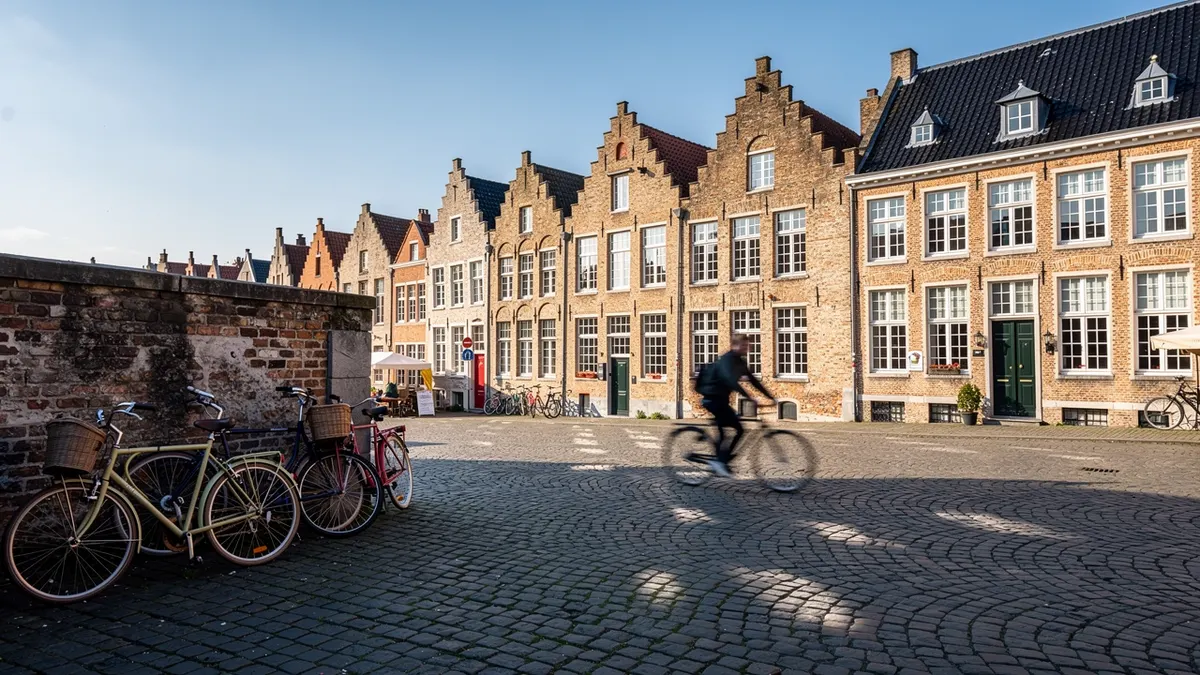
Flanders has no capital. That single absence decides how a creator builds a client base there.
A network rather than a centre
Six consequences for your business.
Your market is regional, not urban.
Travel is part of the work, therefore part of the price.
One week can cover several cities.
Local competition is weaker than in a capital.
Budgets are serious but negotiated.
And reputation travels fast between neighbouring companies.
The clients that hire the most
Six categories.
Industrial and family-run small businesses.
Regional shops and chains.
Food and horticulture companies.
Business service providers.
Tourism and event operators.
And schools and training bodies.
The family business account
Six reasons to make it your core target.
The decision is taken in one conversation.
The need is real and recurring.
Agency competition there is weak.
The content also serves recruitment.
The relationship lasts several years.
And one referral is worth three cold approaches.
Language is an asset
Six uses that can be invoiced.
A Dutch version for the local market.
A French version for the south of the country.
An English version for export.
Subtitles adapted to each market.
Proofreading by a native speaker.
And content designed for an international fair.
Organising your travel
Seven simple rules.
Set a radius included in the base rate.
Price the kilometre beyond that radius.
Group two clients from the same area on the same day.
Announce an arrival window, not an exact time.
Sort out parking near the site.
Carry reduced, portable gear.
And keep a margin for traffic delays.
What these companies order
Six frequent formats.
A company or site presentation.
A product or machine demonstration.
A recruitment video.
A client or staff testimonial.
Trade-fair coverage.
And a short series for social media.
How to build a price here
Six lines to show.
Preparation and the scoping call.
The half-day or day on site.
Travel, with its included radius.
The number of revisions included.
The rights line, with duration and territory.
And the option of a second language.
The administrative side
Six points to check before invoicing.
The status under which you operate.
VAT obligations, to be confirmed with an accountant.
The mandatory wording on the invoice.
The payment term written in the quote.
The insurance covering your activity.
And the rights transfer signed before release.
What a trade and industry region orders
| The buyer | Their typical order | What they require |
|---|---|---|
| A food distributor | The product and its use | The product sheet respected |
| A manufacturer | The technical demonstration | Internal sign-off |
| A local retail chain | In-store videos | Fast delivery |
What language changes about the work
A Dutch-language video is not a French one with subtitles. The pace, the phrasing and the humour differ, and a regional client notices it in the first five seconds.
What the client expects from a delivery
Named files, in the right formats, ready to publish. That discipline shows on the first order, and it is worth more than a sophisticated edit for winning the second.
What the platform brings
On UGC MATCH, joining is free and there is no subscription: you declare your languages and your area, you are visible by category and country, and the order keeps a record of the brief and the delivery. The brand pays at ordering, the funds are not released straight away, and payment goes out on approval. The platform retains 10% of the price on the creator side, who therefore keeps 90%, and charges the brand a 6% service fee, with a minimum of 1.50 EUR.
One last marker: with no capital, nobody dominates the market. That is precisely what leaves room for a well-organised creator.