Leeds is one of the largest office economies in the United Kingdom outside London. Finance, legal services, insurance, digital and a very large public sector presence, mostly in buildings that look identical from the street.
That shapes the video market in a way creators arriving from a consumer background do not expect. There is money here, and almost none of it is buying content about a product.
A city of head offices and back offices
The employer of a thousand people in Leeds is rarely a factory or a shop. It is a floor of desks: claims, compliance, customer operations, software, casework.
What that means for demand
These organisations have almost no marketing need for video, because they are not selling to the public. What they have instead is a permanent hiring problem for roles that are hard to describe and easy to leave.
So the brief is not make us look good, it is help someone picture a Tuesday here. That is a different job, and it is far easier to do well than a brand film, because the raw material is real people doing real work.
Recruitment is the actual budget
| What the employer says | What the candidate wants to see |
|---|---|
| A dynamic and inclusive culture | The actual floor, at eleven in the morning |
| Career progression | Someone two years in, saying what changed |
| Great benefits | Whether the team seems to like each other |
| An award-winning workplace | The commute, the desk, the light |
| A modern office | Whether anyone looks stressed |
The right column costs nothing to film and is almost never commissioned. The left column costs a fortune to produce and persuades nobody, because every competitor on the same street says exactly the same thing.
What makes an office video work
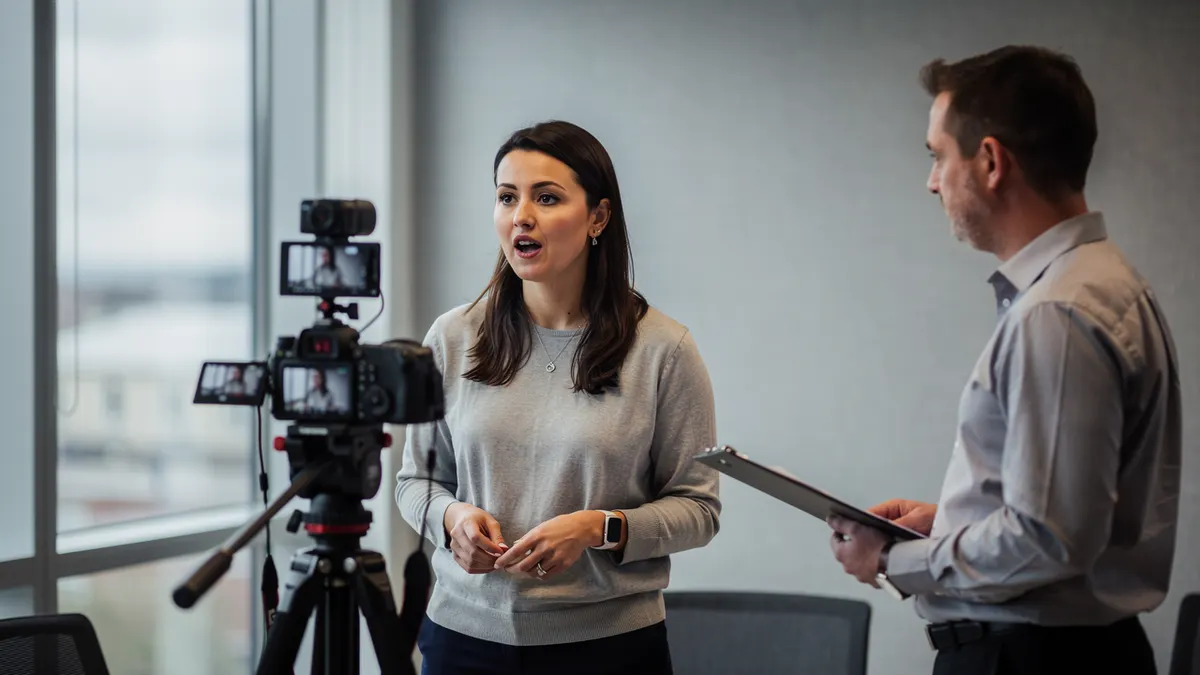
Film people, not premises. Two or three employees at different stages, each answering one question, cut short. Then the room, the walk in, the kitchen, the view from the desk.
Avoid the founder or the director opening the film. In a company of eight hundred, the person a candidate wants to hear from is the one who would sit beside them.
Students are two markets, not one
Leeds has one of the largest student populations in the country, and creators usually see only the obvious half of it.
The obvious half is the audience: young, concentrated, on their phones, useful for any consumer brand that wants reach. The less obvious half is the client base built around them.
The second one is where the money is
Student accommodation, letting agents, gyms, phone repair, bars, food delivery, language schools, driving instructors, hairdressers. All of them sell to a population that turns over completely every three years, which means they can never stop marketing and their year has two hard deadlines: the arrival in September and the housing search in January.
That calendar is the most predictable commercial rhythm in the city, and a creator who plans for it books two seasons in advance rather than chasing.
Where people film
The city centre is compact and workable on foot, which after Birmingham feels like a luxury. The corporate backdrops are around the financial district and the newer riverside developments, and they photograph well without permission because most of it is public.
For anything with texture, the industrial buildings around Holbeck and the arches under the railway give brick and iron. For student-facing work, Hyde Park and Headingley are the two neighbourhoods that read instantly to the audience that lives there.