Scotland has two big cities and they are not interchangeable. Edinburgh holds the institutions, the finance and the government; Glasgow holds the people, the commerce and most of the creative sector.
For a creator that distinction matters commercially, and there is a second one that matters more: Glasgow is unusually hard on content that was not made here.
The commercial capital, not the second city
Glasgow is the larger of the two and it is where most consumer businesses actually operate: retail groups, hospitality, sport, music, a large media presence and a dense population inside a small radius.
What that changes about approaching clients
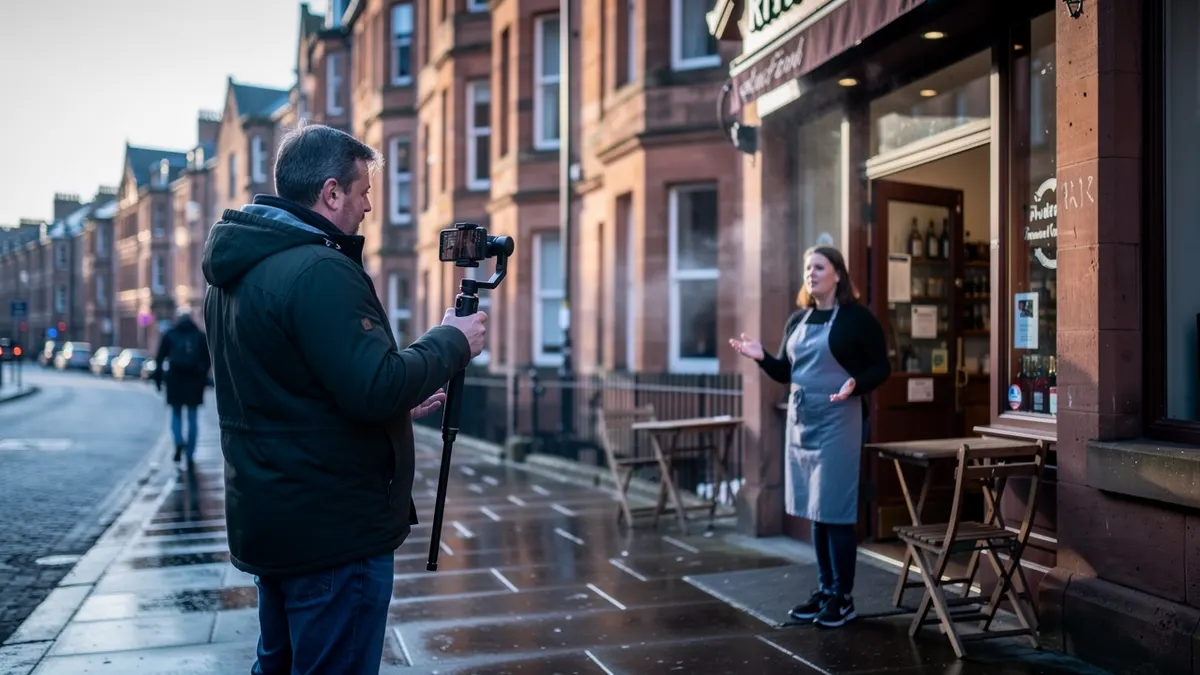
The decision maker is usually in the room. Where a national brand's Scottish marketing might be decided in London, a Glasgow business decides in Glasgow, and it decides quickly.
That rewards a direct approach in a way that other cities do not. A specific message to a named person, with one example and a price, gets an answer here more often than a polished proposal does anywhere else.
The city does not forgive the regional version
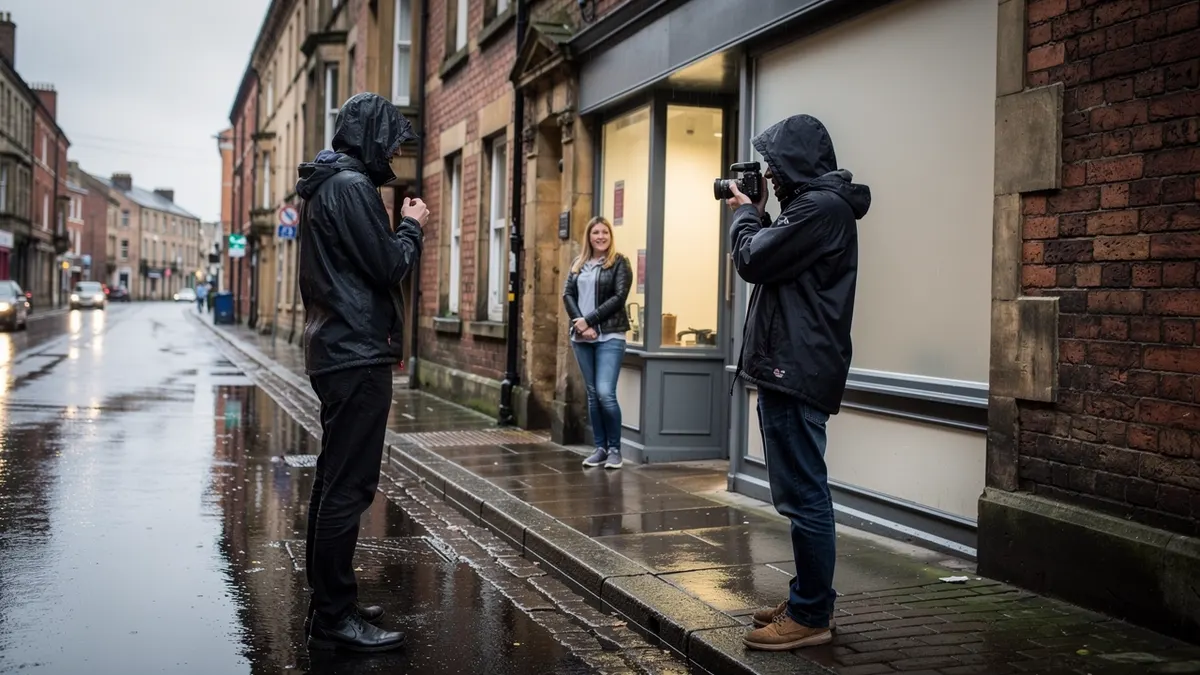
The most common mistake a national brand makes in Scotland is to shoot once in England and adapt. It is cheaper, it looks fine in the edit, and it is spotted immediately.
What gives a recycled campaign away
The location, first. Anyone who lives here knows what a Scottish street looks like and what it does not, and a terraced house in the Midlands does not pass.
Then the voice. A Scottish voice reading a script written for another market has a rhythm that does not fit, and the accent chosen is often from a different part of the country entirely, which is worse than an English voice would have been.
Then the details: the weather, the coins, the shopfronts, the school uniforms, the light. None of these matter in isolation and together they say this was not made here, which for a local audience is the same as saying we did not think you were worth the trip.
What the city actually buys
| Segment | What they need | The thing to know |
|---|---|---|
| Retail and hospitality | Short, frequent, local | Loyalty here is real and it is earned by showing up |
| Sport and clubs | Fan content, matchday and behind it | The audience is enormous and unusually engaged |
| Higher education | Recruitment, open days, research | Two clear seasons, real budgets |
| Public and third sector | Campaigns, testimony, service explainers | Slower approval, reliable payment |
| Music and events | Promotion, aftermovies, artist content | Pays badly, opens doors, decide deliberately |
The last row deserves the warning. Glasgow's music and events scene will happily fill a calendar with work that is fun, visible and barely paid, and a creator who does only that spends three years being well known and broke.
The rate problem
The creative sector here is large, which means there is always someone willing to do it cheaper, and a lot of clients know it.
How to hold a price
Two things work. Quote a package rather than a day, so the comparison is with an outcome rather than with an hourly figure. And be explicit about what is not included, because the cheaper quote almost always excludes something the client assumed, and saying so plainly is not competing on price, it is competing on clarity.
The third thing is slower and stronger: pick a sector, be visibly the person who films it, and stop competing with generalists altogether. In a city this size, being the obvious choice for one thing beats being an option for everything.