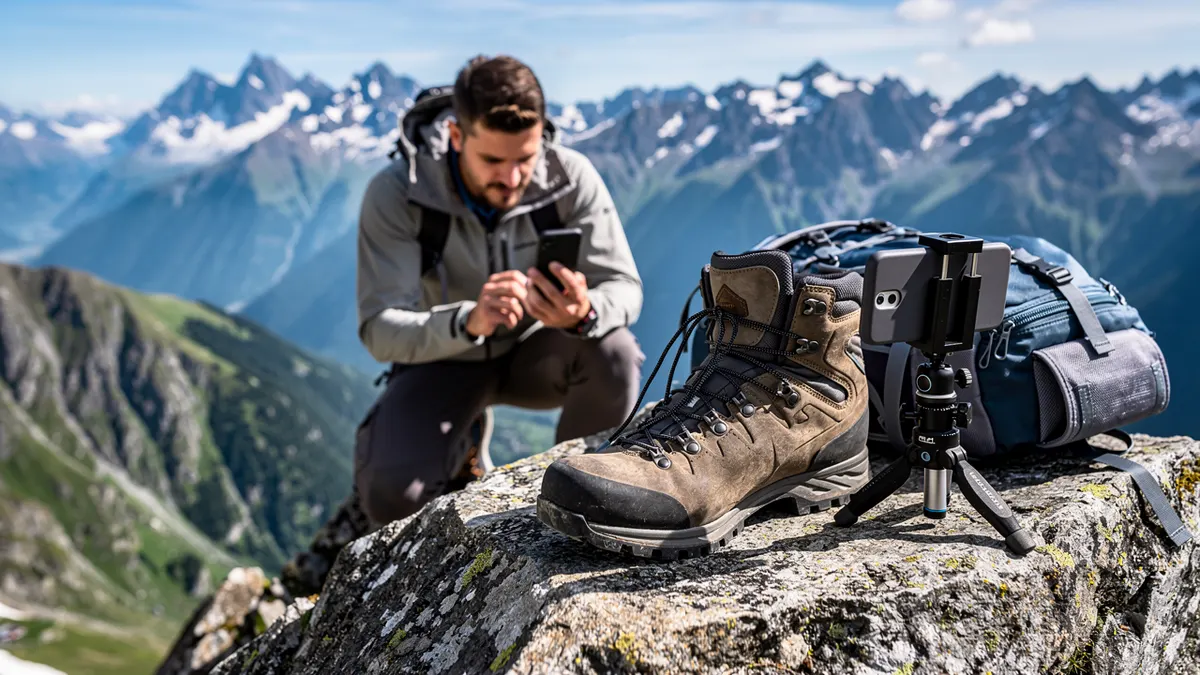
Gastronomy, health, technology and industry make this one of the country's most solid UGC markets, with far less competition than in the capital.
An economy of gastronomy, health and industry
Six client families.
Restaurants and gastronomy players.
Health and biotechnology companies.
Manufacturers and subcontractors.
Technology companies.
Urban shops and services.
And schools and training bodies.
What they order
Six frequent formats.
A product or service presentation.
A recruitment video.
Technical demonstration content.
A team testimonial.
Trade-fair coverage.
And a short series for social media.
What slows an industrial project down
Six delays to plan for.
Site access granted only outside production hours.
A safety briefing before anyone films anything.
A confidentiality check on every frame.
A technical reviewer who is rarely available.
A shutdown period that closes the plant entirely.
And an approval chain that crosses two departments.
The industrial client, the best paid niche
Seven reasons to target it.
The subject discourages most creators.
The need is recurring and planned.
The budget is compared to a production, not a social rate.
The content serves sales and recruitment alike.
A plant has several sites to film.
The relationship builds over several years.
And local competition there is weak.
Working with the health sector
Six essential precautions.
Ask for the client's internal procedure.
Have every sentence approved before the shoot.
Never promise a result.
Do not show a product being misused.
Obtain written consent from the people filmed.
And confirm the obligations with a lawyer.
How to turn a first job into an account
Seven habits that keep a client.
Deliver before the announced date.
Send a short note on what was shot and why.
Name the files so anyone can find them.
Offer the next subject without being asked.
Keep the raw footage for an agreed period.
Ask who else in the company needs video.
And check back at the start of their budget year.
Gastronomy remains a way in
Six clients reachable quickly.
Restaurants and bistros.
Food trade craftspeople.
Delicatessens and wine shops.
Local food brands.
Cookery schools.
And organisers of food events.
How to find clients here
Six routes that work.
Sector-specific trade fairs.
Business networks and local clubs.
Referrals from a satisfied client.
Companies recruiting continuously.
Town-centre shops that communicate.
And visibility maintained on the platforms.
How to build a price here
Six lines to show.
Preparation and the necessary approvals.
The real time on site.
The number of deliverables and their formats.
The number of revisions included.
The rights line, with duration and territory.
And the option of an English version.
What local demand buys
| The segment | Its order | Its frequency |
|---|---|---|
| Food processing and gastronomy | The gesture, the plate, the product | By season |
| Health and chemicals | Approved explanations | Quarterly |
| Retail and fashion | Wear and the shopfront | Regular |
What gastronomy demands from a shoot
A slot dictated by the service. You film between three and five in the afternoon, never during the rush, and a team that accepts that framework gets access others do not.
What beats a low rate here
Recognisable specialisation. In a broad market, a profile clearly identified with a sector receives qualified enquiries, while a generalist profile mostly attracts price comparisons.
What the platform brings
On UGC MATCH, joining is free and there is no subscription: you are visible by category and country, and the order keeps a record of the brief and the delivery. The brand pays at ordering, the funds are not released straight away, and payment goes out on approval. The platform retains 10% of the price on the creator side, who therefore keeps 90%, and charges the brand a 6% service fee, with a minimum of 1.50 EUR.
One last marker: here, a creator who can work within a regulatory constraint is worth three creators who film better. The scarcity is there, not in the image.
Sources
- Urssaf, official auto-entrepreneur portal
- Service Public, how to become a micro-entrepreneur
- Service Public, crossing the micro-entrepreneur turnover thresholds
Checked on 26 August 2026. Thresholds and rates change: where this guide and the official source disagree, the official source is right.