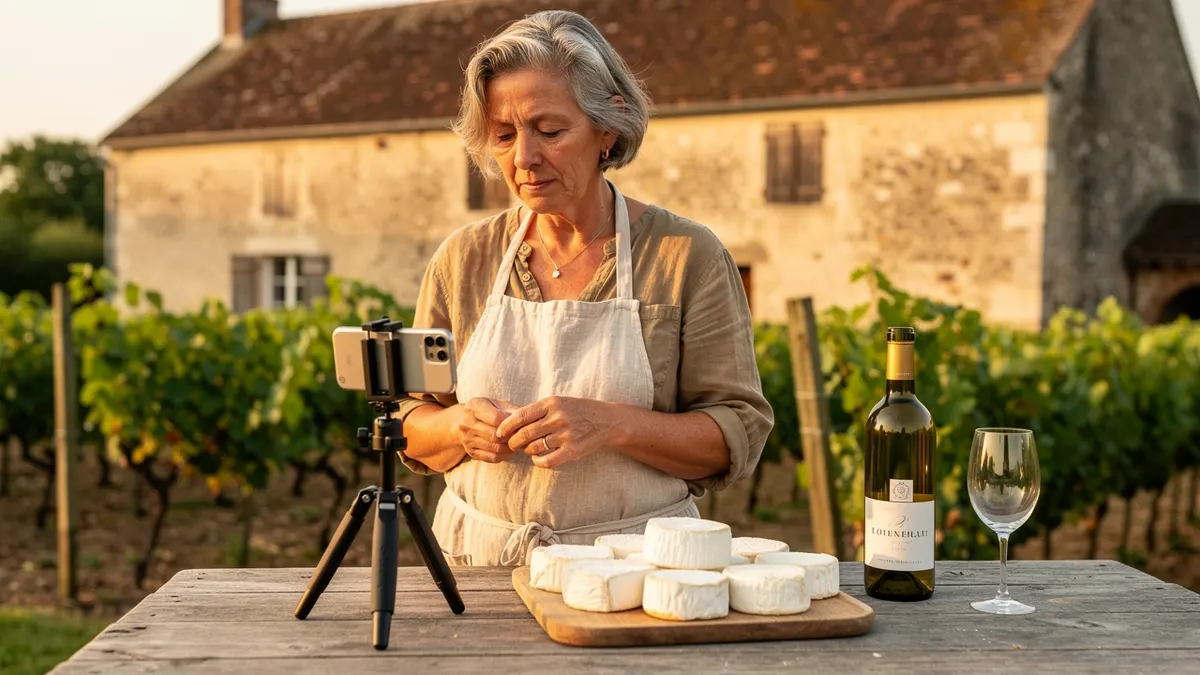
Castles, vineyards and producers in a region built for tourism, with a creator market small enough to make a name in.
The client base
Six categories present.
Wine estates and cellars.
Food producers and processors.
Castles and visitor sites.
Accommodation and restaurants.
Activity operators.
And town-centre retail.
Wine and its rules
Content presenting an alcoholic drink is regulated, and the obligations vary with the territory of release and the platform. Ask the client for the version approved by their department, write in the quote that advertising compliance is theirs, and have it confirmed by a lawyer or the competent body.
What the estates order
Six frequent formats.
An estate presentation.
A harvest video.
A filmed product sheet.
Content for the tasting room.
A video for a trade fair.
And a grower testimonial.
Tourism and its calendar
Six markers.
January and February, for the coming season.
March, before opening.
May, for the final adjustments.
July, for live coverage.
September, for the review.
And November, for the following year.
What tourism buys
Six frequent formats.
An accommodation presentation.
A tour or activity video.
Booking content.
A visitor testimonial.
Event coverage.
And a series of short formats.
Distance is a service, not a problem
Seven lines to write into the quote.
The travel time in minutes.
The zone included at no cost.
The travel rate beyond it.
The number of clients planned per day.
The slot offered by area.
The postponement clause for weather.
And the firm delivery date.
How to build a price here
Six lines to show.
Preparation and location scouting.
The half-day or day of shooting.
The number of formats delivered.
The number of revisions included.
The rights line, with duration and territory.
And the option of a subtitled version.
What a château or an estate asks for first
Six points before the shoot.
Written consent from whoever runs the site.
The hours when no visitor groups are present.
Permission for a tripod and extra lighting.
The areas that must not be shown.
The rules for using a drone.
And approval of the images before release.
What the season sets here
Eight dates through the year.
The opening of the visiting season.
The early summer festivals.
The summer holidays.
The autumn harvest.
The return in September.
The offers aimed at groups.
The Christmas trade.
And the preparation of the new season.
What a heritage and vineyard region orders
| The buyer | Their typical order | Their window |
|---|---|---|
| A wine estate | The cellar and the tasting | Harvest and the holidays |
| A tourist accommodation | The room and the garden | Spring and summer |
| A craftsperson or producer | The gesture and the product | Before the seasonal markets |
What heritage requires as a process
A château or listed site requires written permission for commercial use, sometimes paid. The request takes time, and is started before promising the client a delivery date.
What the tourist season does to the order book
Work concentrates from April to September. A creator who prepares no off-season segment, craft, food or business, spends the winter without orders although the skills are the same.
What the platform brings
On UGC MATCH, joining is free and there is no subscription: you declare your languages, you are visible by category and country, and the order keeps a record of the brief and the delivery. The brand pays at ordering, the funds are not released straight away, and payment goes out on approval. The platform retains 10% of the price on the creator side, who therefore keeps 90%, and charges the brand a 6% service fee, with a minimum of 1.50 EUR.
One last marker: in a spread-out region, your profitability is not decided at the shoot, it is decided by the order of your appointments.
Sources
- Urssaf, official auto-entrepreneur portal
- Service Public, how to become a micro-entrepreneur
- Service Public, crossing the micro-entrepreneur turnover thresholds
Checked on 26 August 2026. Thresholds and rates change: where this guide and the official source disagree, the official source is right.