It is one of the few categories where the audience often knows more than the brand, and proves it publicly in under an hour.
Who buys and what they are looking for
Two very different audiences, and they are not watching the same video.
The one who does the work themselves is looking for fitment, real difficulty, how long it takes and the tools required. The one who has it done wants to know whether it is worth it, how long it lasts and what it changes day to day.
A video trying to speak to both convinces neither.
What the video must show
The whole operation, without fast cutting.
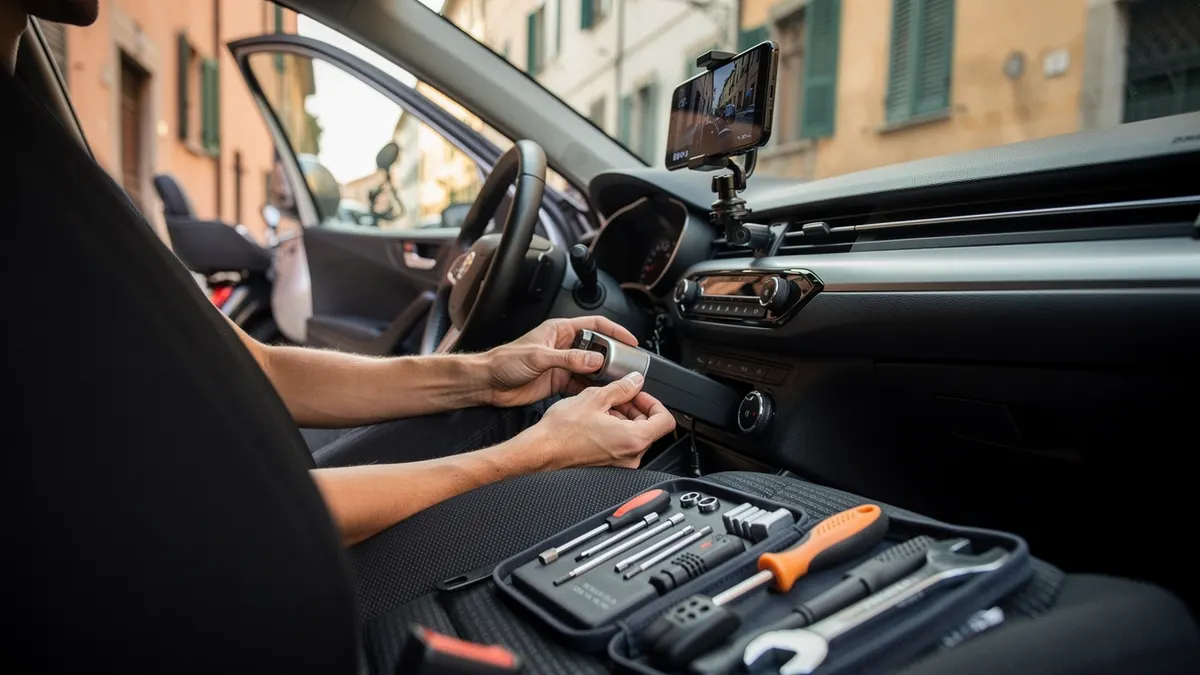
Access to the part, the space available, the real difficulty of fitting, what gets stuck, the result in place. Sped-up edits give the impression that everything is easy, and they produce returns from people who cannot manage it.
Show what goes wrong too: the broken clip, the unreachable bolt, the manual that does not match. That is what lends credit to everything else.
What must never be asserted
A quantified performance, a drop in consumption, a power gain, a compliance or a fitment you have not verified.
The rules applicable to claims, to parts approval and to safety depend on the type of product and the market: they are checked before the brief is written, and copied from the official documentation, never from memory.
If there is doubt about a fitment, say so on screen rather than leaving it out.
Why the audience is harsh
Because a mistake can be expensive or dangerous.
An unsuitable part, an approximate torque setting, a badly done fitting: the consequences are real, and the community knows it. It therefore reacts harshly to vagueness, and lastingly.
It is also why it is very loyal to those who are precise.
The creator has to take something apart
Liking cars is not enough.
Credibility comes from the hands: the way of holding a tool, of setting down a part, of cleaning a mating surface. A creator who has never taken anything apart is spotted in the first take, whatever the script.
So cast on real practice, even at the cost of a less polished image.
Where the sales happen
Rarely on the video itself.
They happen on the product page, in the comments, and in searches made later with the exact reference. That is why the displayed reference counts for more than the hook: it stays in the memory and in the search bar.
What this sector orders
| The buyer | Their typical order | Their condition |
|---|---|---|
| A dealership | Presenting a vehicle | A masked number plate |
| A parts supplier or garage | Fitting an accessory | A gesture matching the manual |
| A car-care brand | Application and result | No performance promise |
What you never quantify yourself
Fuel consumption, range, power. Those values are measured under official protocols and communicated by the manufacturer, with their method, or they are not quoted at all.
What to check before publishing a vehicle shot
The plate, faces and third-party logos in the reflection. A windscreen returns the whole car park, and dark bodywork acts as a mirror for whatever stands behind the camera.
What to deliver as well
A long version and a short one.
The long one serves as documentation and lives two years on the product page. The short one serves in advertising and wears out in a few weeks. Both are shot the same day, and that is the only way to get a reasonable cost on this kind of content.