Food and drink sell on appetite appeal and genuine reactions, and this format shows both. Here are the videos that convert, the brief, the rights and the creators.
Why this format works so well in this category
Because the purchase rests on a sensory anticipation that a product photo does not trigger. A still image shows what it looks like; a video shows how it crunches, runs, melts or steams, and above all how somebody reacts to eating it. It is a category where the short format has a natural advantage, provided you film the substance rather than the packet.
Which formats convert best
Seven formats, from the most effective to the most situational.
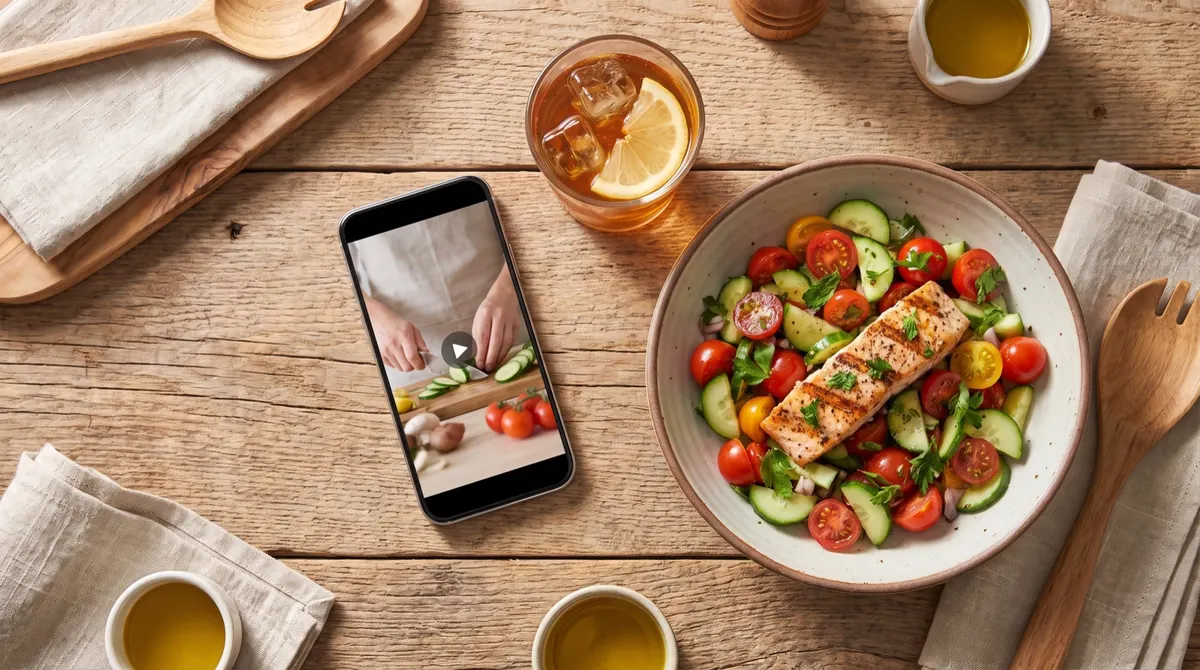
The preparation shot, filmed continuously and sped up.
The reaction to the first taste, with no commentary.
The texture shot, very close up, with nobody in frame.
The recipe in three steps, with the product at the centre.
The comparison with the homemade version, when it is honest.
The everyday format, product built into an ordinary meal.
And the unboxing, useful above all for hampers and subscriptions.
How to brief a creator in this category
Seven mentions to write down.
The shooting order, with the hot shot first.
The exact quantity to prepare, in a concrete measure.
The crockery and worktop expected.
The permitted claims, checked with a lawyer.
The mandatory mentions according to the country.
The allergens not to forget, if the product contains any.
And the use-by date of the product sent, often forgotten.
What must never be said
Six claims to rule out, all to be checked against the applicable rules.
A nutrition claim not approved by the brand.
A health claim, strictly framed.
A promise of weight loss or of a physiological effect.
A numerical comparison with a named competing product.
An unverifiable statement about origin.
And advice that would replace a health professional's opinion.
What usage rights to provide for
Six elements to write into the quote.
Paid advertising, invoiced separately.
A duration of at least twelve months.
The territory, widened if you sell online.
The right to recrop and re-edit.
Use on the product page and on marketplaces.
And the fate of the rushes, valuable for texture shots.
How to film with no studio
Seven settings that are enough in an ordinary kitchen.
Placing the dish near a window, never under a ceiling light.
Filming slightly against the light, with the light behind the dish.
Putting a white sheet on the opposite side, to lift the shadows.
Choosing a plain plate, smaller than usual.
Cleaning the edges, visible in close-up.
Filming at table level, not from above.
And switching off the extractor and anything that blows, for the sound.
What to measure
Six indicators, none of them views.
The retention rate at three seconds.
The add-to-basket rate from the page containing the video.
The repeat purchase rate, decisive in this category.
Recurring customer service questions.
Performance per recipe, measured separately.
And the video's lifespan in paid advertising.
The most frequent mistakes
Six reflexes that spoil a food video.
Filming the dish last, dealt with above.
Showing a portion more generous than the packet's.
Using crockery that draws the eye more than the dish.
Adding music that covers the preparation sounds.
Having the person speak with their mouth full.
And delivering a video where the product is only identifiable at the end.
How to choose a creator by kitchen and market
The right kitchen
An interior resembling that of your customers, with a usable worktop and a source of natural light. A kitchen that is too new produces exactly the opposite of the intended effect.
The right market
Eating habits, meal times and accompaniments differ from country to country. A video shot for one market transposes badly elsewhere, even in the same language.
The right diet
If your product addresses a particular diet, the person has to follow it genuinely. The audience of those niches immediately spots somebody discovering the subject on camera.
What to send with the product
Six items, in the same parcel.
Enough quantity for two shoots, never just one.
The complementary ingredients, if the recipe needs them.
The sheet of mentions to respect.
The permitted claims, on a sheet.
The contact who answers during the shoot.
And a spare intact package, for the product shots.
What to reshoot rather than rescue at the edit
Five situations with no way out.
A dish filmed cold, dealt with above.
A plate where the product cannot be told apart.
A hand hiding the gesture at the key moment.
A preparation shot cut in the middle.
And a reaction re-enacted afterwards, always visible.
What creates appetite on screen
| Shot | What it triggers | The technical condition |
|---|---|---|
| Opening the product | Immediate appetite | The lid sound, uncut |
| The preparation | The real ease | One hand, one gesture, no cut |
| The first bite | The texture | A close-up at plate height |
What deserves care before anything else
The light on the food. A cold ceiling lamp kills a dish, a side window rescues it with no gear, and it is the adjustment that changes the most.
What is never improvised
An allergen, a nutritional value, a storage method or a health claim. Those four are read on the packaging and confirmed with the manufacturer before the shoot.
How to find creators in this category
Six methods, from the most reliable to the slowest.
Filtering a marketplace by food category.
Looking at existing videos rather than descriptions.
Searching among people who already cook regularly.
Going through communities tied to a specific diet.
Asking for a short paid verification video.
And calling back those whose results you already know.
One last marker: in food, the video that sells is not the most polished, it is the one that makes people hungry. Film the substance before the speech, and the hot shot before anything else.