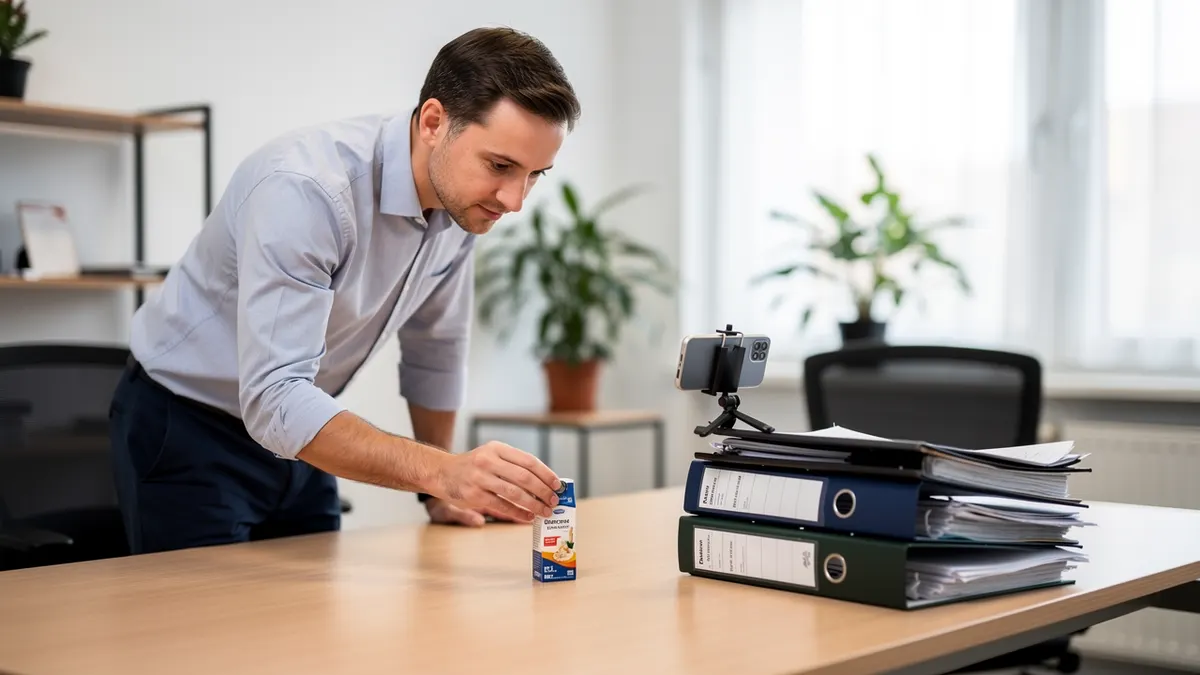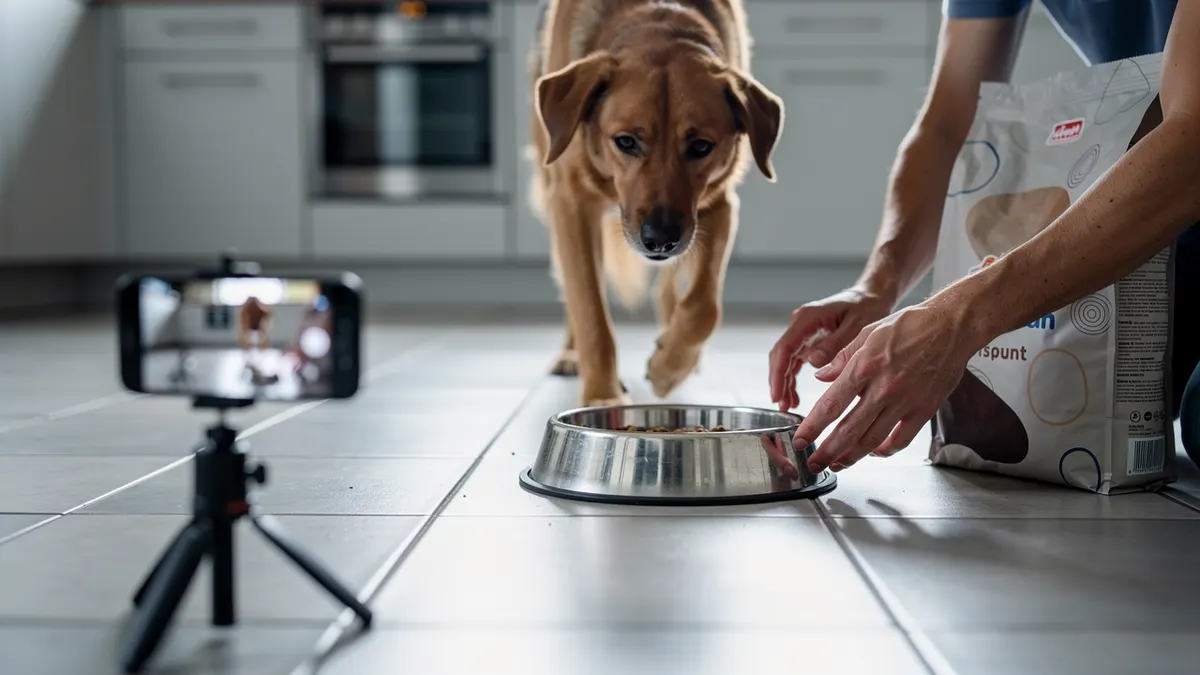
Owners here read the analytical composition: this is what convinces them, and what regulation forbids asserting.
Filming the animal in company
Three shooting rules, and they hold for every species.
Film at animal height, not from standing: that gives the product's real scale.
Keep the original sound: the noise of the kibble, of the toy, of a claw on the floor is part of the demonstration.
And let the scene play out: quick cuts remove exactly what the owner wants to see, which is the full reaction.
What convinces owners
Five elements, in order.
The composition, read on screen exactly as it appears on the packaging, with no comment on the ingredients.
The real size of the product next to the animal, and next to a hand.
The duration: how long a bag or a toy really lasts, with the animal's weight stated.
The durability: the toy after three weeks, the bowl after thirty washes.
And the cleaning: what washes off, what stays, what holds the smell.
Why the animal must not perform
The most common and most visible mistake.
A trained animal executing an action on cue produces a perfect image and a dead video: the audience recognises learned behaviour immediately.
What works is the opposite: the animal that does not listen, the one lying down next to the toy, the one carrying the product off somewhere else. Those moments are the ones owners recognise from home.
One production consequence: allow three times more shooting time than for an ordinary category, and accept not getting the planned sequence.
The tone
Two rules, and they avoid the ridiculous.
Speak to the adult who buys, not to the animal. A high-pitched voice and childish phrasing drive away exactly the audience that reads labels.
And describe instead of asserting: what you observed, over what period, on which animal, with its age and weight.
What cannot be asserted
Four families of claims demand extreme caution.
Any health claim: treating, curing, preventing, reducing pain or illness.
Any behaviour promise: calming, correcting, removing anxiety.
Any nutritional claim going beyond what the label carries.
And any comparison with a food or treatment prescribed by a vet.
The working rule: the brand supplies the authorised wordings in writing, the creator repeats them word for word, and everything else is described as a personal observation. The rules applicable to pet food, supplements and devices are checked with the competent authorities before publication.
What is filmed with an animal
| Subject | The shot | The constraint |
|---|---|---|
| A bowl or a toy | The animal approaching on its own | No forced staging |
| A harness | The fitting, hands visible | A calm animal, never restrained |
| A care product | The gesture, not the result | No veterinary claim |
What is prepared before pressing record
Short takes, a treat within reach, a place the animal knows, and accepting that a session lasts ten minutes, not two hours.
What is referred to the vet
A dose, a symptom, a change of diet or any claimed health effect. The video shows the use and points to the professional, to be confirmed with a vet.
What to buy for a test
Three profiles are enough, and they must differ by animal, not by person.
A young animal, an adult, an older animal: the three reactions are not alike, and that is exactly what the owner wants to compare before buying.