A category where the buyer is not the user: here is what convinces owners, and why the animal must not perform.
What really convinces an owner
Five elements, in the order they are checked.
The transition: how many days to change food, and what happens if you go too fast.
The quantity: how much per day by weight, with the portion shown in a hand.
Storage: where an opened bag keeps, for how long, and what happens if it is left out.
Refusal: what the owner does when the animal will not eat, the most frequent situation and the least covered.
And the real monthly cost, worked out aloud for an animal of a given weight.
The right tone is sober
Three rules, and they avoid the ridiculous.
Speak to the person who pays, in the words of a worried adult, not those of a sentimental advert.
Never put a voice on the animal: that device drives away the seriously buying audience fastest.
And keep affection measured: the bond shows through gestures, never through adjectives.
The animal does not perform
That is the production rule, and it changes the schedule.
Allow three times more time than for an ordinary category, and accept leaving without the planned sequence.
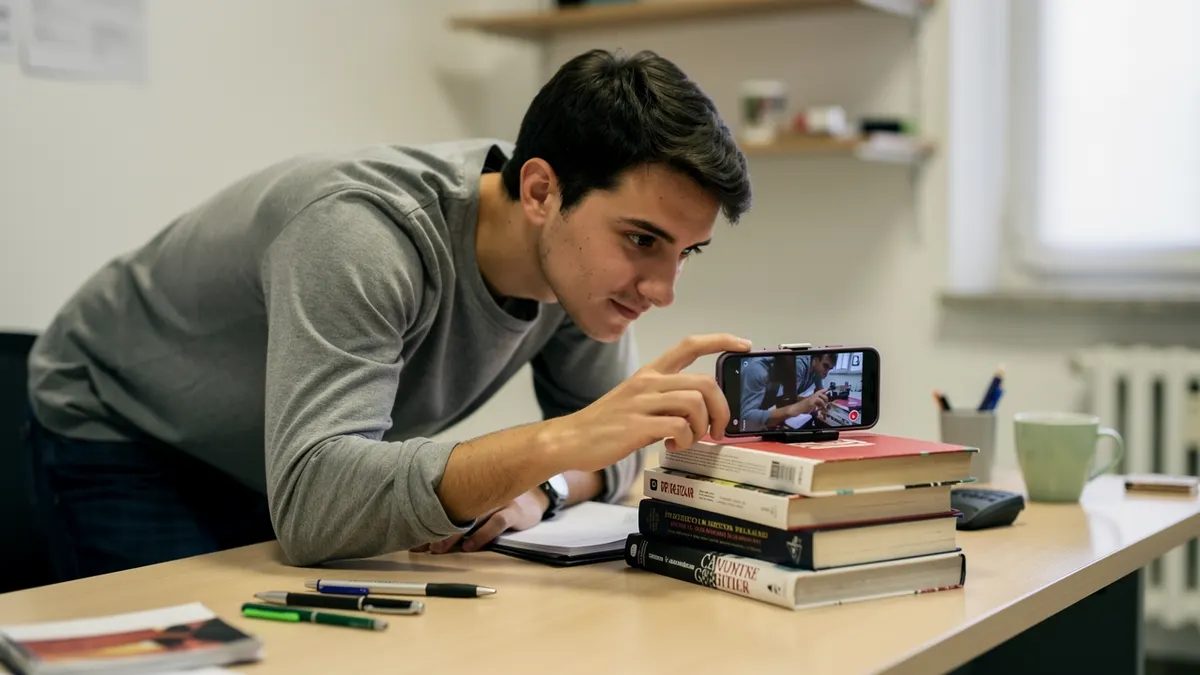
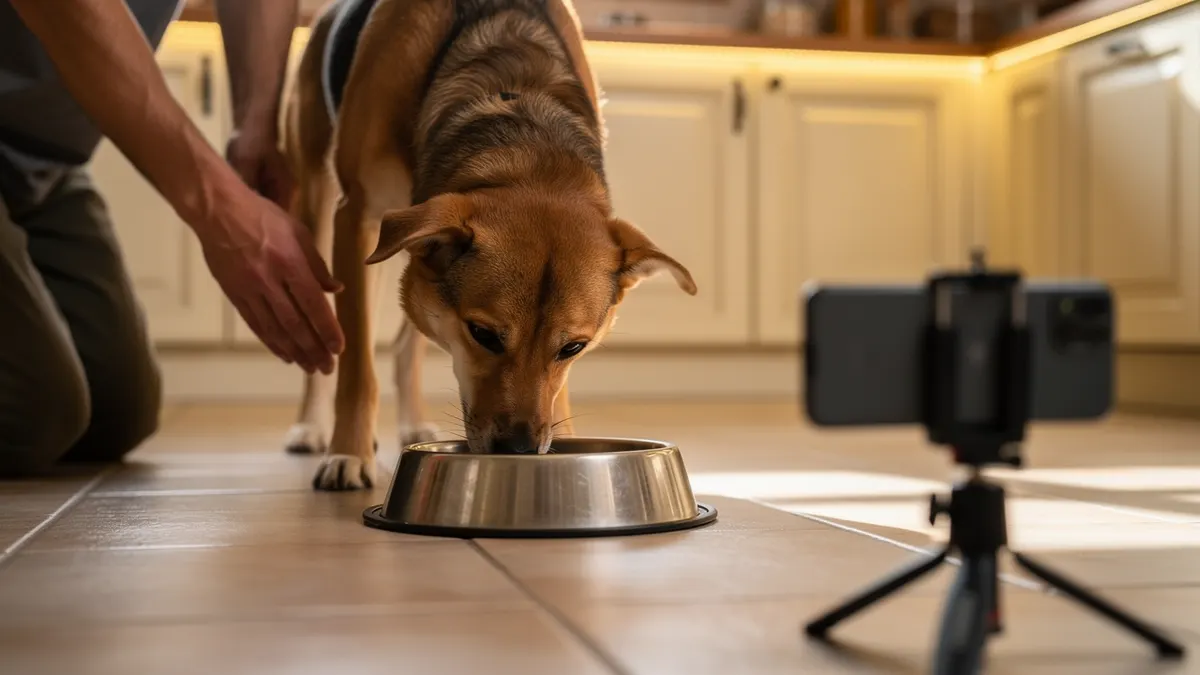
Two practical consequences. Shoot at the owner's home, never in a studio: behaviour changes as soon as the environment changes. And let the camera run: the twenty usable seconds come after fifteen minutes of indifference.
One absolute limit: no restraint, no deprivation, no insistence to obtain a reaction. If the animal turns away, the take stops, and it shows on screen when the rule has not been respected.
What else to show
Three things almost nobody films.
Cleaning: what washes, what keeps the smell, what survives the dishwasher.
Wear: the toy, the bowl, the harness after three weeks of real use.
And storage in a flat: the space the bag takes, where the litter tray goes, what is visible from the living room.
What the camera must capture
| Subject | The shot | The difficulty |
|---|---|---|
| The behaviour | A wide shot, without intervening | The waiting |
| The product in use | The animal using it on its own | No constraint |
| The texture of a food | A close-up in the bowl | The focus |
What makes a session possible
Takes of thirty seconds, a break between each, a familiar place and a second person holding the animal's attention off camera.
What stays with the vet
A dose, a ration, a symptom and any claimed health effect. The creator shows the use and refers to the professional, to be confirmed with a vet.
The buying windows
Four moments concentrate demand, and they govern the production calendar.
Spring, with external treatments and the return of long walks.
Summer, with travel, transport and heat.
The autumn restart, with routines resuming and postponed vet appointments.
And the end of the year, when the accessory becomes a gift, which shifts the discourse towards the person giving.
A production rule valid throughout: shoot out of season, with no dated setting, and keep a version with no time reference. In this category more than others, a useful video stays useful for three years, provided it contains neither a promise nor a calendar.