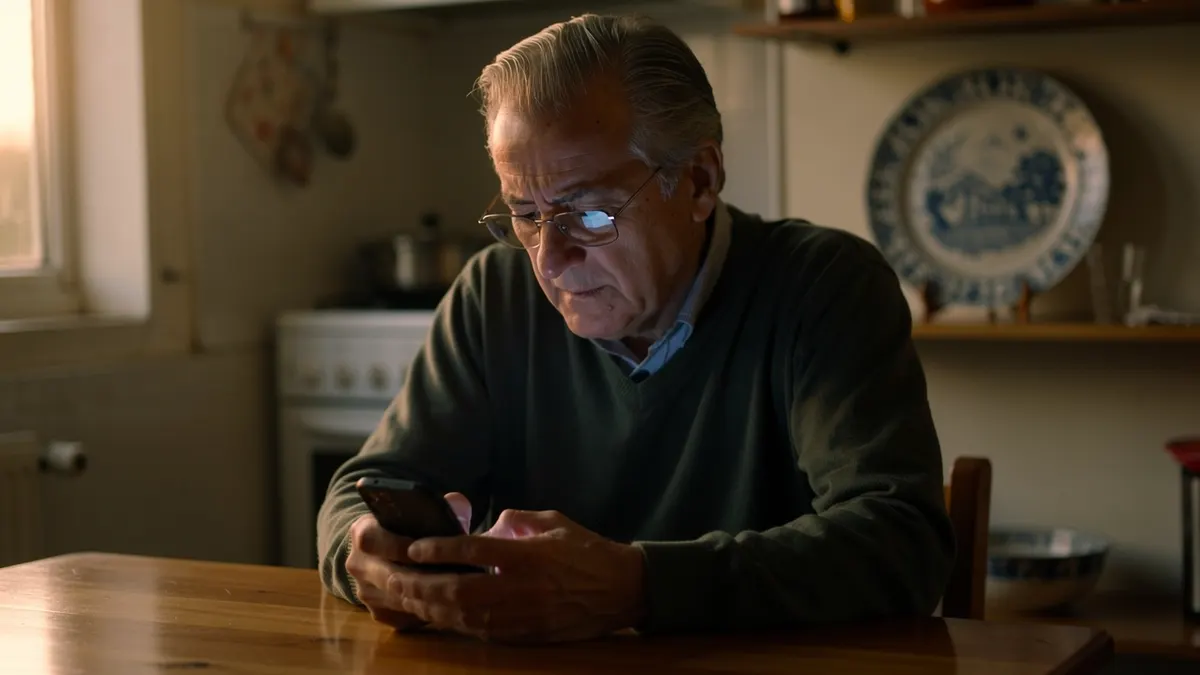
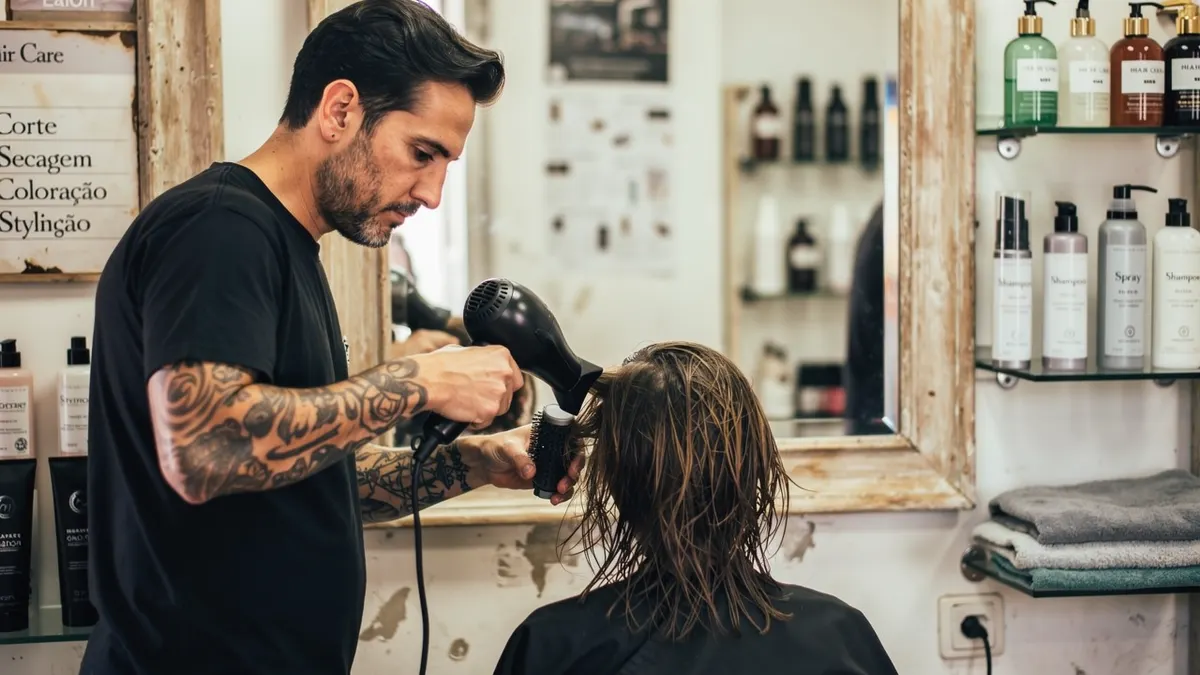
The brief says: show how the service works. There is nothing to show. That single fact explains why these videos slide into explanation, and why explanation does not work.
Why these videos slide into explanation
With no object, the camera points at a face
The reflex is mechanical: with no product, you film somebody talking. The video becomes a presentation, with a presentation's flaws: it asks for attention before giving a reason to grant any, and it loses its audience in the first five seconds.
Explanation is what the format does worst
This format is good at showing a use, a reaction, a before and after. It is bad at setting out a mechanism, a pricing structure or a method. A website, a page or a call do that better. Asking a short video to explain everything is asking it to do another medium's job.
Film the trace, not the service
The three filmable moments
Seven usable traces, from the strongest to the most subtle.
The gesture the client no longer performs, dealt with above.
The visible result, a filed case, a sold house, a full room.
The place where the service happens, workshop, kitchen, site.
The provider's tool, in their hands, in action.
The delivered document, leafed through on screen.
The moment of switch, when the client understands.
And the calendar, before and after, shown side by side.
What a service creator has to be
Cast the client, not a creator
That is the second inversion. In this field, the credible person is not somebody who films well, it is somebody who genuinely used the service and can say what they did before. A professional creator who never had the problem produces a slick testimonial, and the audience feels it immediately.
How to get clients to agree
Six arguments that work, in this order.
The shoot happens at their home or workplace, in an hour.
They approve the video before release, unconditionally.
Nothing confidential appears, the list is written in advance.
They can decline to show their face and use only their voice.
They receive something in return, a discount, a free service or payment.
And they keep a usable copy for their own communication.
What to ask the client before shooting
Five questions, asked on the phone.
What they did before, in detail.
What has changed in their week since.
The precise moment they saw the difference.
What they would say to somebody hesitating.
And what they absolutely do not want shown.
What to write in the brief
Seven mentions, short.
The precise trace to film, decided before the shoot.
What the client did before, in one sentence.
The information not to show.
The permitted claims, checked according to the sector.
The expected length, longer than for a product.
The vertical format and a square version.
And the person who approves, with their reply time.
Seven sectors and the trace to film for each
Seven examples, transposable.
Accounting, the pile of paper that has vanished.
Cleaning and upkeep, the room filmed from the same spot, twice.
Hair and beauty, the gesture learned and redone alone.
Repair, the object working again, with no cut.
Property, the letterbox with the changed name.
Teaching and tutoring, the notebook filled week by week.
And health and wellbeing, the activity taken up again, filmed from a distance.
How to edit a service video
Six editing rules specific to this case.
Open on the trace, never on an introduction.
Keep the shots long, a service is understood slowly.
Put the voice over the image, not to camera.
Limit on-screen text to three words per shot.
End on the result, not on a logo.
And deliver a version with no music, usable in advertising.
Where to run these videos
Six placements, from the most productive to the slowest.
The service page, at the top, before the text.
Replies to quote requests.
Advertising targeted at a precise geographic area.
Local business listings.
Emails sent to former clients.
And local groups, where the group's rules allow it.
When it does not work
There are services this format does not suit, and it is better to know before spending. That is the case when the result is only visible after months, when the clientele refuses to appear for confidentiality reasons, or when the service is so technical that no trace is understandable without explanation. In those cases a filmed interview, a screen demonstration or a written document serve better than a forced short video.
What you film when there is no object
| What you show | What it proves | How |
|---|---|---|
| The professional's gesture | The craft | Hands, tool, result |
| The place of practice | The seriousness | A wide, tidy shot |
| The flow of an appointment | What will happen | A simple chronology |
What replaces a product demonstration
The journey. A service is told through its steps: first contact, assessment, intervention, follow-up. That sequence reassures, not a promise of results.
What is never filmed
An identifiable client without written consent, a document being processed, or a screen showing data. These three often appear without thinking in a professional setting.
The most frequent mistakes
Six reflexes that produce an unusable video.
Starting by explaining the service, dealt with above.
Filming a creator who was never a client.
Showing a software screen for more than three seconds.
Announcing a price, which dates the video.
Having an unverifiable figure stated as a result.
And shooting in a neutral set, which places nothing.
One last marker: a service is shown through what it makes disappear. If your video has no shot where something is missing, it is still explaining, and nobody will watch it to the end.