Made in France sells abroad. Not everywhere for the same reasons, and never with the same sentence.
Origin does not reassure about the same thing everywhere
That is the starting point, and it changes the edit.
In some markets, origin suggests build quality and durability. In others, it suggests style, luxury or a way of life. Elsewhere again, it suggests safety, traceability or compliance.
The practical consequence is simple: the same product is presented emphasising three different arguments depending on the market, from the same footage.
Hence the production rule: shoot wide, cut short, and plan several versions from the start.
What travels from one market to another
Three elements travel unchanged.
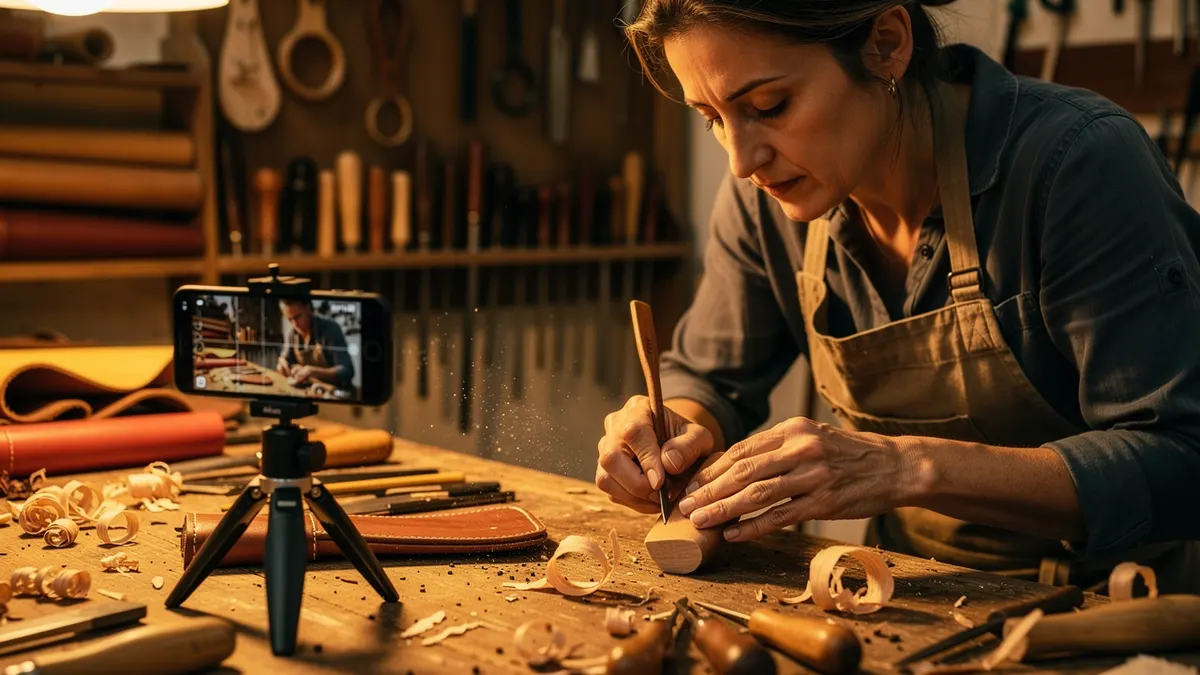
The manufacturing gesture, described in the box.
The demonstration of use, provided it shows no electrical socket, no local packaging and no unit of measurement.
And the material detail filmed close up: a seam, a grain, a texture, an assembly.
Those shots form a reusable library. That is what makes an international campaign affordable for a medium-sized brand.
What has to be reshot every time
Three elements must be redone for each market.
The voice, because a foreign accent shifts attention from the product to the person.
The life context: the kitchen, the bathroom, the street, the table. They are what tell the viewer whether the video was made for them.
And the disclosures, units and date formats, which follow the country of distribution and not the country of origin.
So plan, from the first shoot, a master with no burnt-in text and a voice on a separate track. That is what allows versions without paying again.
What never translates
Two things, and they cost dearly when forgotten.
Humour and cultural references, which at best produce incomprehension.
And claims. What may be asserted about a product depends on the country of distribution: composition, origin, benefits, comparisons, mandatory disclosures. A sentence that is perfectly legal here may be prohibited elsewhere, and the reverse is also true. That is checked with a lawyer for each market, before publication.
Rights, to be framed in the first contract
That is the line that costs most when forgotten.
A video shot for the home market and then run abroad almost always exceeds the planned territory. So write from the start: worldwide territory or a list of countries, duration, channels, paid advertising, and the right to sub-licence to a local distributor.
That last point is specific to export: your resellers abroad will want to use the content, and they have no rights by default.
What adapts when a brand goes abroad
| Element | What stays | What is redone |
|---|---|---|
| The visual identity | Colours, logo, pace | Nothing |
| The voice | The structure of the script | The language and the accent |
| The proof | The filmed gesture | Prices and legal notices |
What is cast locally rather than translated
A local voice. A dub gives itself away in three seconds, and a brand speaking with a foreign accent loses the very closeness it came for.
What is checked before running in a new country
The sector's mandatory notices, the platform's rules in that country and the product's actual availability, to be confirmed with a lawyer.
The test to run before spending
A simple test, before producing a full campaign.
Take your best existing video, have it dubbed into the target language by somebody who lives there, and run it on a small budget in that market.
Then look at two things: what the comments ask for, and what they criticise. Those two lists are worth any study, and they write the brief for the next campaign.