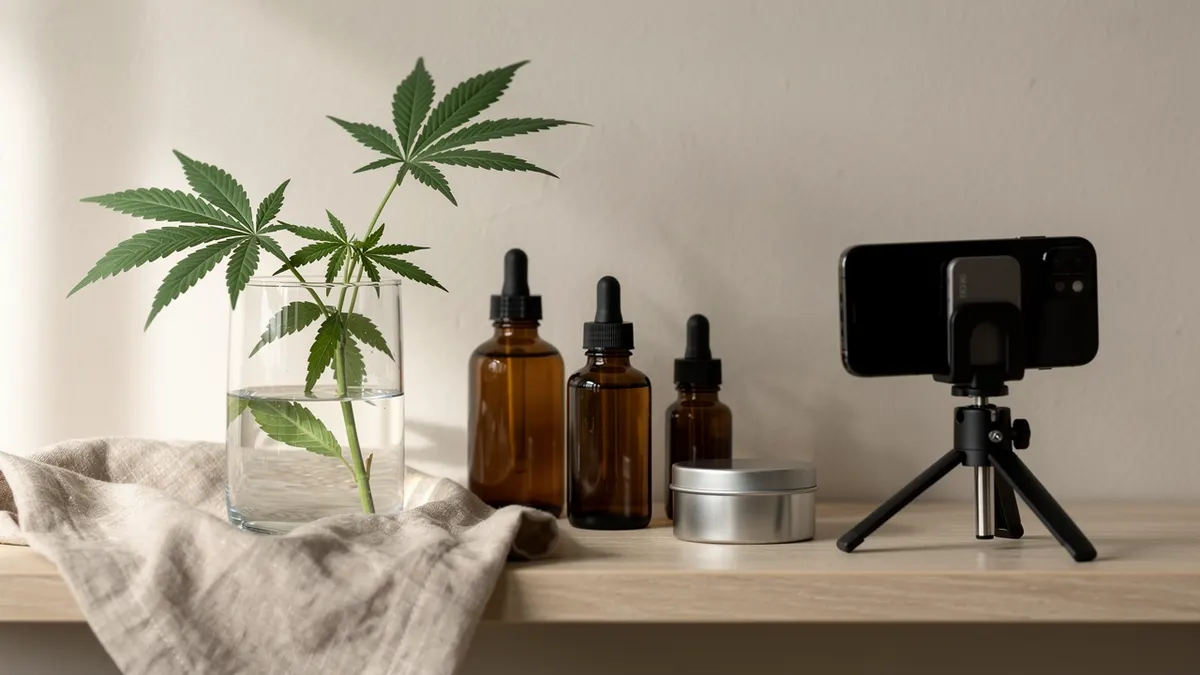

A creator video that promotes a prescription drug is prescription drug promotion, and in the United States that puts it in front of the Food and Drug Administration's Office of Prescription Drug Promotion. The FDA's own description of the office's remit lists "Internet based promotion including social media" alongside television, print and sales presentations, and describes what every piece of that promotion must do: not be false or misleading, have a balance between efficacy and risk information, and reveal material facts about the product, including facts about consequences that may result from its use. A thirty-second testimonial that says a treatment "changed my life" and stops there has nothing in it that answers the second and third of those three, and the brand that commissioned it is the party the office writes to.
The general craft of health content, and the market of hospitals and health companies, are covered elsewhere in this cocoon, from the Houston and Boston guides to the guide to UGC for wellness brands. The subject here is the line that runs through the health category in the United States: prescription drug promotion on one side, with the FDA's rules, and everything else on the other, where the FTC's advertising standard does the reading.
Which side of the line the product is on
What the FDA's office regulates
The FDA states that its Office of Prescription Drug Promotion regulates prescription drug promotion made by or on behalf of the drug's manufacturer, packer or distributor. A creator paid by a pharmaceutical company to talk about one of its prescription treatments is making promotion on that company's behalf. Whether a telehealth platform that prescribes and ships a manufacturer's product is itself a distributor, or is acting on the manufacturer's behalf, is a question the FDA's page does not answer, and this guide does not answer it either; it is the first question a telehealth brand puts to regulatory counsel. The office lists what it does not regulate, and the list covers much of what creators film in the health category: over-the-counter drugs, medical devices, foods, dietary supplements, cosmetics, drugs for animals, compounded drugs and certain biological products.
What that means for a brief
For a prescription product the brief is written by regulatory affairs, not by marketing, and the creator's role is closer to an actor's than to a reviewer's: the words are supplied, the risk information is part of the script, and improvisation is where the trouble starts. The FDA's list of common drug promotion issues reads like a list of things creators do naturally: omitting or downplaying risk, overstating the drug's benefits, failing to present a fair balance of risk and benefit information, omitting material facts, making claims that are not appropriately supported, misrepresenting data from studies. Compared with a supplement brief, where the creator's own vocabulary is the tool, a prescription brief treats that vocabulary as the risk.
Everything else is read under the FTC's advertising standard
The FDA's page does not hand those products to the FTC: it routes them to other FDA offices, non-prescription drugs, devices, foods and cosmetics, dietary supplements each with its own contact. What the FTC's health products guidance adds is the division of labor: the two agencies share jurisdiction over the marketing of drugs, devices, foods, supplements and other health products, the FDA with primary responsibility for claims in labeling and the FTC for claims in all forms of advertising. A creator video is advertising. For over-the-counter products, devices, telehealth services that do not promote a specific prescription drug, and health apps, the FTC's health products guidance is therefore the operative text, and it is the same standard this cocoon describes for supplement brands and fitness brands: claims about the health benefits or safety of drugs and other health-related products require substantiation in the form of competent and reliable scientific evidence, testimonials are claims the advertiser is making, and any material connection between the endorser and the advertiser must be clearly and conspicuously disclosed.
| Product | Who reads the video | What the brief carries |
|---|---|---|
| A prescription drug promoted on behalf of its manufacturer, packer or distributor | The FDA's office, and the FTC for the endorsement | Risk information in balance with the benefit, material facts, wording supplied by regulatory affairs |
| A telehealth service promoting a specific prescription treatment | The FTC; briefed as if the FDA's office will read it too, until counsel has answered whether the promotion is made on the manufacturer's behalf | The same as the row above |
| An over-the-counter drug | The FTC for the advertising, another FDA office for the product | Substantiation for every benefit claim |
| A device, a health app or a diagnostic | The FTC for the advertising claims, with whatever status the product holds with the FDA, not stated here, setting the outer limit of what it may be said to do | Claims inside that limit, in the brand's words |
| A hospital or health system | The FTC for the advertising; the rules on patients, consent and access inside a facility are the client's to set, as the Houston guide describes, and not stated here | Accuracy, no outcome promises |
The testimonial with a diagnosis in it
Health testimonials are stories about a condition, and a creator telling their own story is describing something real. The compliance problem is the connection between the story and the product: "since I started X, my symptoms are gone" is a claim about what X does, and for a prescription product it is a claim that has to sit next to the drug's risks, and for anything else it is a claim the brand has to be able to substantiate. The FTC's guidance is explicit that a testimonial showing results more dramatic than users can generally expect is likely to be deceptive, and that "Results not typical" does not cure it; the fitness guide sets that rule out in full. What a health brand adds to it is the diagnosis: a creator who names a condition and links it to the product has made the strongest form of the claim, and the brand should decide before the shoot whether that sentence is one it can carry.
Telehealth, and the brief that promotes a prescription without naming it
The telehealth market sells access to prescription treatments through an app, and its creator content is often built to promote the treatment without ever saying the drug's name, on the theory that the video is then about a service. The FDA's description of its remit does not turn on whether the name is spoken; it turns on whether the promotion is for a prescription drug and made on behalf of its manufacturer, packer or distributor. Whether a platform's video is promotion made on the manufacturer's behalf is not a question the page answers, and a brand should not answer it by assuming the video is a service ad. What usually stops a telehealth brand from getting this right is that its marketing team is a growth team, of the kind the San Francisco guide describes, testing hooks by the dozen; the fix is the one the guide gives, that the script is a compliance document, applied with a regulatory reviewer in the loop rather than a legal reviewer alone.
The brief for a health brand
- Decide, product by product, which side of the line each one is on, prescription or not, and write it at the top of the brief.
- For any prescription product, have regulatory affairs supply the wording, including the risk information, and instruct the creator to read it rather than paraphrase it.
- For everything else, list the benefit claims the brand has substantiated and forbid the rest, with any diagnosis-to-product sentence treated as the strongest claim in the video.
- Put the disclosure of the connection, fee, free treatment, free device, in the video itself, as the FTC's influencer guidance asks, not only in the description.
- Route the finished video through the same review the brand's own ads go through; the FDA reads social media promotion, and a creator video is promotion.
Sources
- FDA, The Bad Ad Program
- Federal Trade Commission, Health Products Compliance Guidance
- Federal Trade Commission, Disclosures 101 for Social Media Influencers
Checked on 20 September 2026. This guide is not legal advice. Where this guide and the official source disagree, the official source prevails.