The platform Canadian business buyers actually use, and the one where a polished video performs worse than a phone recording.
The feed punishes production value
That is the reversal surprising teams coming from advertising.
A video shot in a studio, lit, edited with transitions, is identified as an advert and scrolls past unwatched.
Three reasons.
The context: people check this feed between two tasks, on a work computer, often with no sound.
The format: a person talking to their camera looks like a message sent, not like a campaign.
And credibility: in a professional environment, visual sophistication suggests a budget, therefore a prepared speech.
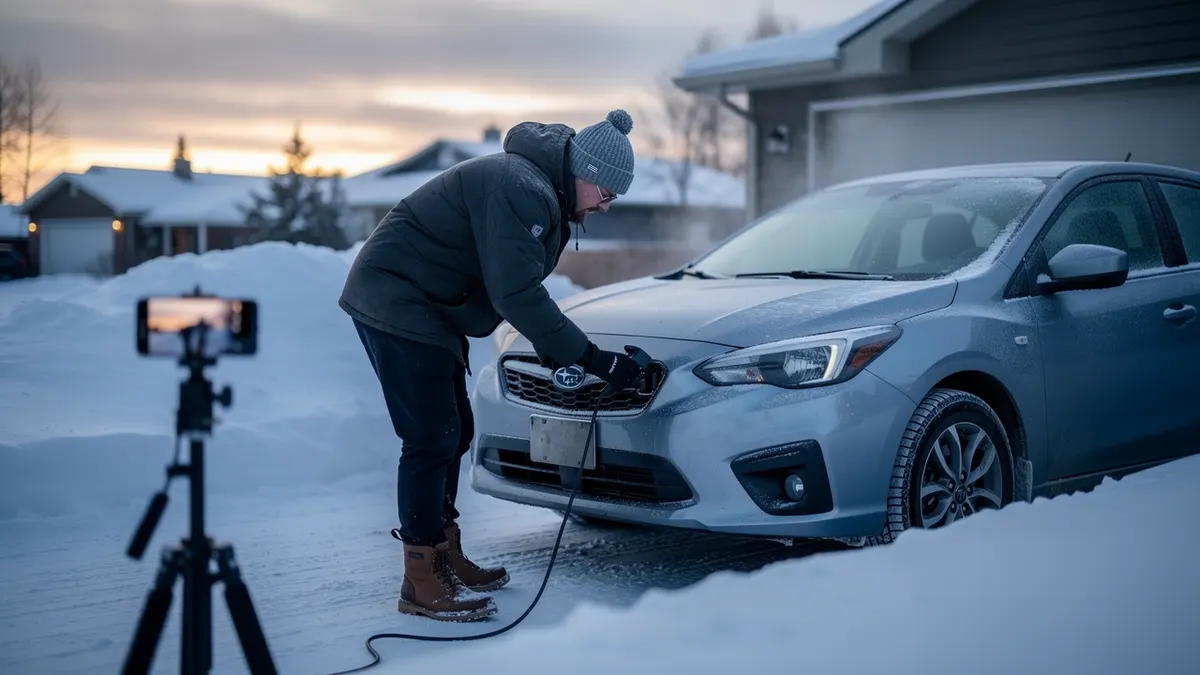
Three production choices that work: a single fixed shot, office light, burnt-in subtitles because the sound will be off.
Employees are the channel
That is the particularity of business-to-business, and it is badly used.
A message published by an identifiable person travels better than one published by a company page, and that is not down to an algorithm but to something obvious: people follow people.
Four profiles to put on camera, in order of effectiveness.
The person who installs, repairs or commissions, because they know what actually happens.
The person answering support, who knows the questions by heart.
The person who sells, provided they explain rather than sell.
And the leadership, once a quarter, for what commits the company.
Two precautions. Written agreement from every person filmed, with duration and channels. And a clear rule on what happens when they leave the company: that point is planned in advance and checked with a lawyer.
The precise beats the promotional
Four formats that get answers.
The explained figure: a cost, a lead time, a rate, with the calculation method.
The concrete case: a situation, what was done, what did not work.
The comparison of two approaches, without naming a competitor.
And the answer to an objection, in the client's exact words.
Four formats that do not work: announcing attendance at an event, the inspiring quotation, the collective thank you, and the recruitment video disguised as content.
It suits long cycles
That is what makes this channel hard to judge, and easy to abandon too soon.
A professional purchase is decided over several months, with several people, and the video comes in well before the request for a quote.
Three consequences for measurement.
Do not judge on clicks: most people discovering you here will go nowhere that day.
Look instead at inbound requests citing a precise subject you covered.
And compare over two quarters, not two weeks.
One simple and reliable method: add a question to the contact form, where did you hear about us, with a free-text answer.
What the channel expects from a video
| Element | What works | What fails |
|---|---|---|
| The subject | A recognised professional problem | An entertainment hook |
| The tone | Sober, precise, documented | An energetic staging |
| The proof | A figure with its source | A general claim |
What is filmed in a professional setting
The real workstation, the tool's screen, the operator's gesture. Each shot needs a permission, and often an approval before release.
What is approved before publishing
The script, the figures quoted, the faces and anything identifying an end customer. In this sector a missing approval blocks the video for months.
Bilingualism counts less here, but not never
That is the local nuance of this channel.
Part of professional exchange happens in English, including between French speakers, and a single-language post does not automatically exclude.
Three cases where the French version remains necessary: when you address a Quebec clientele, when the content is meant to be reused on commercial material, and when the person filmed is more comfortable in that language, which is audible.
One last point to check: as soon as a post becomes commercial material, the display and the mandatory statements follow precise rules depending on the province, to be checked with a lawyer before publication.