It is a mass sport, with thousands of clubs and an audience that plays every week. Its buyers do not look at a racket: they look at somebody playing with one.
What the category is made of
Three distinct markets, often merged into one brief.
Equipment: rackets, balls, shoes, bags, protections, strings and accessories. The purchase is technical and gets compared.
Clubs: booking, membership, lessons, internal tournaments, court hire. The purchase is local and decided within a few kilometres.
And clothing, which follows its own codes and sells as much off court as on it.
A video trying to serve all three serves none of them.
The video that works, and the one that does not
Five formats cover the essentials.
The racket in play
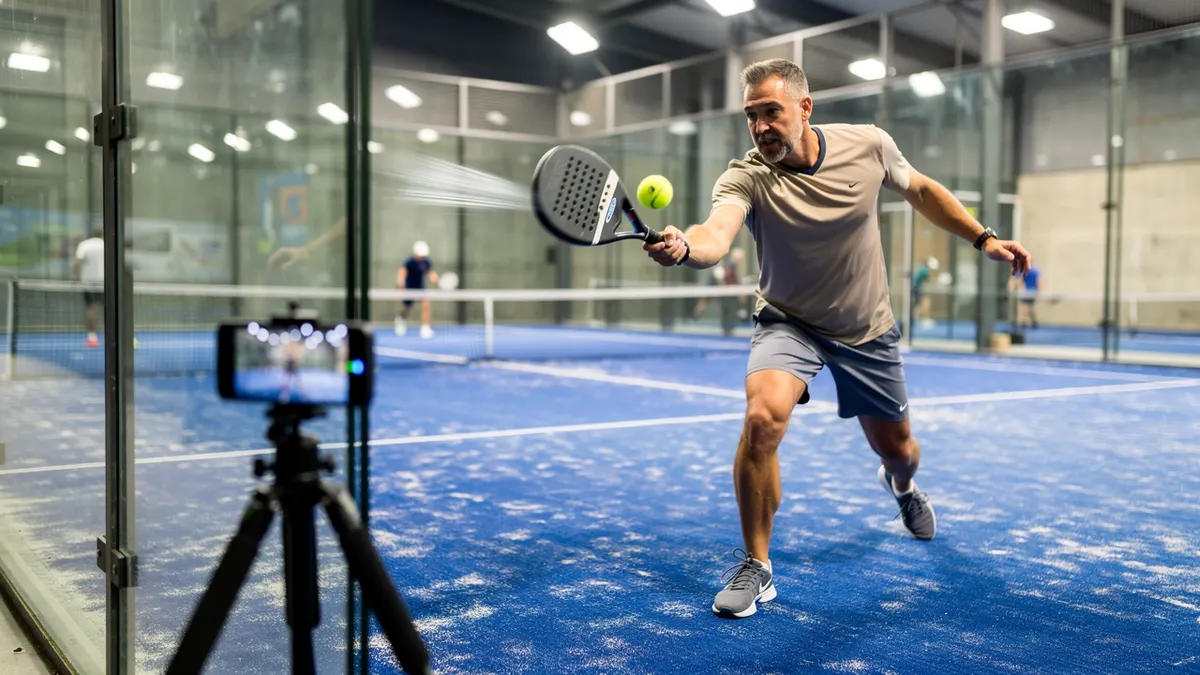
Filmed from the back of the court, with real sound, no music. The noise of the ball on the frame is information, not atmosphere.
The technical explanation
Weight, balance, shape, material, tolerance. Two minutes are enough, provided you show rather than list.
The recommendation by level
It is the most requested and least produced format: which racket for somebody playing for six months, for two years, for ten years.
The club tour
It sells the court, the access, the changing room, the opening hours and the atmosphere. It is proximity content, not brand content.
The progress clip
One person filmed three months apart, on the same stroke. It is the format most watched by players, and it costs only a little organisation.
What does not work
Three frequent mistakes.
The fast edit over music, where neither the stroke nor the ball can be seen.
The professional player hitting hard: they impress and inform nobody, because nobody plays like them.
And the product shot on a neutral background, which belongs to the listing and not to the video.
Claims and safety
That is the part binding the brand as much as the creator.
Claims about performance, power, speed or protection against injury must be documented, and are not improvised out loud.
Three practical precautions. Never present equipment as preventing an injury. Show the warm-up and compliant use, even when it is less spectacular. And be careful with images of minors, which follow their own rules.
These rules depend on the product and the medium, and are checked with a lawyer before publication.
What the court imposes on the shoot
| Constraint | Effect on screen | The workaround |
|---|---|---|
| The back glass | Reflections and glare | Shoot from the corner, never head-on |
| The fencing | A mesh that blurs the image | Press the lens against the mesh |
| The ball noise | A loud, brief sound | Lower the input level |
What is agreed with the club
The quiet slot, the manager's consent, the consent of the players filmed and permission to step onto the court between two bookings.
What proves a piece of equipment
The bounce, the weight in hand, the wear after several sessions. A racket filmed brand new on a bench proves nothing the buyer wants to know.
Practical notes for the brand
Four points that change the quality of the material.
Choose the person for their real level, not for their audience: this category's public identifies a level within three exchanges.
Shoot early in the morning or late in the evening: the courts are free and the light is usable.
Plan for two cameras, one fixed at the back of the court. The stroke is judged from afar, the material from close up.
And keep the rushes sorted by level and by equipment category. They will serve again for the next range, out in a year.