A portfolio is not a gallery of your finest images. It is a proof, and a proof answers a precise question: can this person film my product?
In Costa Rica that proof runs into an unexpected obstacle, and it comes from what is most beautiful about the country.
The magnificent setting works against you
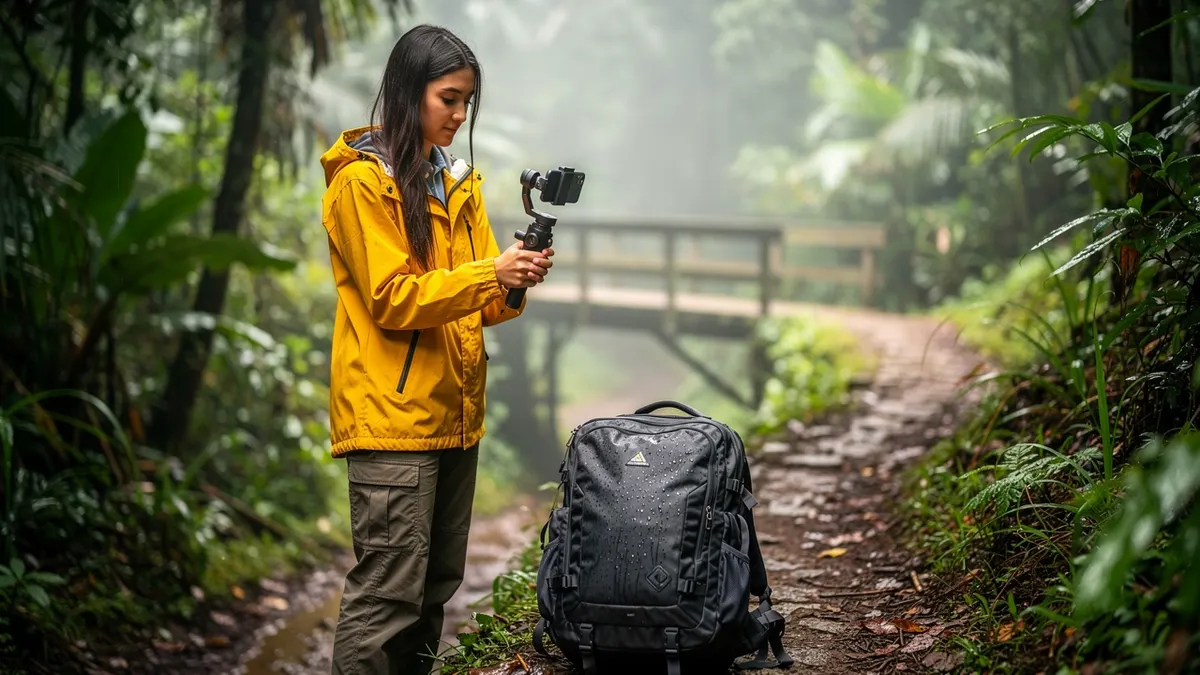
Within driving distance you have beaches, forest, a light other people pay dearly to go and find. The temptation is obvious: shoot where it is beautiful.
The problem is what the buyer concludes. They see travel content, not a product demonstration. They wonder whether you can film a cream on a worktop, an app on a phone, a garment in an ordinary room, and nothing in your portfolio tells them.
The spectacular setting captures attention instead of the product. That is exactly the opposite of what a brand buys.
What a portfolio must prove, in order
That the product stays readable. The label, the texture, the gesture are visible. A beautiful image in which the product cannot be made out proves nothing.
That you hold a format. Vertical, short, a hook in the first seconds. A two-minute horizontal edit says you have not worked for this market.
That you can speak. At least one piece with your voice, in real conditions, without music to fill the gaps.
That you deliver cleanly. The sound is clear, the image is not blown out, there is no abrupt cut at the end.
The language question
A significant share of demand comes from outside the country. A portfolio containing only one language therefore closes off half the market without noticing.
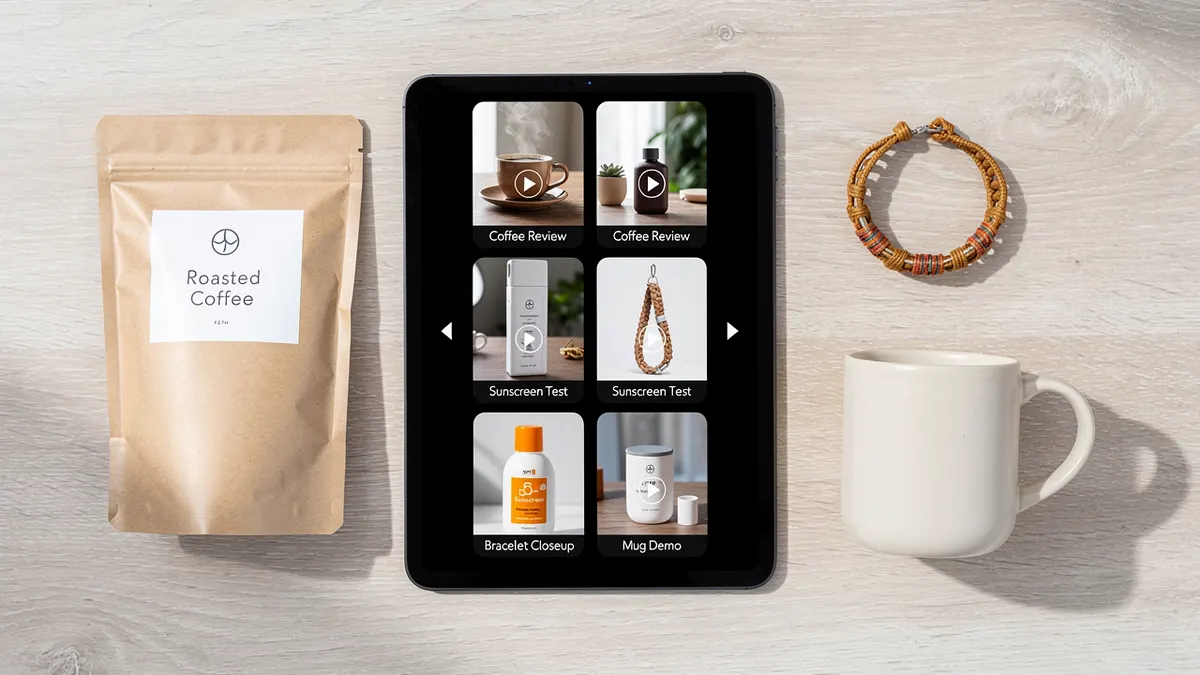
Two pieces in Spanish, one in English, and you answer both kinds of buyer. It is not a matter of perfect fluency, it is a matter of proof: whoever sells in English needs to know you can do it.
How to build it when nobody has paid you yet
Film products you already own, treating them exactly like an order: a written instruction, an imposed length, a deadline you set yourself.
Do not lie about the status of those pieces. Nobody asks whether it was paid; they look at whether it is usable. A well-made practice piece beats a real order badly edited.
Three pieces are enough to start applying. Six are enough to stop apologising.
Maintenance, which matters more than assembly
One piece added a month, the oldest removed. A portfolio whose latest piece is a year old says you stopped, even if that is false.
And sort by category, not by date. Someone looking for a beauty product wants to see your beauty pieces immediately, not scroll through your history.
What belongs in a sample that gets you booked here
Seven components.
A product actually sold in the country.
A setting that does not look like a studio.
A hook that lands within two seconds.
Subtitles that work with the sound off.
A close shot showing how the thing is made.
An ending that says what to do next.
And a length under thirty seconds.
What each sample must cover
| Sample | What it demonstrates | Format |
|---|---|---|
| One | A clear product demonstration | Vertical, 30 s |
| Two | A credible piece to camera | Vertical, 20 s |
| Three | A use with no speaking | Square, 15 s |
What gets updated every quarter
The first visible sample, the price range, a language added and the date of the last update.
What is removed without regret
A sample older than a year, a category you no longer target, a video whose rights you no longer hold.
What closes the page in three seconds
A link asking for access permission. A video that takes time to start because the file is too heavy. A page saying neither what you do, nor where you are, nor what it costs.
Test your own link from a phone you never use, off your usual network. It is the only way to see what the buyer sees.