How Brazilian brands plan UGC around a launch: teaser, reveal, first impressions and momentum.
Setting the launch against the Brazilian calendar
Six calendar markers.
Check the date does not fall in a saturated window, where advertising costs double.
Allow for the logistics delay to distant regions, which shifts actual receipt.
Plan the ad submission date, always earlier than the launch date.
Avoid periods when creators are unavailable, notably the big commercial windows.
Take the climate into account: a summer product launches when the season begins, not at its height.
And check regional dates, which do not coincide from one state to another.
Seeding creators before any announcement
Seven steps of the seeding phase.
Choose ten to fifteen creators rather than three, to offset unavailability.
Send the product with a message setting the embargo, dealt with above.
Supply the list of authorised wordings at the moment of sending, not at the shoot.
Ask for confirmation of receipt, which starts the turnaround countdown.
Allow time for real use before filming: a review produced on the day of delivery is worth nothing.
Organise a group exchange to answer questions once.
And pay for the production from this phase, without waiting for distribution.
Building the waiting list with teasers
Six formats for the waiting phase.
The closed parcel, without the product, which creates the question without answering it.
The texture or a detail in extreme close-up, not identifiable.
The problem the product solves, shown without the product.
The comparison with the current method, filmed before the new product arrives.
The factual countdown, with the date and time of opening.
And the question put to the audience, which feeds the comments and prepares the answer on launch day.
One useful remark: this phase produces few sales and a lot of information. The comments received during the teasers give the real objections, and those must feed the launch-day videos.
Launch day: reveal and first impressions
Seven formats to publish on the same day.
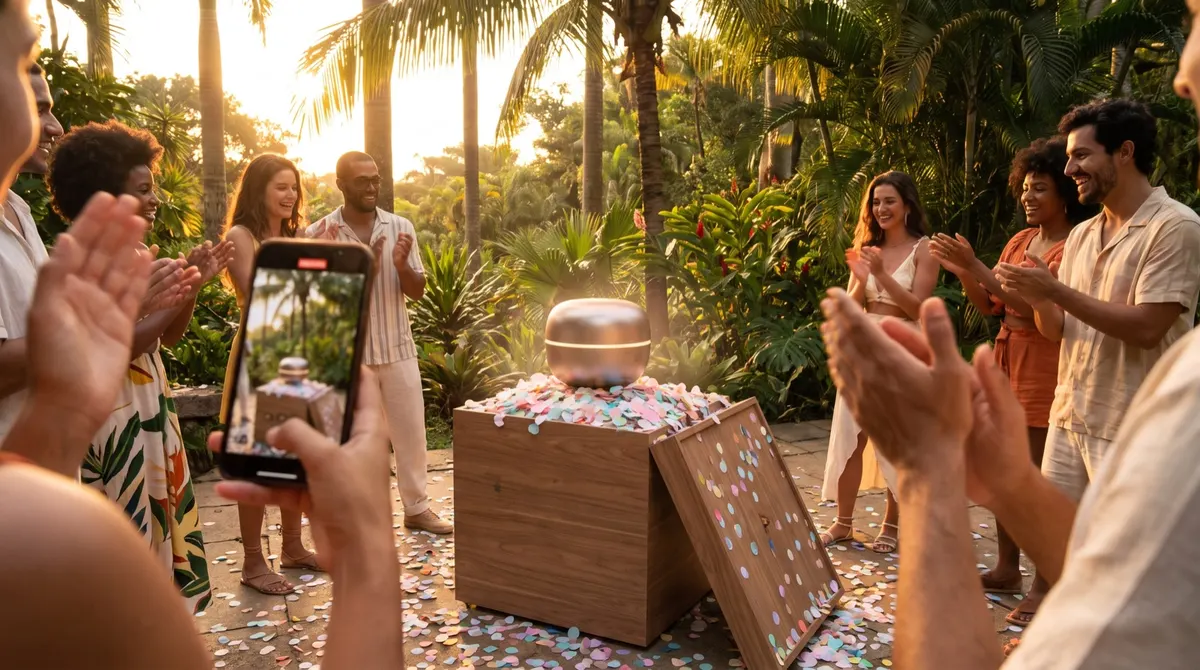
The full reveal, with the product shown in the hand and to scale.
The first impression, filmed in one take, with no editing.
The demonstration of use, answering the main objection identified during the teasers.
The price and what it replaces, said clearly.
The contents of the box, with what has to be bought in addition.
Availability: where to buy it, how long it takes to arrive, decisive information in Brazil.
And the answer to questions asked during the teaser phase, which closes the loop.
Keeping momentum and feeding the advertising engine
Seven actions after launch day.
Spot within twenty-four hours the video that held attention best.
Produce two or three opening variants of it, on the same video body.
Shift the advertising budget onto that creative, and cut the others.
Order the two-week feedback format, which handles the durability objection.
Publish the answer to the most frequent comments, the least produced and most useful format.
Buy the advertising rights of the video that works, with a long duration.
And keep the rushes of every video, including those that did not work: they will serve for the sales campaign.
What you must have in stock on launch day
| Video type | Its role | How many |
|---|---|---|
| Three different hooks | Find the one that holds | 3 |
| A full demonstration | Answer the main doubt | 1 |
| An objection answer | Delivery, price, comparison | 2 |
What is prepared six weeks ahead
Shipping the products, the brief, and the shoot. A launch that orders its videos three weeks out goes live with a single version, and a single version cannot be tested.
What is kept for afterwards
The videos with no mention of newness. Past the first month, they keep running as everyday advertising, whereas anything saying launch becomes unusable.
The mistakes that spoil a launch
Six frequent, all avoidable mistakes.
Sending the product with no embargo, dealt with above.
Launching without having provided for advertising rights, which makes the best video unusable.
Ordering every video from the same creator, which produces one voice.
Publishing before the stock and the product page are ready.
Asking creators to publish all at the same hour, which saturates the audience instead of accompanying it.
And stopping production on launch day, when the most profitable period starts right afterwards.
One last marker: in Brazil a launch is not decided on release day, it is decided in the two weeks that follow, when the first objections appear in comments and nobody has planned videos to answer them. Keep budget for that phase.