Three pieces are enough to start applying. The problem is almost never their number, it is their model.
Most of the examples taken as references come from a market where advertising speaks louder and faster. Copied as they are, they produce a tone the Italian buyer recognises immediately as imported, and they move to the next profile.
So you keep the mechanism and change everything else.
Piece 1: the single-take demonstration
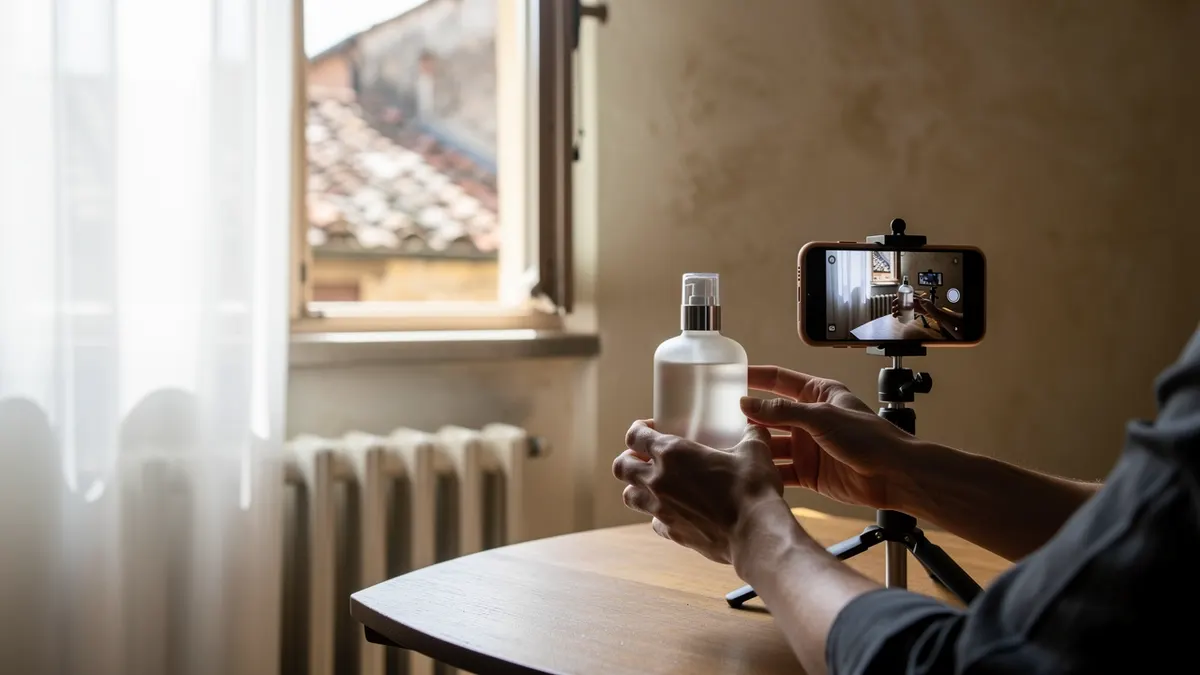
Take a product you own and show it from start to finish, without a cut.
A continuous take proves something an edit never will: that it actually works. For a tool, a utensil, a cleaning product, it is the most requested format and the easiest to judge.
What counts is the first second: a hand beginning to do something. No logo, no introduction, no greeting.
Piece 2: the objection spoken aloud
Do not film praise. Film someone explaining what made them hesitate, then what decided them.
It is the form that works best with an audience that distrusts enthusiasm, and it is also the one that reassures the brand: it sees that you can handle a reservation without demolishing the product.
One objection per video. The price, the durability, the difference from the photo, the size. Choose the one you would genuinely hear.
Piece 3: the product in a place of work
This is the piece that sets you apart in Italy, and the one almost nobody shoots.
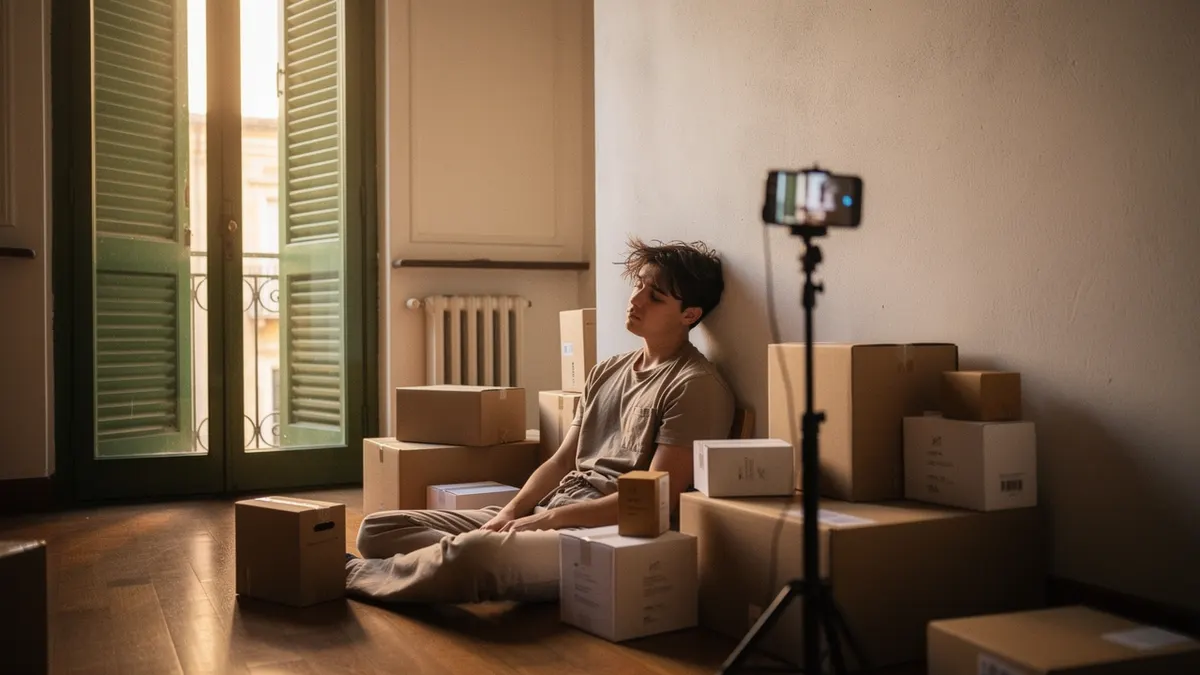
A large share of buyers are small businesses: a workshop, a shop, a laboratory, a counter. They want to see that you can film on their premises, with the light that is there, the noise that is there, and a cluttered worktop.
You do not need a real client for that. Film at a shopkeeper friend's, in a professional kitchen, in a garage. What is judged is your ability to hold a clean frame in a place that is not.
Shooting them in one afternoon
Choose three products you already own, and a single location per piece. Write one sentence per video, the one you will say first, and nothing else.
Shoot each shot three times and delete the first two takes without watching them. You will save more time there than in any setting.
Listen to ten seconds on headphones before each real take. Sound decides more often than image: a badly lit video still gets watched, a badly recorded one gets skipped.
What does not transpose
The chopped edit with a cut every second. It tires an audience that did not grow up with that format.
The superlative and the presenter's tone. That register triggers distrust faster than it triggers interest.
And cultural references from another country, which ring hollow even when well translated.
What each sample must contain
| Segment | What it proves | Length |
|---|---|---|
| Opening | That you can hook | 3 s |
| Demonstration | That the product works | 15 s |
| Close | That you can conclude | 5 s |
What can be filmed with what you have to hand
A product from the cupboard, a window, a plain wall: the first sample does not wait for an order.
What makes a sample unusable
A recognisable but uncredited brand, protected music, text unreadable on a phone.
How to present them
Three videos, one line each: the format, the length, the language. Nothing more.
A link that plays in one click, with no access request, tested from a phone that is not yours.
And your city. In Italy, knowing where you are is part of the decision, and a perfect example on a profile with no location remains an example nobody calls back.