Three videos are enough to get signed, provided they prove three different skills and not three products.
Three skills, not three products
That is the mistake that loses the most applications.
A buyer is not looking at whether you can film a cream, a toy and a drill. They are looking at whether you can do three things: show, speak, convince.
Three videos on the same product can therefore be excellent, provided each demonstrates a different skill. Conversely, three identical videos on three different products prove nothing.
Choose a product you already own, in a category that buys advertising, and shoot the three formats below.
The first format: the demonstration
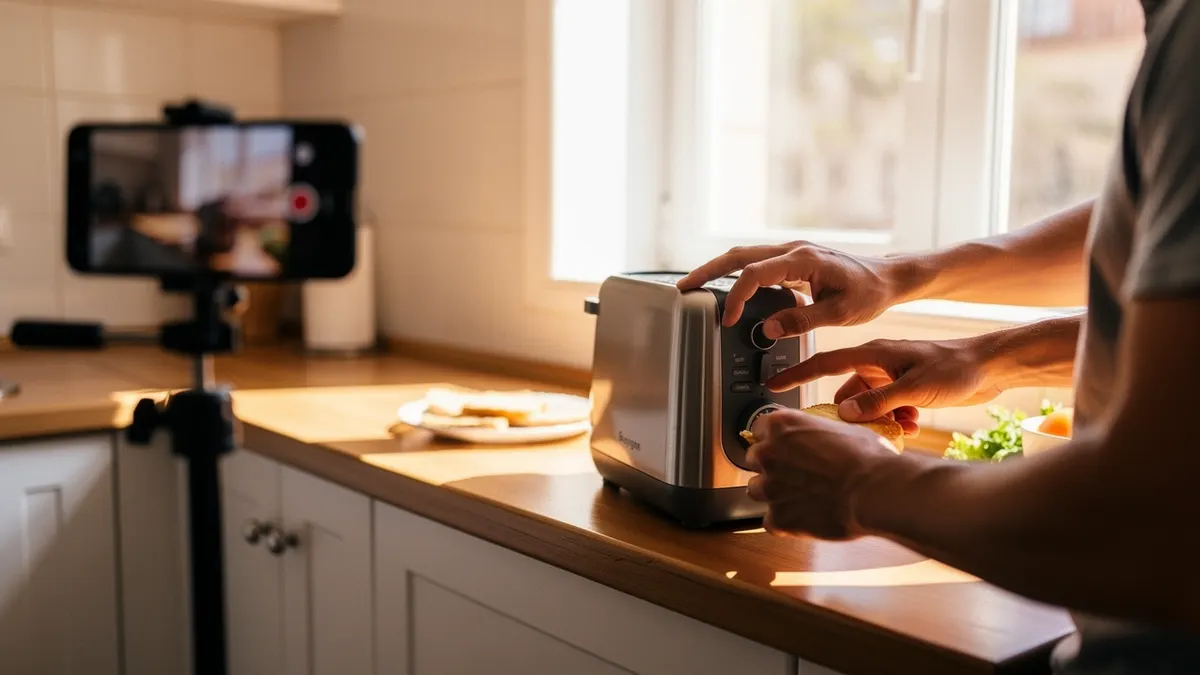
It proves you can film hands and an object.
The problem first, the product next, the action in full, the result held on screen. No music, no text, no effects.
What the buyer checks: steadiness, focus on the product, framing that does not cut off the hands, and light identical from start to finish.
The second: speaking to camera
It proves you can hold a message facing the lens.
Thirty to forty seconds, a single idea, a gaze that stays, an opening sentence understandable without sound. This is where sound is judged: a decent microphone makes more difference than a beautiful image.
What the buyer checks: credibility, pace, and whether you can state an argument without reciting it.
The third: the answer to an objection
It is the rarest and best-selling format.
Take a real objection from your category, the one that recurs in comments or reviews, and answer it by showing, not by arguing. Price, size, durability, difficulty of use, comparison with the cheapest option.
What the buyer checks: your understanding of the product and of the customer. That is the video that turns a profile into a supplier.
What to avoid
Four things, all frequent.
The fast edit with music and transitions, which hides exactly what the buyer wants to see.
The invented brand or the logo of a brand you have not worked with, which would expose you to a real problem.
The displayed price, which dates the video within months.
And the uncommissioned example presented as a campaign. A personal example is presented as such, always, and that honesty is read as a sign of seriousness.
What a set of samples must cover
| Sample | What it demonstrates | Length |
|---|---|---|
| 1 | Speaking to camera | 20 s |
| 2 | A demonstration with no voice | 15 s |
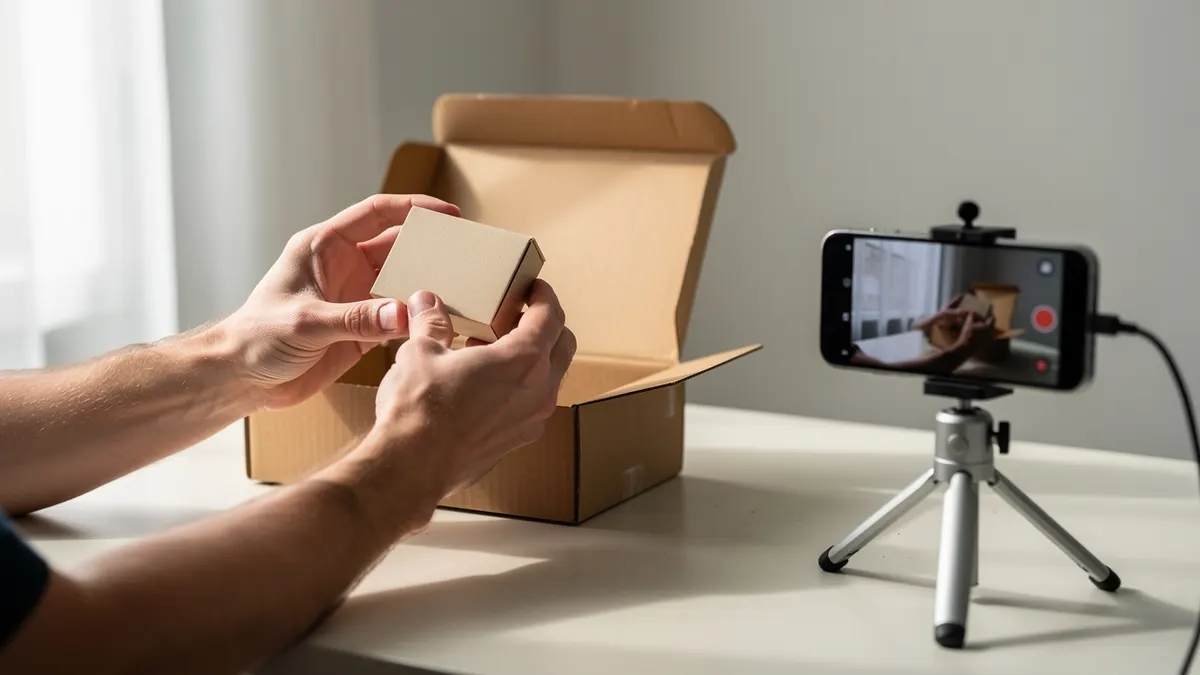
| 3 | An unboxing or a first time | 25 s |
What goes first
The sharpest shot, not the most spectacular. A brand decides in three seconds, and it decides on quality, not on the idea.
What is redone every six months
The lead sample. A clip from two years ago gives itself away by an app interface, by the format, and by the editing style.
How to name them
That administrative detail decides how fast you get an answer.
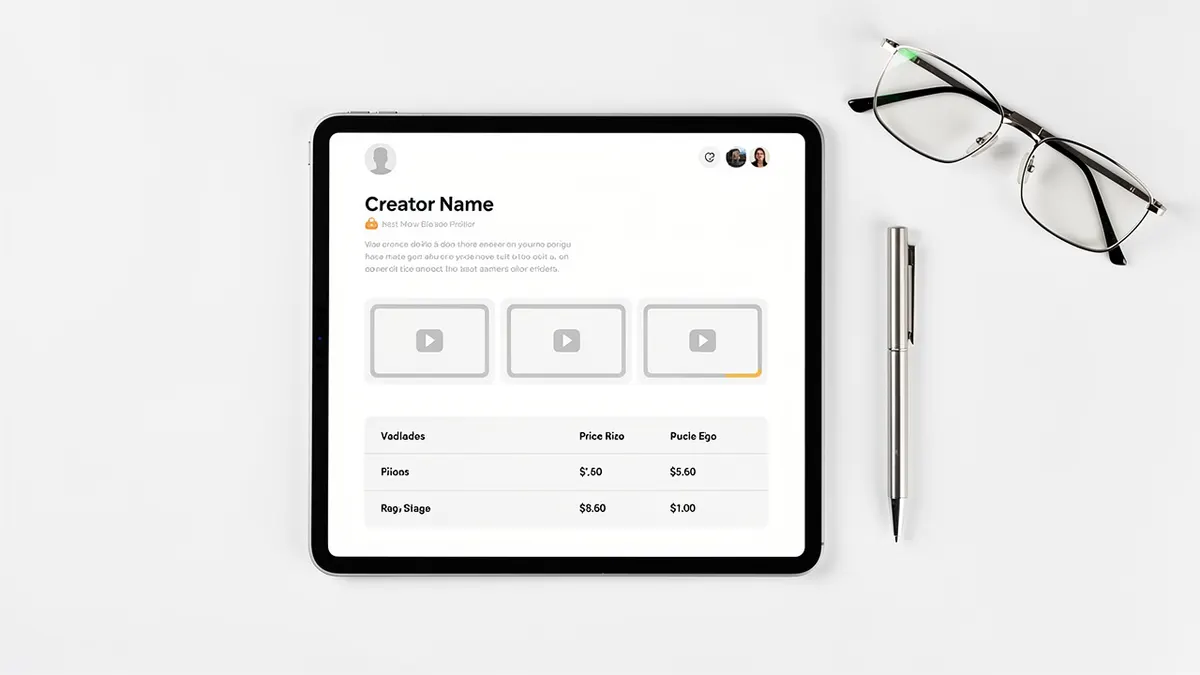
Name each file with the skill, the category and the length: demonstration, skincare, twenty seconds. A buyer receiving three legible files understands in ten seconds what you can do.
File them somewhere visible without signing up, with a sentence stating your usual timescale, the languages you deliver in, and the fact that you invoice. Those three pieces of information turn a portfolio into a potential quote.