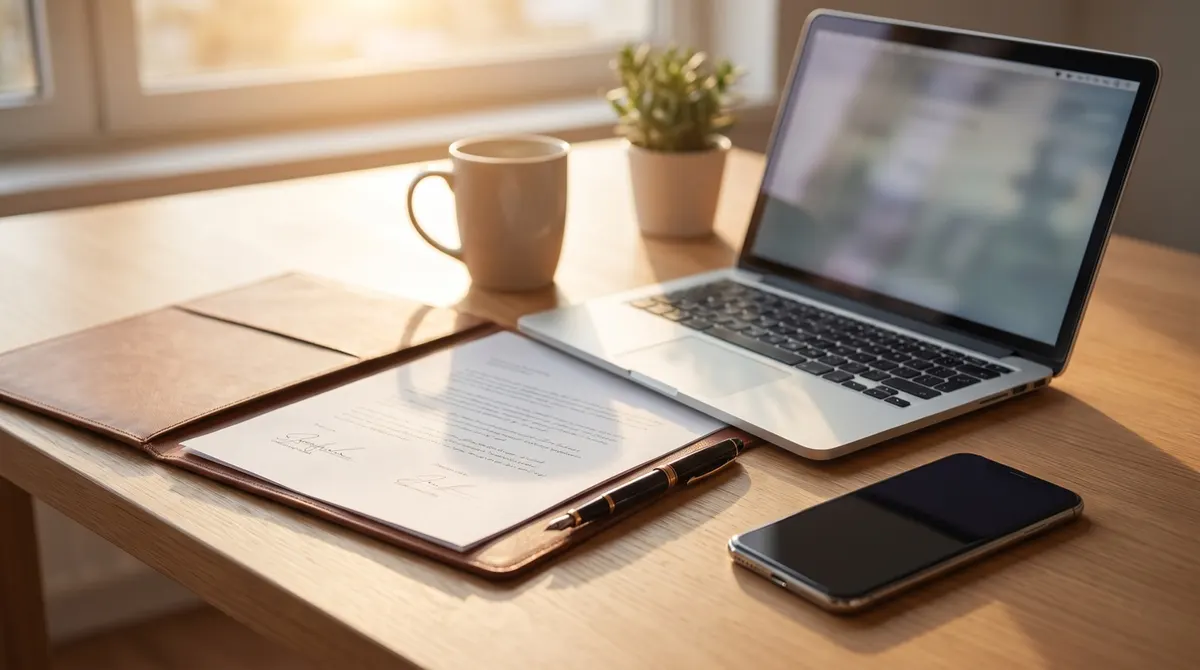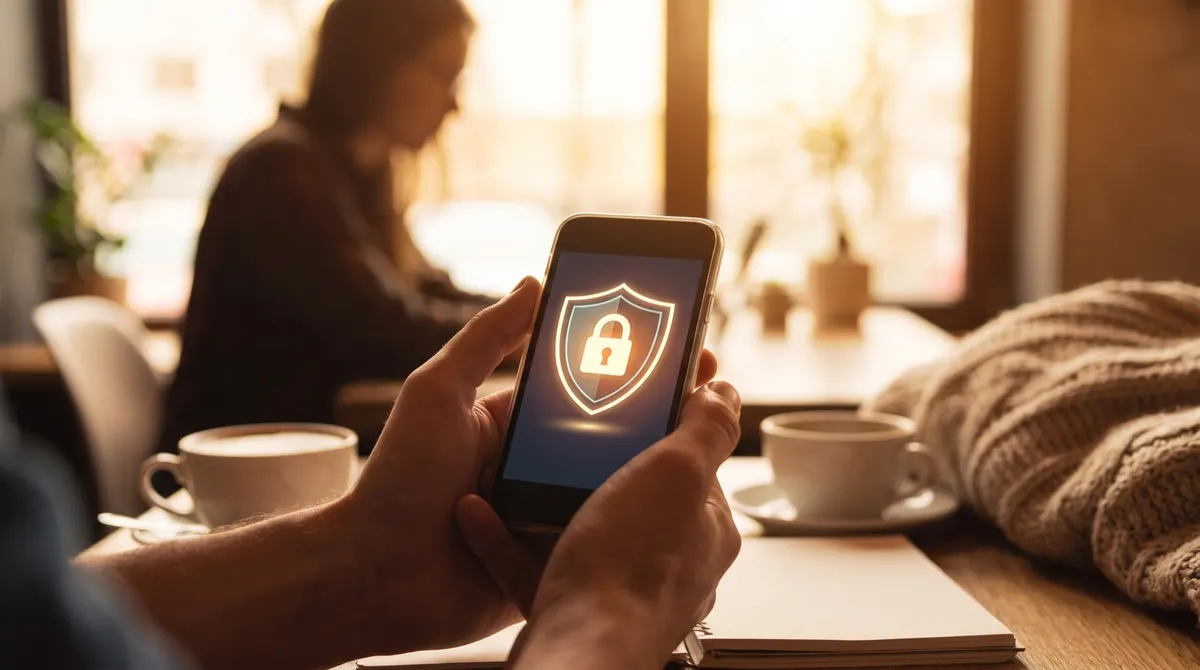
Payment later, fake brands, buy the product yourself: the most common scams, the warning signs, and how secure payment removes the risk.
Why creators are targeted
Because the job brings together three conditions that suit a scam: many beginners, exchanges that start in private messages, and a digital deliverable that travels in one click. Getting the file before payment is enough to make the operation profitable.
The most common scams
Seven scenarios, often combined.
Payment promised after the video runs.
The fake brand using a well-known name.
Buying the product at your expense, never reimbursed.
The fake transfer, with a doctored screenshot.
The overpayment to refund urgently.
The free test that becomes the whole campaign.
And the contract that assigns all your rights with no limit.
The warning signs
Seven clues that should stop you.
A high amount offered with no questions at all.
A vague or non-existent brief.
Pressure to leave the platform.
An artificial urgency on the date.
An email address that is not on the brand's domain.
A contact who refuses any call or written record.
And a request for banking details outside the usual framework.
How to check a brand
Seven checks, in ten minutes.
Find the official website and its address.
Compare the email domain with the site's.
Look at how old the social accounts are.
Search for the name of the person writing to you.
Check the company exists in a public register.
Ask for an invoice or a headed purchase order.
And ask a precise question about the product.
What is not a scam
Six normal situations, often misread.
A brand asking for a detailed quote.
A brand negotiating the price once.
A product given on top of a fee.
A written thirty-day payment term.
A revision request provided for in the contract.
And a brand taking two weeks to approve.
The case of the free product
Sending a product in exchange for a video is not illegitimate in itself, it is simply rarely enough. The right question is not moral, it is arithmetic: does the value of the product cover your filming, editing and exchange time. Below that, it is not a collaboration, it is a purchase you are funding.
What must never be done
Seven absolute rules.
Never deliver the final file before payment is secured.
Never advance a significant sum.
Never refund an overpayment without checking the money actually arrived.
Never share a code received by message.
Never sign an unread document.
Never accept a purely verbal agreement.
And never assign your rights with no time limit.
How secure payment works
The brand pays at the moment of ordering, but the funds are not released immediately. They go to the creator when the delivery is approved. That removes the question that poisons the job, will I really be paid, without forcing the brand to pay for work it has not yet seen.
What secure payment does not cover
Six risks that stay on your side.
A disagreement about the video's content.
A brief accepted while too vague.
A badly written rights assignment.
Work done off the platform.
An order accepted with no quote.
And a file sent before the order.
How to deliver without exposing yourself
Six habits.
Send a watermarked or low-resolution version first.
Deliver the final file in a private space.
Use a time-limited link.
Do not send the raw footage unless it is invoiced.
Check the recipient's identity.
And keep proof of sending.
Protecting your rights, not only your fee
Six reflexes.
Write down the licence duration.
Name the territories.
Specify advertising use.
Invoice the rights on a separate line.
Cap the number of revisions.
And refuse an unpriced total assignment.
What to keep
Six items, in the same folder.
The accepted quote, dated.
The final brief.
The written exchanges about rights.
Screenshots of the important messages.
The invoice and its due date.
And the proof of delivery.
The typical messages of a fake brand
Seven wordings that come back almost identical.
We saw your profile and your style fits us perfectly.
The budget is already approved, we need to start today.
Our team prefers to talk outside the platform.
Buy the product, we will reimburse you on delivery.
Here is the transfer proof, the bank takes forty-eight hours.
We sent you too much money, could you refund the difference.
And send the final video first, payment follows.
How to answer a suspicious message
Six replies, short and without accusation.
Ask for the official site and an address on the right domain.
Offer to place the order on the platform.
Ask for a headed purchase order.
Refuse any purchase you would fund.
Ask a precise question about the product.
And stop the exchange if a single request goes unanswered.
What to do if you have already been caught
Seven steps, in order.
Stop any delivery in progress immediately.
Gather all the written evidence.
Send a factual written reminder.
Report the account on the platform concerned.
Seek advice from a legal professional.
File a report with the competent authorities.
And warn other creators, without naming publicly without proof.
How to recover a file used without a licence
Six possible actions.
Document the placement with a dated screenshot.
Restate the accepted terms in writing.
Ask for removal or regularisation.
Use the reporting procedures of the distribution platform.
Consult a lawyer if the amount justifies it.
And invoice the observed use if an agreement is reached.
The rules that protect you
Six habits that are almost always enough.
Stay where the order is recorded.
Never deliver before payment is secured.
Write the rights down before filming.
Check the company before accepting.
Refuse any artificial urgency.
And trust your unease when something rings false.
The signals that should alert you
| The signal | What it announces | The response |
|---|---|---|
| Payment promised after release | A likely non-payment | Ask for a deposit |
| A request for files before agreement | Use with no consideration | Deliver after approval |
| A contact refusing anything in writing | An indefensible dispute | Do not start |
What protects you in every case
A quote accepted in writing, proof the files were delivered and a trace of the payment. Those three turn a disagreement into a file, and their absence makes any claim futile.
How payment works with us
Signing up and the profile are free, the brand pays at ordering, funds do not leave immediately, the transfer follows approval, and the platform keeps 10% on the creator side.
What the platform brings
On UGC MATCH, joining is free and there is no subscription: the order keeps a record of the brief, the accepted terms and the delivery, in a private space. The brand pays at ordering, the funds are not released straight away, and payment goes out on approval. The platform retains 10% of the price on the creator side, who therefore keeps 90%, and charges the brand a 6% service fee, with a minimum of 1.50 EUR.
One last marker: almost every reported case has one thing in common. The creator had sensed something, and carried on anyway.
Sources
- Urssaf, official auto-entrepreneur portal
- Service Public, how to become a micro-entrepreneur
- Service Public, crossing the micro-entrepreneur turnover thresholds
Checked on 4 September 2026. Thresholds and rates change: where this guide and the official source disagree, the official source is right.