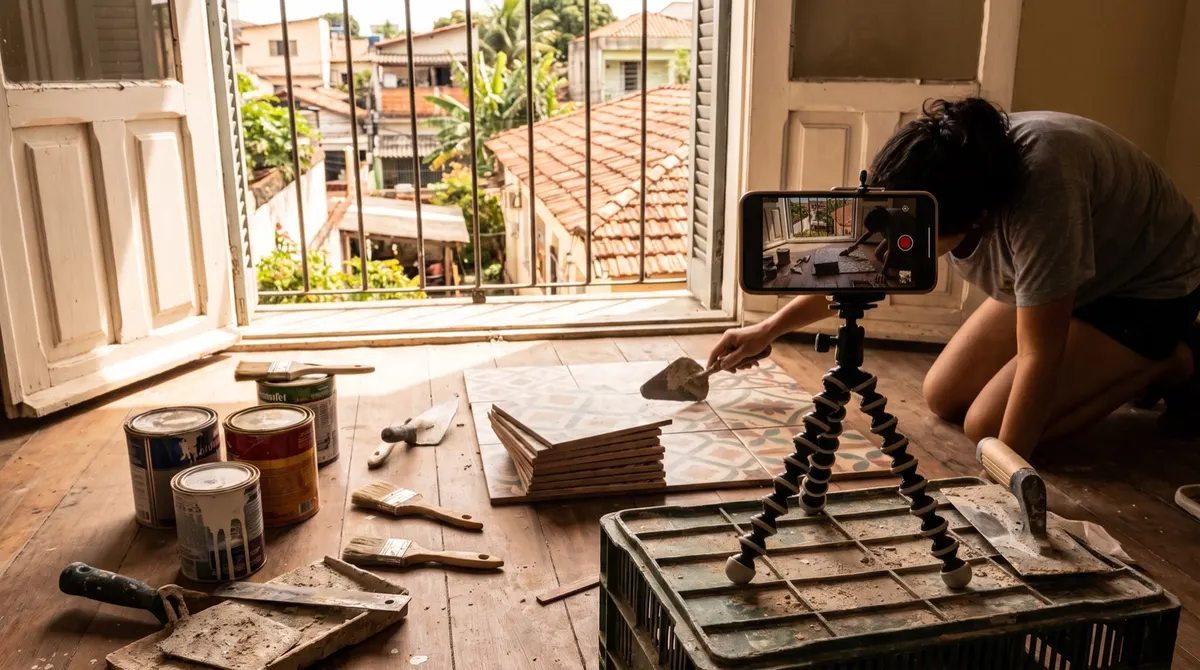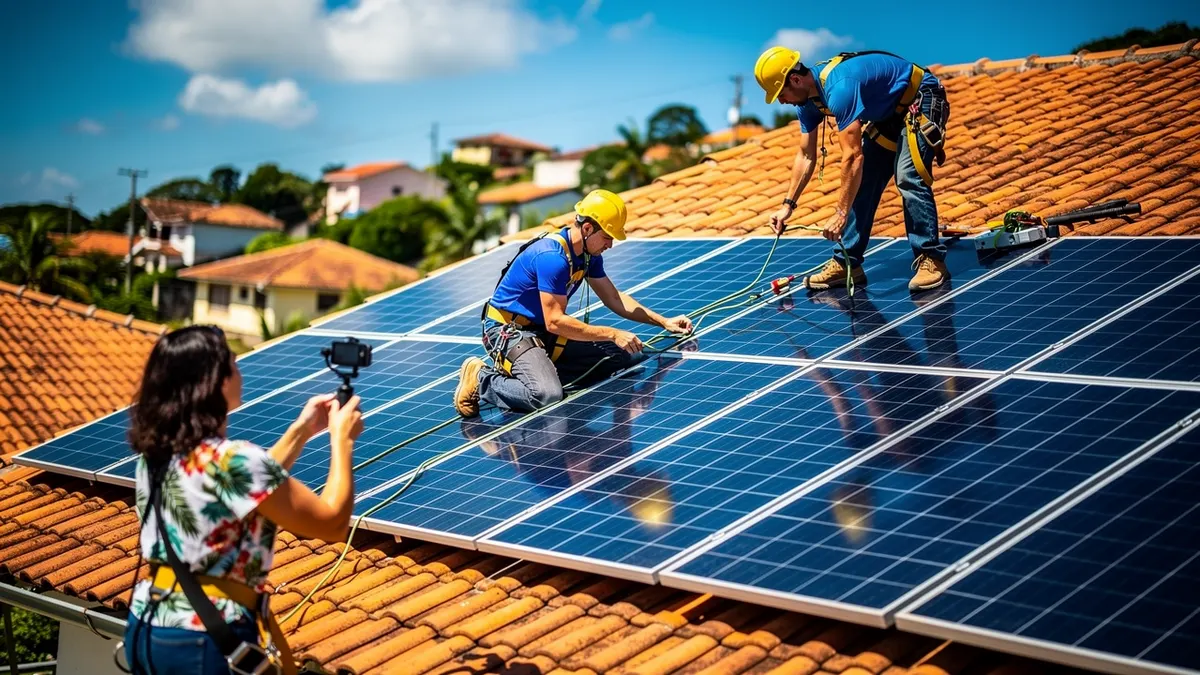
This is a high-value purchase, slow to decide, and settled on very concrete checks. So the useful video is not the one showing the installation: it is the one that teaches people whether it is possible at all.
Why creator video works here
Because the decision is made between neighbours, not in a brochure.
The doubt is rarely about the technology: it is about the company. Will it still exist in five years, does it come back when there is a problem, did the job go well for somebody in the area.
A video shot by a real customer, at home, with their own house and roof, answers that question better than any sales argument. That is also why the local format beats the national one.
The formats that sell
Four, and the most useful is the least spectacular.
Installation day, filmed continuously: the team arriving, the floor protection, the noise, the real duration, the state of the house that evening. That is what the customer dreads and nobody shows it.
The simple explanation by the customer themselves, in their own words, including what they did not understand.
After-sales: what happens when there is a problem, who answers, how quickly, and what was done.
And the comparison of quotes, explained as a method and not as a conclusion: what to compare, which lines to read, which questions to ask the three companies consulted.
The claims that cause problems
This is the part where improvising costs most.
Everything touching savings, yield, payback period, expected production, warranties, subsidies and connection conditions is regulated and depends on the installation, the location and the applicable rules. The figures come from the company's approved documentation and are used as they are.
Those points are checked with the competent authority and with a lawyer before anything goes live. A creator promises no savings, quotes no future bill amount, and presents no case as representative.
One rule finally applies to the picture: showing a meter, a consumer unit or a bill suggests a numerical claim, even with no commentary.
What is never filmed
Three things, without exception.
The customer's personal documents: a legible full bill, contract number, identifiers, precise address.
People present without written agreement, including the installation teams.
And any electrical handling shown as something to do yourself. Interventions are filmed in accordance with the applicable safety rules, or not filmed at all.
What the video can show without promising
| Shot | What it proves | What it does not quantify |
|---|---|---|
| The roof installation | The length of the job | A monthly saving |
| The monitoring screen | Output observed on one given day | An annual yield |
| The maintenance | The cleaning gesture | A lifespan |
What you ask the installer for
Site access permission, a contact reachable during the shoot, and sign-off on any figure quoted.
What is left to the specialist
The payback calculation, the grid connection and any public incentive, to be confirmed with the installer and the relevant authority.
Practical notes for the company
Three decisions that change the yield.
Film locally: a video shot in the same region, with the same kinds of houses, converts better than a better-produced national one.
Buy long rights: this content serves for several years, because it does not date.
And plan the follow-up sequence, six or twelve months later, at the same customer's home. It is the hardest proof for a competitor to obtain and the most convincing for a prospect.